St. Anne's Church & Shandon Bells: Cork's Iconic Tower
St. Anne's Church, Shandon, is an undisputed symbol of Cork, its distinctive clock tower and famous bells immortalized in song and story. Known to all as the Shandon Bells, this landmark is one of the most recognizable sights in the city, holding a deep connection to Cork's history and identity.
History and Architecture
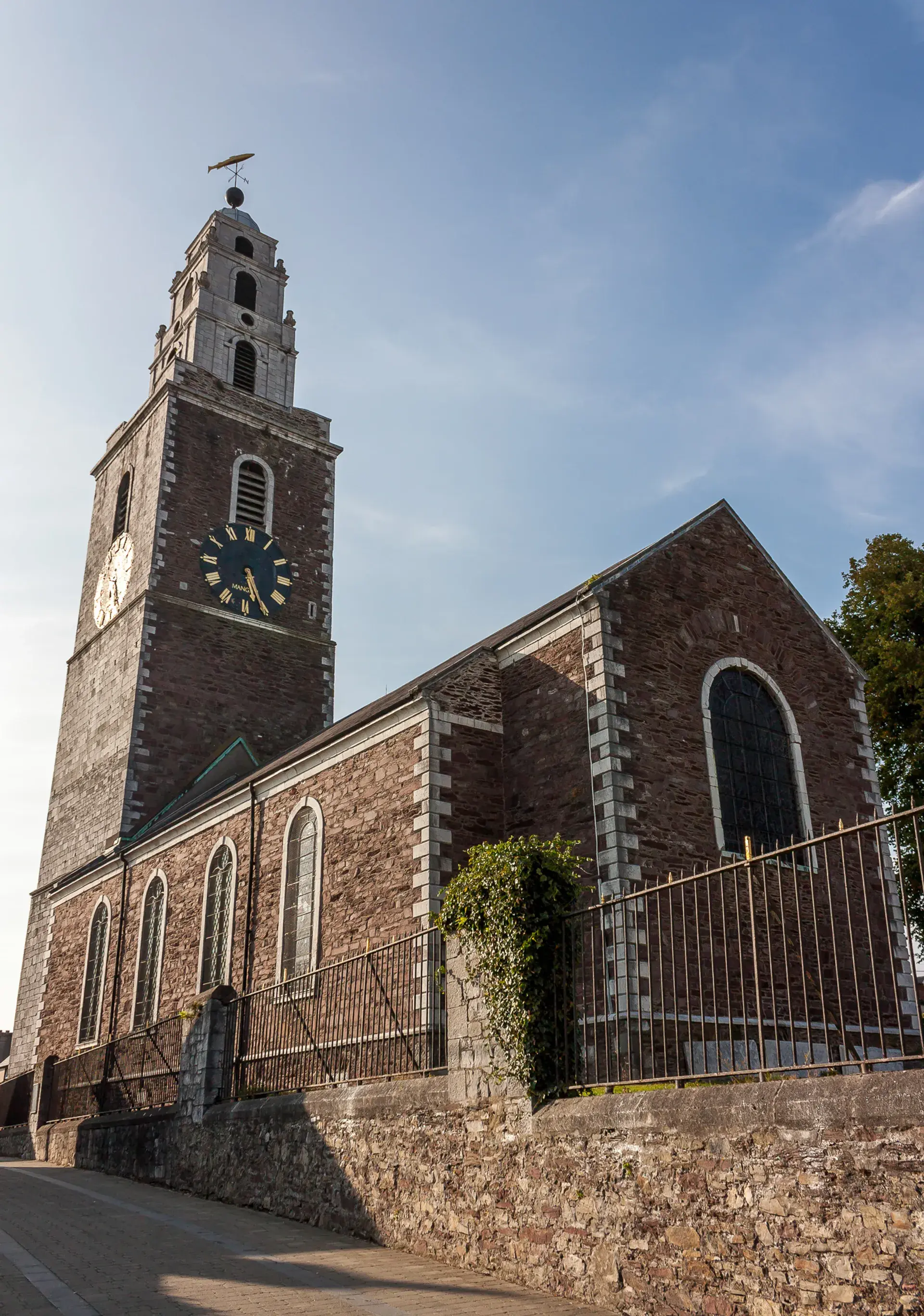
The site has a long history of worship, dating back to a medieval church dedicated to St. Mary mentioned in 1199. After that structure was destroyed in the Siege of Cork in 1690, a replacement was built, but a growing population necessitated a new building. The current St. Anne's Church was constructed between 1722 and 1726 in a vernacular Georgian and Italianate style. No architect for the main church is recorded, but the McOsterich family was involved in the tower's design.
The church's tower is famous for its bichrome appearance. Two sides are built with red sandstone from the ruins of the nearby Shandon Castle, while the other two sides use white limestone from a derelict Franciscan Abbey. These colors are often associated with Cork itself. The church gained full parochial status in 1772, with Rev. Arthur Hyde, the great-great-grandfather of Ireland's first President, Douglas Hyde, appointed as its first Rector.
The Bells and the 'Four-Faced Liar'
The church's belfry was added between 1749 and 1750. Its original eight bells, cast in Gloucester by Abel Rudhall, first rang out on December 7, 1752, for a local wedding. These bells were immortalized in the poem 'The Bells of Shandon' by Francis Sylvester Mahony, also known as Father Prout, who is buried in the churchyard.
In 1847, a four-faced clock made by James Mangan of Cork was installed in the tower. It quickly earned the affectionate local nickname 'The Four-Faced Liar' because its four faces often show slightly different times. This discrepancy is due to the effects of wind on the hands and the tolerances of the historic mechanical system.
St. Anne's Church Today
St. Anne's remains an active Church of Ireland parish and is the oldest church in continuous use in Cork City, with weekly services. It is also a major tourist attraction, offering visitors the chance to climb the tower for 360-degree panoramic views of the city. A unique feature is the opportunity for visitors to ring the famous bells themselves using an Ellacombe apparatus.
The church's interior contains a baptismal font from 1629, which survived the destruction of the previous church on the site. Significant restoration and conservation projects on the clock, bell supports, and original 300-year-old doors began in 2025 to preserve the historic structure for future generations.
Unique Features and Traditions
Perched atop the tower is an 11-foot-3-inch gilded weathervane shaped like a salmon. Known locally as 'the goldie fish,' it symbolizes the historic importance of the salmon fishing industry on the River Lee and also serves as an early Christian symbol.
A unique privilege is afforded to the McOsterich family, who were involved in the tower's construction. Whenever a member of their family marries, anywhere in the world, the Shandon Bells are rung in their honor.
FAQ
Why is the clock at St. Anne's Church called 'The Four-Faced Liar'?
The clock is known as 'The Four-Faced Liar' because its four faces can show slightly different times. This is caused by wind affecting the hands and the tolerances of the old mechanical system.
Can you actually ring the Shandon Bells?
Yes, visitors can ring the famous Shandon Bells. The church has an Ellacombe apparatus that allows individuals to play melodies by pulling ropes connected to the bell clappers.
What are the two colors of the church tower?
The tower has two sides made of red sandstone from the ruins of the old Shandon Castle and two sides of white limestone from a derelict Franciscan Abbey, reflecting the city's colors.
What is the fish on top of St. Anne's Church?
The 3-meter gilded weathervane is a salmon, known locally as 'the goldie fish'. It represents the importance of the salmon fishing industry on the River Lee and is also an early Christian symbol for the Lord.