Crawford Art Gallery: Cork's Cultural Landmark
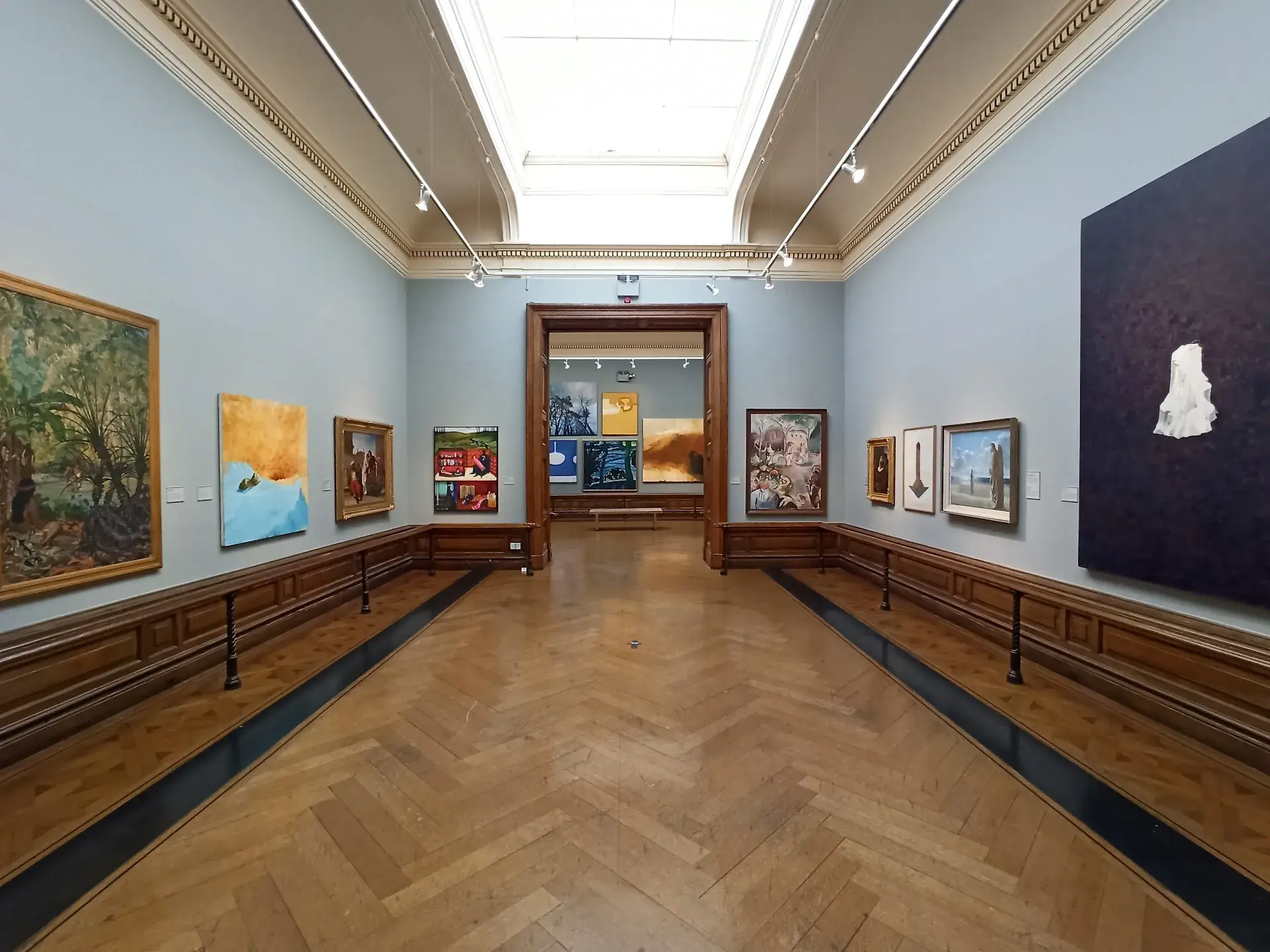
Housed in the city's magnificent former Custom House, the Crawford Art Gallery is an essential landmark that has witnessed Cork's commercial and cultural evolution for over 300 years. The building stands on Emmet Place, an area that was originally an open dock vital to the city's maritime trade.
From Custom House to Art Institution
The building's story begins between 1723 and 1724 when it was constructed as Cork's Custom House, a center for the city's bustling port. Its function shifted in 1830 when it became home to the Royal Cork Institution, a precursor to University College Cork.
By 1850, the site had transitioned into a Government School of Design, laying the groundwork for its future as a hub for the arts. Notable students from this era included artists Samuel Forde, Daniel Maclise, and John Hogan.
The Crawford Era and Expansion
A pivotal moment in the institution's history arrived in 1884. William Horatio Crawford, a wealthy local brewer and landowner, financed a significant extension designed by architect Arthur Hill. In recognition of his philanthropy, the institution was renamed the Crawford School of Art in 1885. The inner gates of this extension bear the inscription 'Science and Art,' hinting at an original, broader plan for the school.
The Collection's Serendipitous Start
The gallery's foundational art collection began in 1819 with a set of Graeco-Roman and Neo-Classical sculpture casts. These 'Canova Casts' have a surprising origin story. They were initially an unsolicited diplomatic gift from Pope Pius VII to the British Prince Regent (later George IV) following Napoleon's defeat. The Prince Regent had no space for them, and they were subsequently turned down by the Royal Academy before finding a permanent and welcome home in Cork.
A National Cultural Institution
The building officially became the Crawford Art Gallery in 1979 after the art school relocated to a new campus. It continued to grow, with a new 1000-square-meter contemporary art wing designed by Dutch architect Erick van Egeraat added in 2000. Before its temporary closure, the gallery was a National Cultural Institution housing a collection of nearly 4,000 works and welcoming over 265,000 visitors in 2019.
Transforming for the Future
As of Autumn 2024, the Crawford Art Gallery is temporarily closed to facilitate a major €29 million redevelopment project. Designed by Grafton Architects, this transformation aims to enhance the historic building and its facilities. The gallery is expected to reopen to the public in 2028. During the closure, the gallery offers free 'Crawford Uncovered' tours, providing a unique look at the empty building before its renewal.
FAQ
Is the Crawford Art Gallery currently open?
No, the Crawford Art Gallery temporarily closed to the public in Autumn 2024 for a major redevelopment project. It is scheduled to reopen in 2028. During the closure, special 'Crawford Uncovered' tours of the empty building are being offered.
What was the Crawford Art Gallery building originally?
The building was originally Cork's Custom House, constructed in 1724. It was central to the city's prosperity as a major port before it was repurposed for educational and cultural use.
Who was William Horatio Crawford?
William Horatio Crawford (1812-1888) was a wealthy brewer and landowner from a family that co-founded the Beamish and Crawford brewery. His significant financial contribution funded an extension to the building in 1884, leading to it being renamed the Crawford School of Art in his honor.
What are the 'Canova Casts'?
The 'Canova Casts' are a collection of Graeco-Roman sculpture casts from the Vatican. They were a diplomatic gift from Pope Pius VII to the British Prince Regent, who rejected them. They found a home in Cork in 1819 and became the foundation of the gallery's art collection.
Discover Cork like never before
Dive into Cork hidden stories and secret spots with Ciceru interactive tours.
Explore tour
Audioguide
Quizzes
Maps
Solo
Couples
Groups & families

© Photo by Itzel Gallardo via Google Maps · Google Places