Cork's National Monument: A Symbol of Irish Rebellion
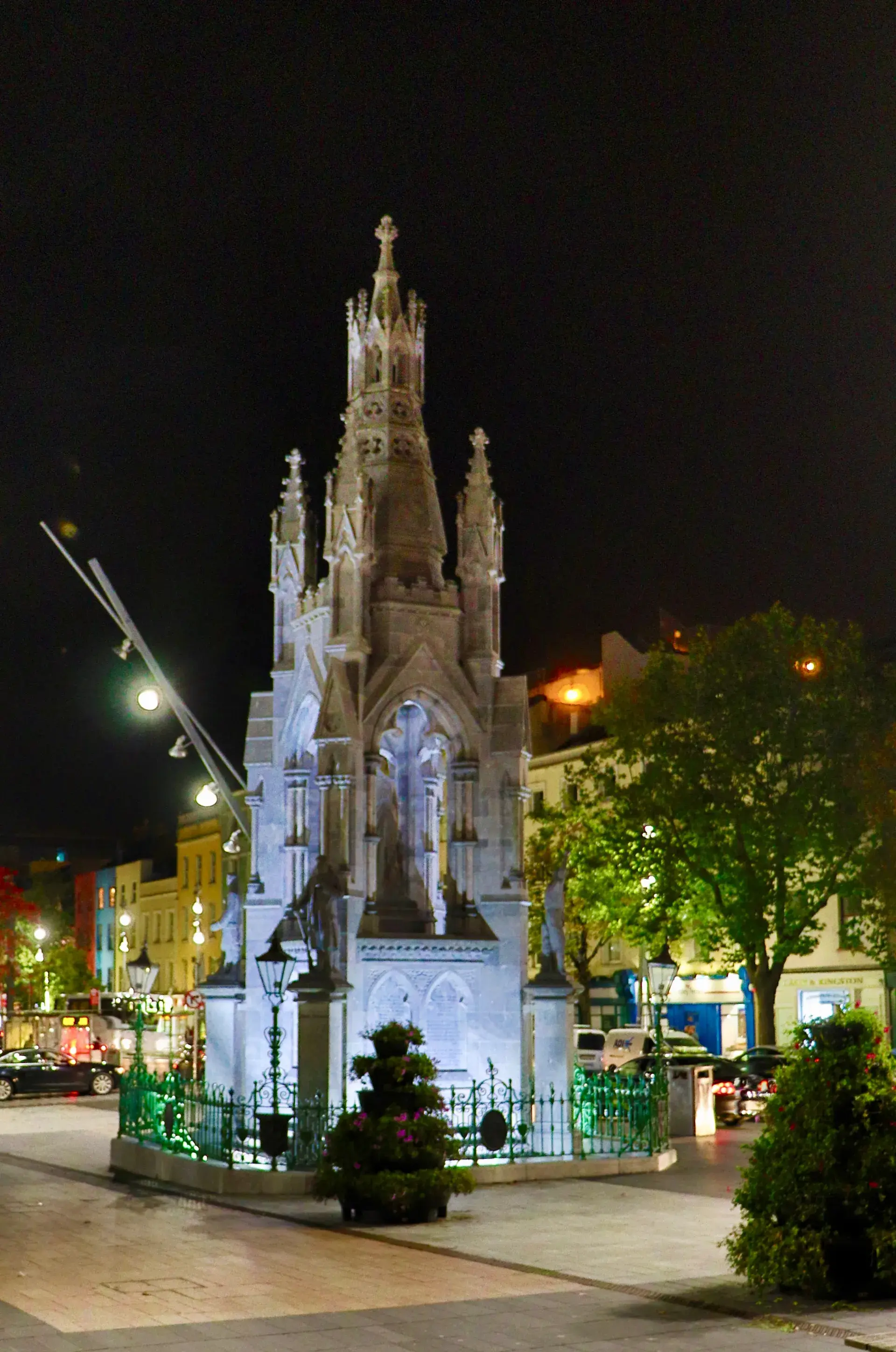
Standing prominently on the Grand Parade in Cork, the National Monument is an intricate Gothic Revival structure that serves as a powerful symbol of Ireland's long struggle for independence. Unveiled on St. Patrick's Day in 1906, this landmark commemorates the patriots who participated in numerous rebellions against the British Crown.
A Monument to Irish Patriots
The monument honors the men and women involved in the Irish rebellions of 1798 (United Irishmen), 1803 (Robert Emmet's rebellion), 1848 (Young Irelanders), and 1867 (Fenians). It features statues of key revolutionary figures sculpted by John Francis Davis. These include Wolfe Tone, a founder of the United Irishmen; Michael Dwyer, a leader in the 1798 rebellion; Thomas Davis, a chief organizer of the Young Ireland movement; and Peter O'Neill Crowley, a Fenian leader from the 1867 rising. The central figure is a personification of Ireland, known as Mother Erin or the Maid of Erin.
Design and Construction
Designed by architect D.J. Coakley, the monument stands 14.6 meters high in an Early Irish Gothic style. Its foundation stone was laid in 1898 by the Mayor of Cork, Patrick Meade. The project was initiated and funded by the Cork Young Ireland Society, which faced significant fundraising challenges. A substantial portion of the funds, over $154,000, was raised in the United States by Patrick R. Fitzgibbon, a Cork emigrant. Despite his crucial role, Fitzgibbon's contribution was never acknowledged on the monument itself.
The unveiling ceremony in 1906 was a major public event, drawing an estimated 60,000 people and 50 bands. The renowned Fenian patriot Jeremiah O'Donovan Rossa, who had been granted the Freedom of the City of Cork in 1904, officially unveiled the monument.
A Site of Shifting Symbolism
The location of the National Monument is historically significant. It occupies the site where a statue of King George II once stood until its removal in 1862. The street's old Irish name, 'Sráid an Chapaill Bhuí' (Yellow Horse Street), was a reference to this former equestrian statue. The replacement of a British monarch with a memorial to Irish rebels clearly illustrates a shift from colonial symbolism to one of national identity.
While the monument predates the 1916 Easter Rising and the War of Independence, a plaque was later added to honor those who fought for Irish independence between 1916 and 1923. The surrounding guard rails also feature small plaques depicting the US eagle and flag with the words 'Hail Columbia' and the date 1776, a nod to the significant American donations that made its construction possible.
The Monument Today
Today, the National Monument is a key landmark and a visual history lesson in the heart of Cork city. After undergoing restoration in 2002, it was rededicated in April 2009. It continues to serve as a gathering place for political and social events, including commemorations of pivotal moments in Irish history and contemporary public demonstrations.
FAQ
Who is depicted on the National Monument in Cork?
The monument features statues of Irish patriots Wolfe Tone, Michael Dwyer, Thomas Davis, and Peter O'Neill Crowley, with a central allegorical figure of Mother Erin (Maid of Erin).
When was the National Monument in Cork built?
The foundation stone for the monument was laid in 1898, and it was officially unveiled to the public on St. Patrick's Day, 1906.
What does the National Monument commemorate?
It primarily commemorates those who participated in the Irish rebellions of 1798, 1803, 1848, and 1867. A plaque was added later to also honor those who fought for Irish Independence between 1916 and 1923.
What stood on the site of the National Monument before it was built?
The site was previously occupied by an equestrian statue of King George II, which was removed in 1862. The street's old Irish name referred to this 'Yellow Horse' statue.