St. Fin Barre's Cathedral: Cork's Gothic Masterpiece
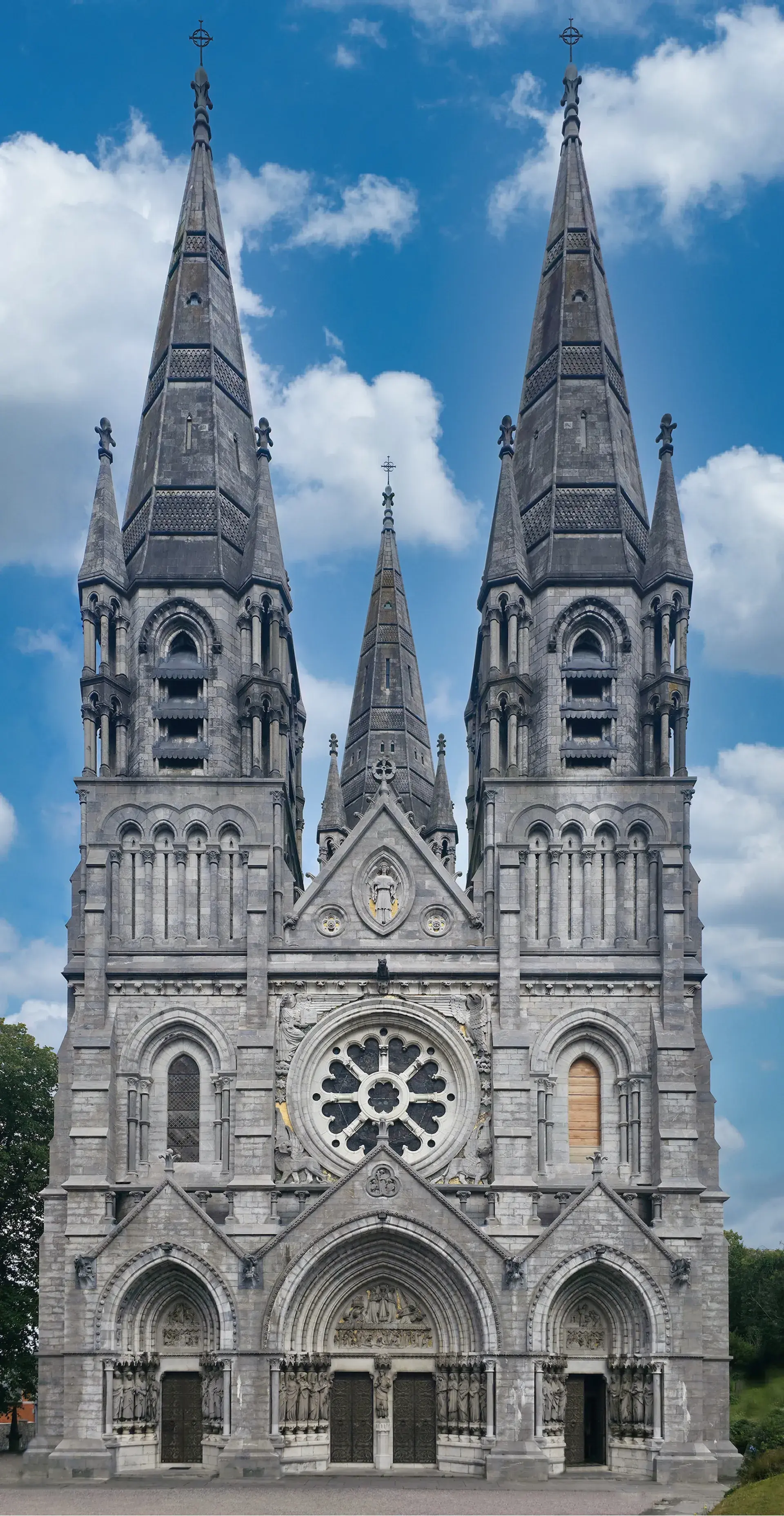
St. Fin Barre's Cathedral is a spectacular French Gothic Revival cathedral that stands as Cork's most breathtaking architectural landmark. With its three fairytale spires and a gilded 'resurrection angel', the building is a testament to Victorian architectural ambition, built on a site steeped in over a millennium of Christian history.
A History Through Centuries
The site of St. Fin Barre's Cathedral has been a place of continuous Christian worship since the 7th century. It was here that St. Finbarr, the patron saint of Cork, founded a monastery and school, around which the city began to grow. The current cathedral is the third significant church to occupy this sacred ground.
A previous medieval structure was severely damaged during the Siege of Cork in 1690 by a cannonball fired from the nearby Elizabeth Fort. That building was later replaced in the 18th century by a structure widely regarded as plain and featureless. In the mid-19th century, the Anglican Church commissioned the grand cathedral that stands today.
The Vision of William Burges
In 1863, the Victorian architect William Burges won a competition to design the new cathedral. His comprehensive French Neo-Gothic design was chosen from 68 entries. Burges famously submitted a design that appeared to meet the initial £15,000 budget by omitting the cost of the spires and carvings. With the backing of Bishop John Gregg, the project ultimately cost over £100,000.
The foundation stone was laid on January 12, 1865, and the cathedral was consecrated on November 30, 1870. The iconic three spires were finally completed by October 1879, with minor work continuing into the 20th century. Burges's singular vision extended to almost every element, including the interior furnishings and stained glass.
Architectural Highlights and Unique Features
The cathedral is a premier example of French Neo-Gothic design, distinguished by its three spires and intricate sculptural details. The exterior features 32 gargoyles modeled by sculptor Thomas Nicholls. Atop the main spire is a gilded copper 'resurrection angel', known locally as the 'goldie angel', which was a personal gift from Burges to the city.
Inside, a fascinating historical artifact is on display: a 24-pound cannonball from the 1690 siege, which was discovered in 1865 during the demolition of the previous church. The construction of the spires also has a unique story, with Bishop Gregg leveraging a rivalry between a local beer magnate and a whiskey distiller to fund two of them.
The Cathedral Today
St. Fin Barre's Cathedral remains an active Church of Ireland place of worship, with regular services, including daily Eucharist and choral events. It also serves as a vibrant cultural hub, hosting concerts, organ recitals, film screenings, and art exhibitions.
The cathedral's magnificent pipe organ, built in 1870 by William Hill & Sons, features over 4,500 pipes and is a central part of its musical tradition. The building is open to visitors from Monday to Saturday for an admission fee, while its garden, which includes a labyrinth, is freely accessible to the public.
FAQ
When was St. Fin Barre's Cathedral built?
The foundation stone for the current St. Fin Barre's Cathedral was laid in 1865. The building was consecrated in 1870, and its three spires were completed by October 1879.
Who designed St. Fin Barre's Cathedral?
The cathedral was designed by the notable Victorian architect William Burges. He won a design competition in 1863 and oversaw the entire project, from the architecture to the interior furnishings.
What is the story behind the cannonball in the cathedral?
A 24-pound cannonball is displayed inside the cathedral. It was fired from Elizabeth Fort during the Siege of Cork in 1690 and damaged the previous medieval church on the site. It was found during demolition work in 1865.
Is St. Fin Barre's Cathedral free to visit?
An admission fee is required for visitors to enter the cathedral from Monday to Saturday. However, the surrounding cathedral garden, which features a labyrinth, is free for the public to access.