The Grand Parade: Cork's Historic Civic Spine
The Grand Parade is one of Cork's most significant streets, running 280 meters from South Mall to St. Patrick's Street. This wide boulevard, once a channel of the River Lee, now serves as the city's civic spine, lined with important landmarks and public spaces.
From River Channel to City Street
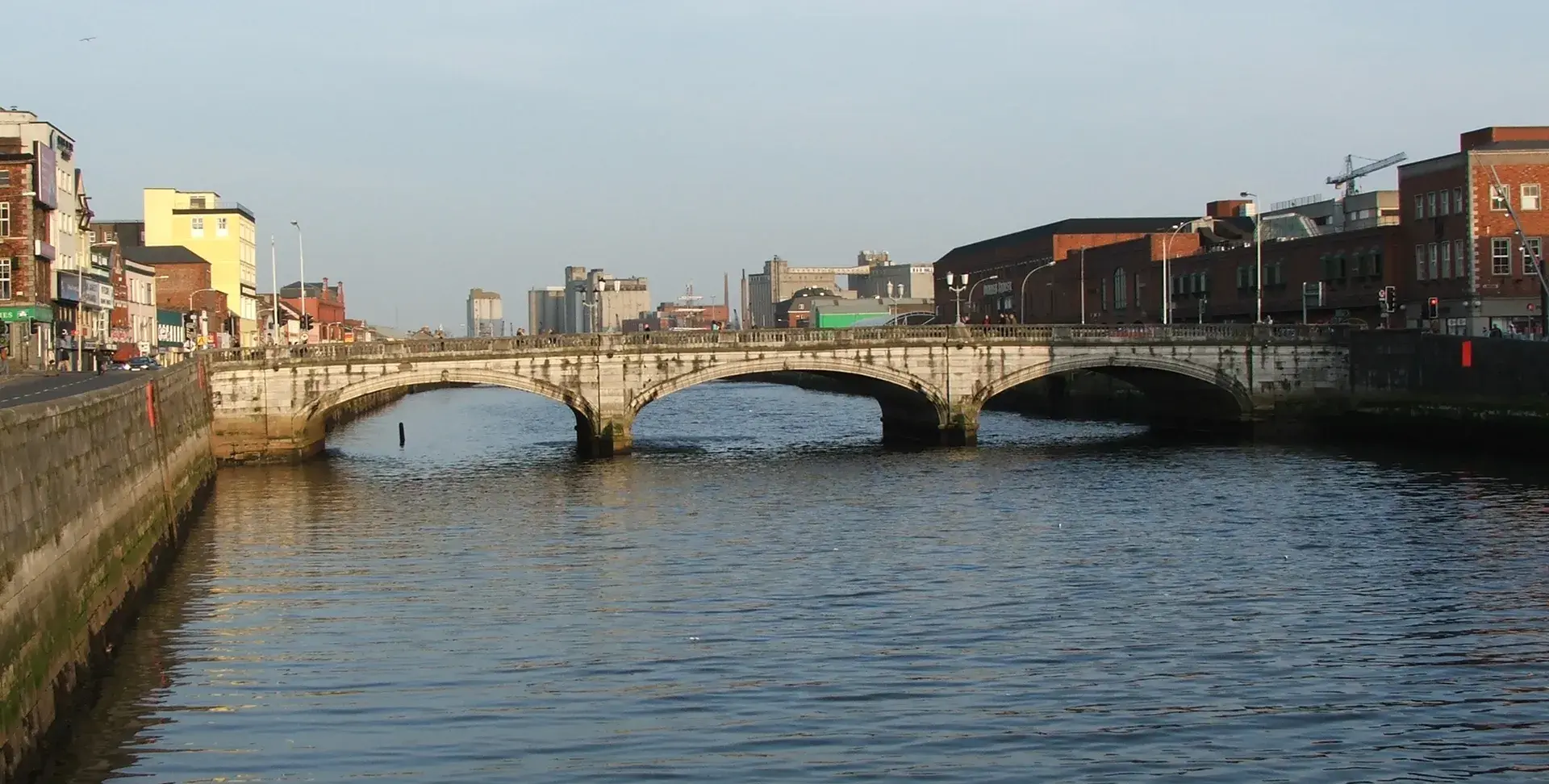
The street's origins lie in the water that once flowed here, with the original Hiberno-Norse settlement of Cork developing on its west bank. The channel was gradually filled in over centuries, a process completed by 1801. Its Irish name, Sráid an Chapaill Bhuí ('Street of the Yellow Horse'), recalls a statue of King George II erected in 1761. The statue was painted yellow to prevent degradation and was famously torn down by a mob in 1862, a symbol of shifting political tides.
Monuments and Milestones
The Grand Parade has long been a stage for Irish history. Where the "Yellow Horse" once stood, the mid-19th century Berwick Fountain, designed by Sir John Benson, now resides. More prominent is the National Monument, unveiled on St. Patrick's Day 1906. Designed by Dominick J. Coakley in an Early Irish Gothic style, it commemorates patriots from the rebellions of 1798, 1803, 1848, and 1867. The monument was funded by public subscription and unveiled by the famed Fenian Jeremiah O’Donovan Rossa.
A Center for Public Life
The street has served as a critical public forum. During the debates over the Anglo-Irish Treaty in 1922, both Michael Collins and Éamon de Valera addressed rallies here. During the War of Independence, the Shamrock Hotel at No. 31 operated as a vital safe house for IRA volunteers, with proprietress Mary O'Brien concealing weapons and sheltering wanted men. The street also hosted annual Corpus Christi celebrations from 1926 until 1941, when the temporary altar was moved to make way for bomb shelters.
The Grand Parade Today
Today, the Grand Parade is a bustling commercial and civic artery. It features retail shops, offices, Cork's main library, and Bishop Lucey Park. It also provides an entrance to the historic English Market. The street is the focus of the "Grand Parade Quarter" project, a major urban regeneration initiative set to create a new city library, redevelop the park, and improve public spaces for walking and cycling.
FAQ
Why is the Grand Parade's Irish name 'Street of the Yellow Horse'?
The name, Sráid an Chapaill Bhuí, refers to a statue of King George II that stood on the street from 1761. The statue was painted yellow to prevent degradation and was torn down by a crowd in 1862.
What is the National Monument on the Grand Parade?
The National Monument is a memorial unveiled in 1906 to honor Irish patriots who participated in the rebellions of 1798, 1803, 1848, and 1867. It was designed by Dominick J. Coakley in an Early Irish Gothic style.
What was the Grand Parade before it became a street?
Before it was a street, the Grand Parade was a channel of the River Lee. The area was progressively reclaimed and was fully established as a street by 1801.
What significant archaeological items have been found on the Grand Parade?
During excavations, a 13th-century amber paternoster, a type of prayer bead, was discovered. This rare find suggests Cork was a trade hub for Baltic amber during the medieval period.