Casa D'Amore: Alberobello's First Mortared House
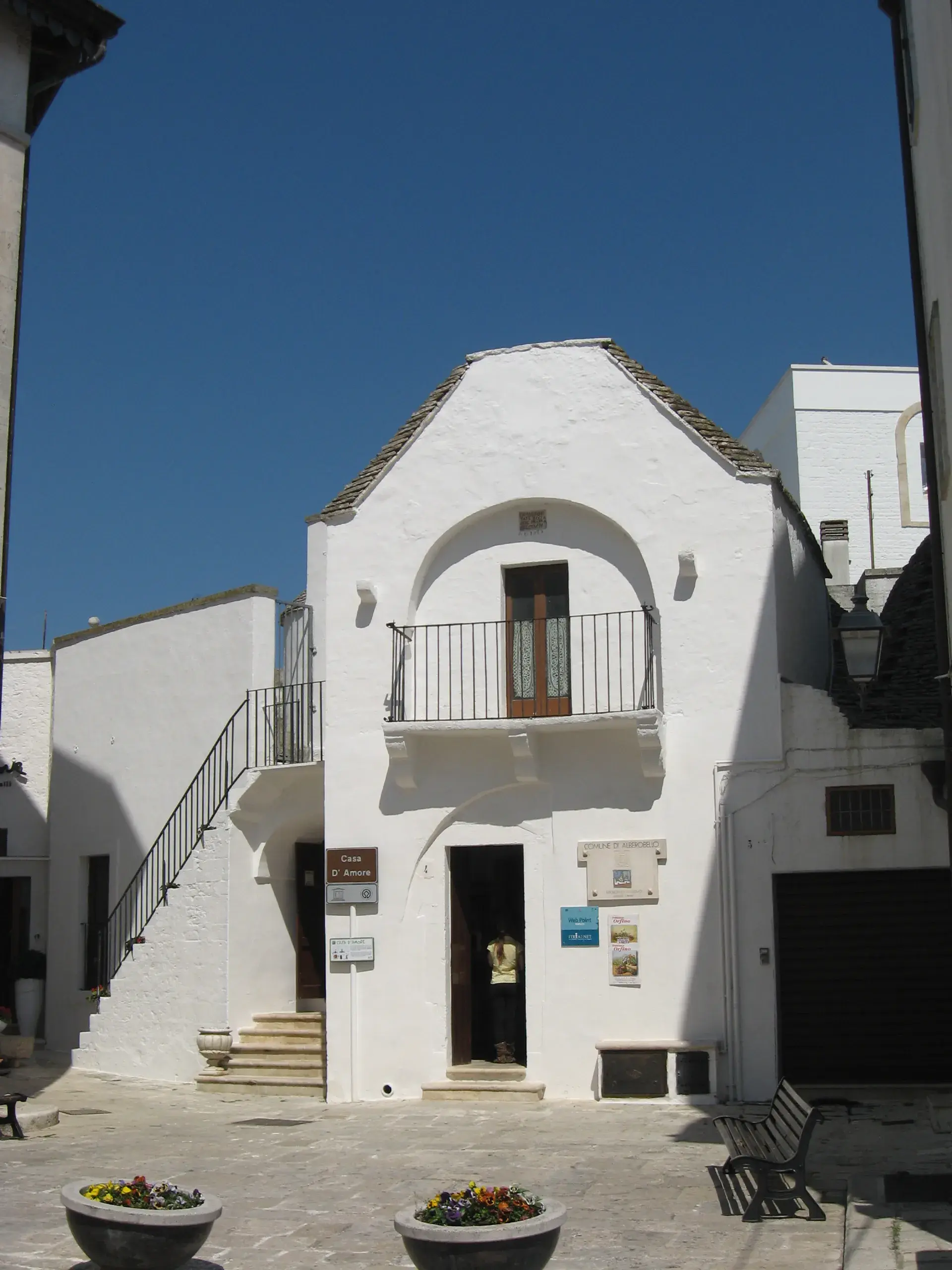
Located on Piazza Re Ferdinando IV di Borbone, Casa D'Amore represents a pivotal milestone in the architectural and political evolution of Alberobello. Built in 1797 by Francesco D’Amore, the two-story limestone home stands out as the very first building in the settlement officially constructed using mortar, lime, and terracotta rather than traditional dry-stone masonry.
Positioned between the older dry-stone trulli quarters of Rione Monti and Rione Aia Piccola and the later 19th-century civic core surrounding Piazza del Popolo, the house marks the physical transition from a feudal enclave into an emancipated town.
The Fall of the Feudal Building Ban
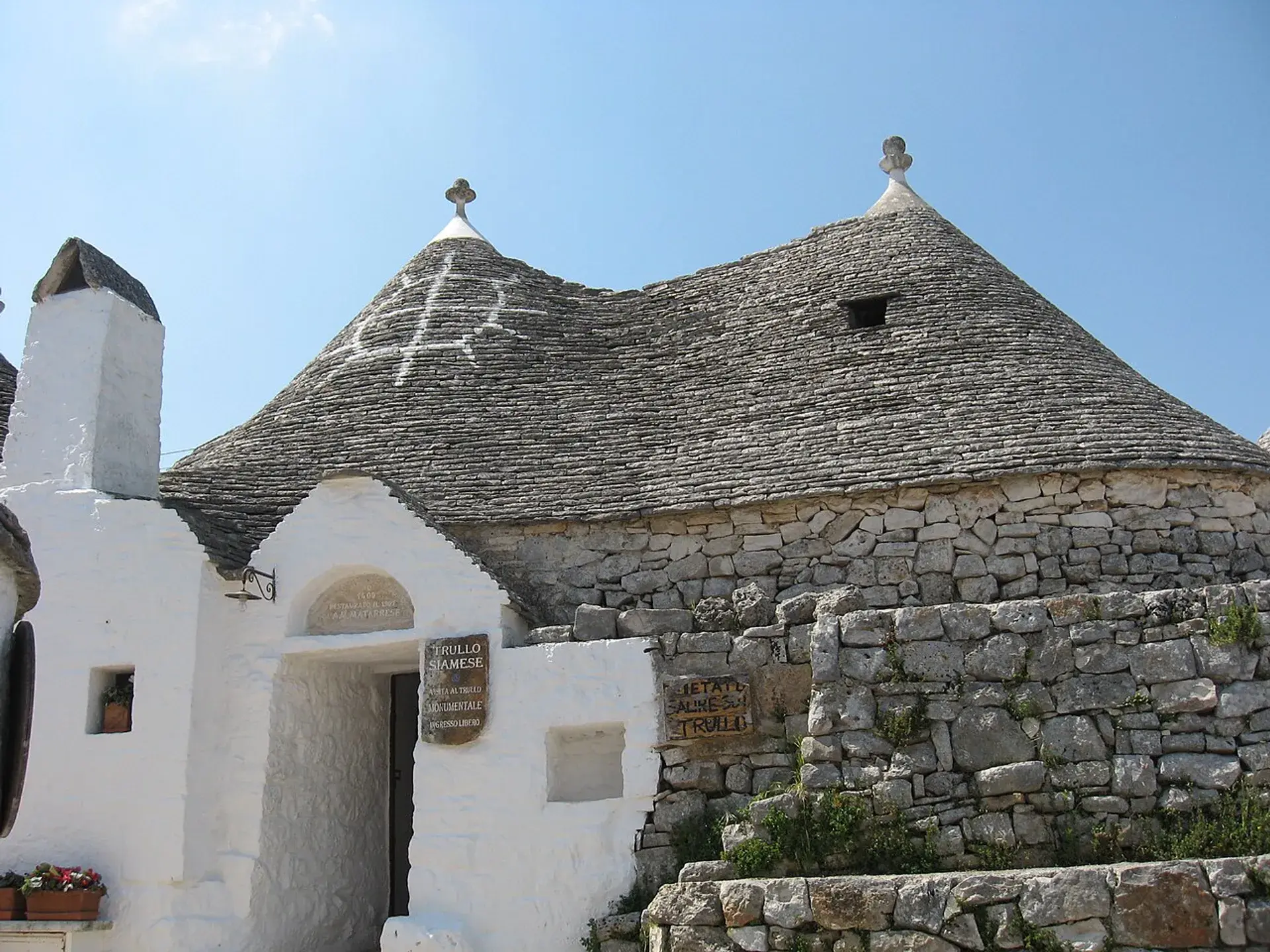
For generations, the Counts of Conversano from the Acquaviva d'Aragona family forbade the use of binding mortar across their domain. This mandate forced peasants to build exclusively with dry-stone techniques, giving rise to Alberobello's iconic conical trulli. The dry-stone method served a strategic financial purpose for the feudal lords: whenever royal tax inspectors from the Kingdom of Naples approached, the mortarless buildings could be rapidly dismantled to evade settlements taxes and then quickly rebuilt.
This feudal oppression ended on May 27, 1797, when King Ferdinand IV of Bourbon issued a royal decree officially recognizing Alberobello as a free royal town (città regia). The decree dissolved feudal vassalage and lifted the long-standing prohibition on mortar.
On June 22, 1797, while the town gathered to elect its first mayor, Francesco D'Amore began laying mortared stone for his new residence. The act was a bold public declaration of newfound civic liberty. D'Amore deliberately oriented the house directly toward the administrative residence of the former feudal overseers, ensuring that the agents could directly witness the permanent violation of the old feudal order.
Architecture and the Royal Inscription
Casa D'Amore is an architectural hybrid combining classical town-house styling with local craft traditions. The structure features a two-story limestone facade, an external staircase, and a projecting stone balcony. Instead of a standard conical ceiling, the ground-floor entrance hall is crowned with an elegant star vault (volta a stella).
Despite these advancements, local building methods remained deeply ingrained. Traditional stone-builders known as caseddari, who lacked formal architectural training, incorporated interior conical elements into the layout while adapting their skills to mortar. The mortar itself was crafted locally by mixing lime with vuolo, a distinctive regional red soil.
Carved directly beneath the arch of the upper balcony is a prominent Latin epigraph commemorating the historic moment:
"EX AUCTORITATE REGIA - HOC PRIMUM ERECTUM - A.D. 1797" (Erected first by royal authority - A.D. 1797)
Civic Role and Modern Museum Network
Shortly after its completion, the building served as Alberobello's first municipal seat (primo municipio). Its historical and structural significance led to its designation as an Italian National Monument in 1930, and it was later included in Alberobello's UNESCO World Heritage listing in 1996.
Despite the name "Casa D'Amore" translating literally to "House of Love"—often sparking romantic legends among travelers—the property derives its name entirely from Francesco D'Amore. Today, the monument forms part of the municipal museum network (Polo Museale di Alberobello). It operates as a municipal tourist information office and an exhibition venue for temporary art and historical displays.
FAQ
Why is the building called Casa D'Amore?
Although the Italian phrase translates literally to "House of Love," the building is simply named after Francesco D'Amore, the local resident who built and owned the house in 1797.
Why was Casa D'Amore the first house in Alberobello built with mortar?
The Counts of Conversano had banned mortar for centuries so homes could be torn down quickly to evade royal property taxes. On May 27, 1797, King Ferdinand IV declared Alberobello a free royal town, ending the mortar ban and allowing permanent construction.
What does the Latin inscription on the facade say?
Carved beneath the balcony, the Latin epigraph reads "EX AUCTORITATE REGIA - HOC PRIMUM ERECTUM - A.D. 1797," which translates to "Erected first by royal authority - A.D. 1797."
How is Casa D'Amore used today?
Casa D'Amore is part of the Polo Museale di Alberobello museum network, functioning as a tourist information office and an exhibition space for temporary art and history displays.