Trulli of Rione Monti: Alberobello's Stone District
Architectural Design and Dry-Stone Construction
Rione Monti is the largest trulli district in Alberobello, encompassing approximately 1,030 conical stone buildings arranged across an uphill slope. The structures were erected using a prehistoric dry-stone technique (a secco), built entirely without mortar or cement. Each trullo features double-skinned perimeter walls filled with loose rubble, supporting an inner vaulted dome topped by an outer cone of overlapping limestone slabs called chianche or chiancarelle. Sloping eaves along the roofline channel rainwater into internal cisterns excavated directly into the limestone bedrock beneath the floors.
The dry-stone method also dictates the indoor environment of the district. The thick, windowless walls and corbelled ceilings retain dense cool air, producing a significant drop in temperature when transitioning into the interior from the sun-warmed streets.
Feudal Evasion and Historical Origins
The architectural landscape of Rione Monti originated as an evasion of feudal taxes. Under the 15th-century edict Pragmatica de Baronibus, the Kingdom of Naples collected heavy levies from feudal lords establishing new permanent towns. In the 1630s and 1640s, Count Giangirolamo II Acquaviva d'Aragona ordered settling agricultural laborers to build strictly without mortar.
This construction restriction allowed dwellings to be quickly dismantled ahead of royal tax inspections. Historical accounts indicate that peasants could bring down a trullo cone within hours by removing a specific key stone, presenting royal inspectors with what appeared to be an ordinary heap of limestone rubble rather than a taxable settlement. Alberobello remained under feudal dominion until King Ferdinand IV of Naples granted royal emancipation in 1797, which legally permitted builders to use mortar. The district was declared an Italian National Monument between 1928 and 1930 and gained inscription as a UNESCO World Heritage Site in 1996 under criteria (iii), (iv), and (v).
Symbols, Pinnacles, and Local Curiosities
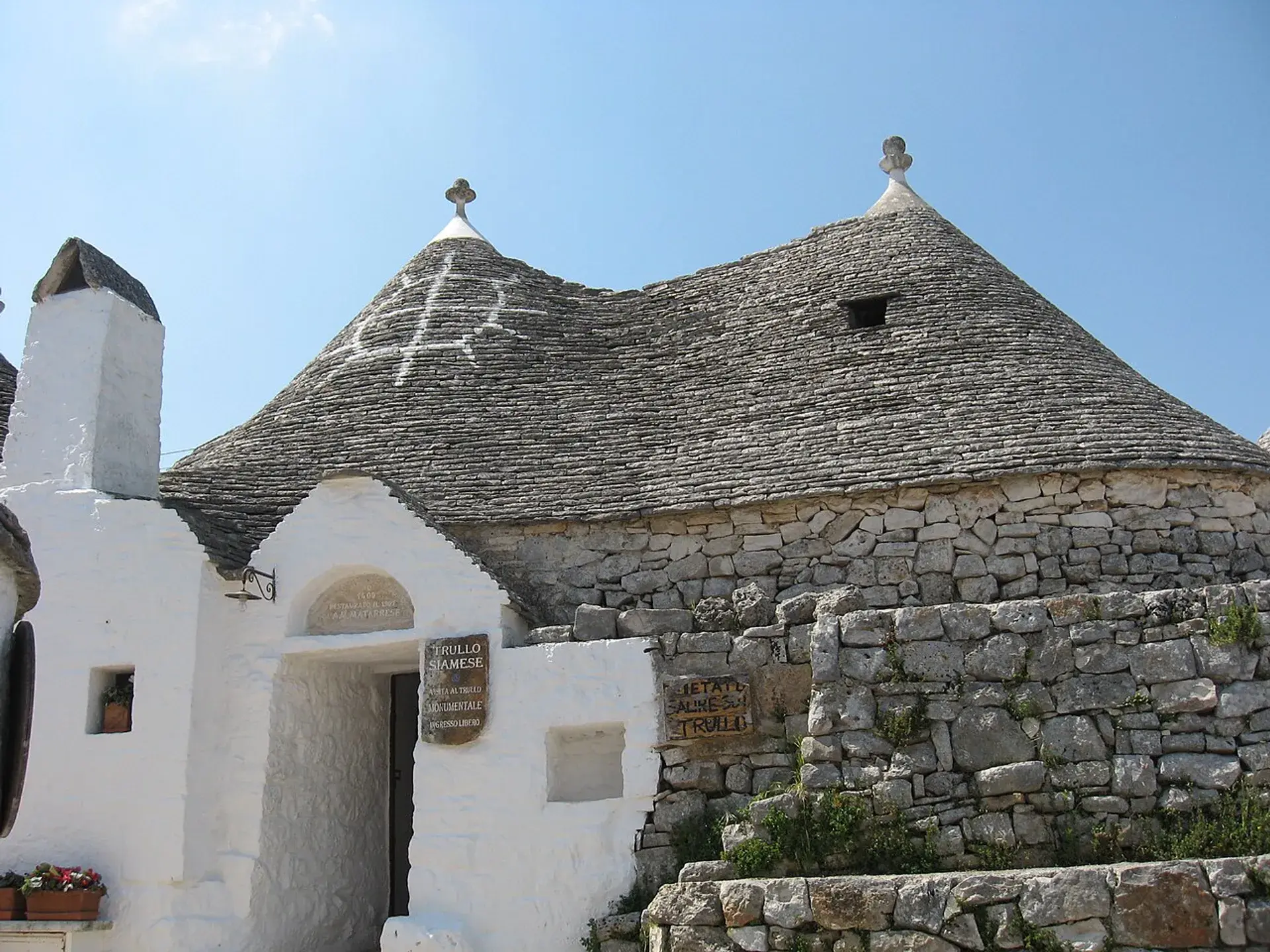
The limestone cones of Rione Monti display distinctive roof features. Many roadway-facing roofs are painted with symbols using whitewash or lime milk, representing a mixture of Christian crosses, astronomical signs, and ancient apotropaic charms intended to safeguard the household. Carved stone pinnacles (pinnacoli) crowning the roof cones served as individual signatures for master builders (maestri trullari) and were traditionally believed to ward off the evil eye.
Among the district's notable landmarks is the Siamese Trullo (Trullo Siamese). Local lore attributes the structure's layout to two brothers who shared a double-coned home until a feud over the same woman divided them. Following the dispute, the dwelling was partitioned internally and equipped with two separate entrances opening onto opposite streets.
Modern District and Contemporary Use
Rione Monti functions as the primary commercial and visitor center of Alberobello. Located across the modern valley and Largo Martellotta from Rione Aia Piccola—a preserved residential neighborhood of roughly 400 trulli—Rione Monti is oriented around retail and tourism. Key pedestrian corridors such as Via Monte Pertica and Via Monte San Michele feature accessible rooftop viewing terraces.
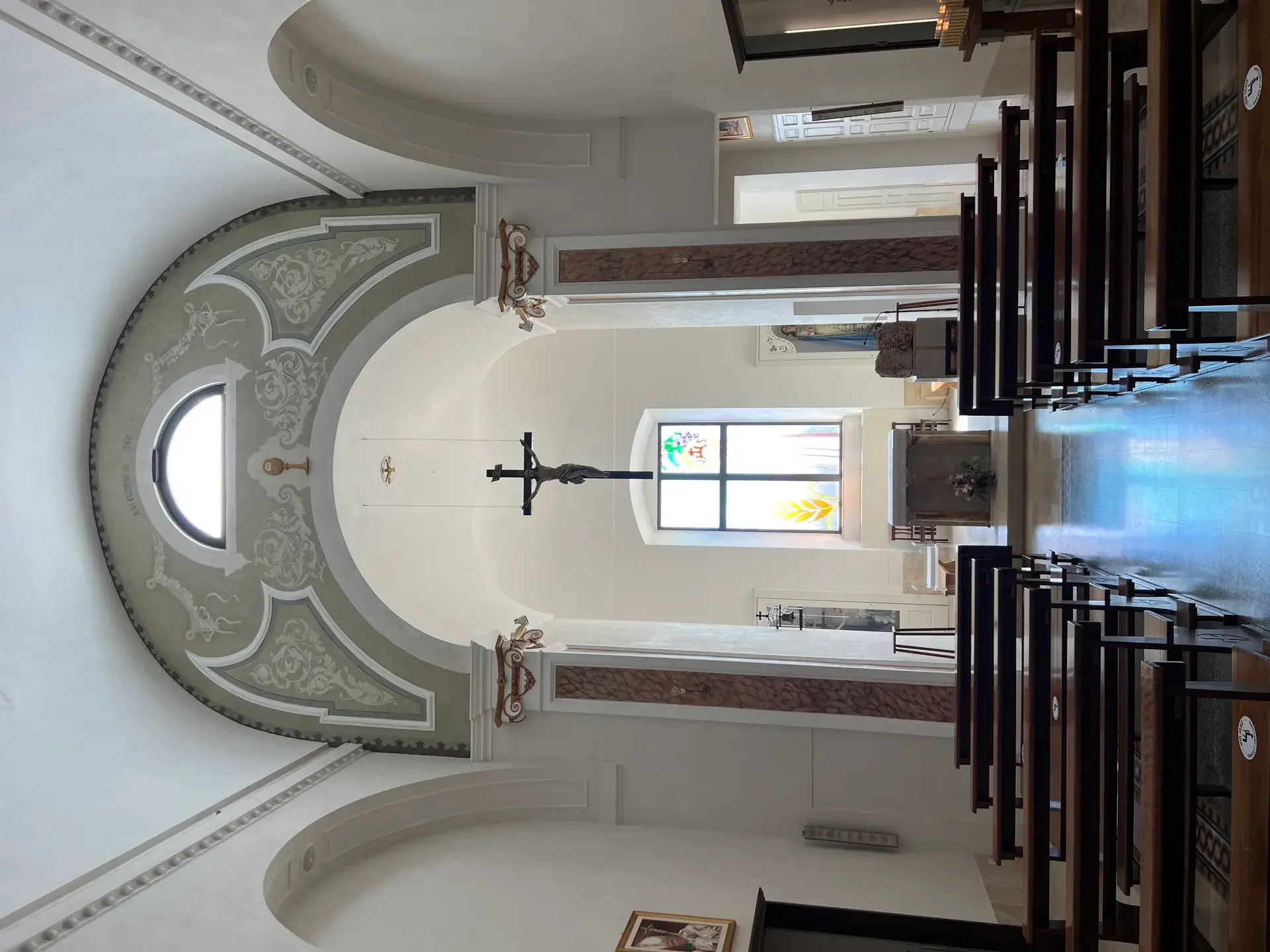
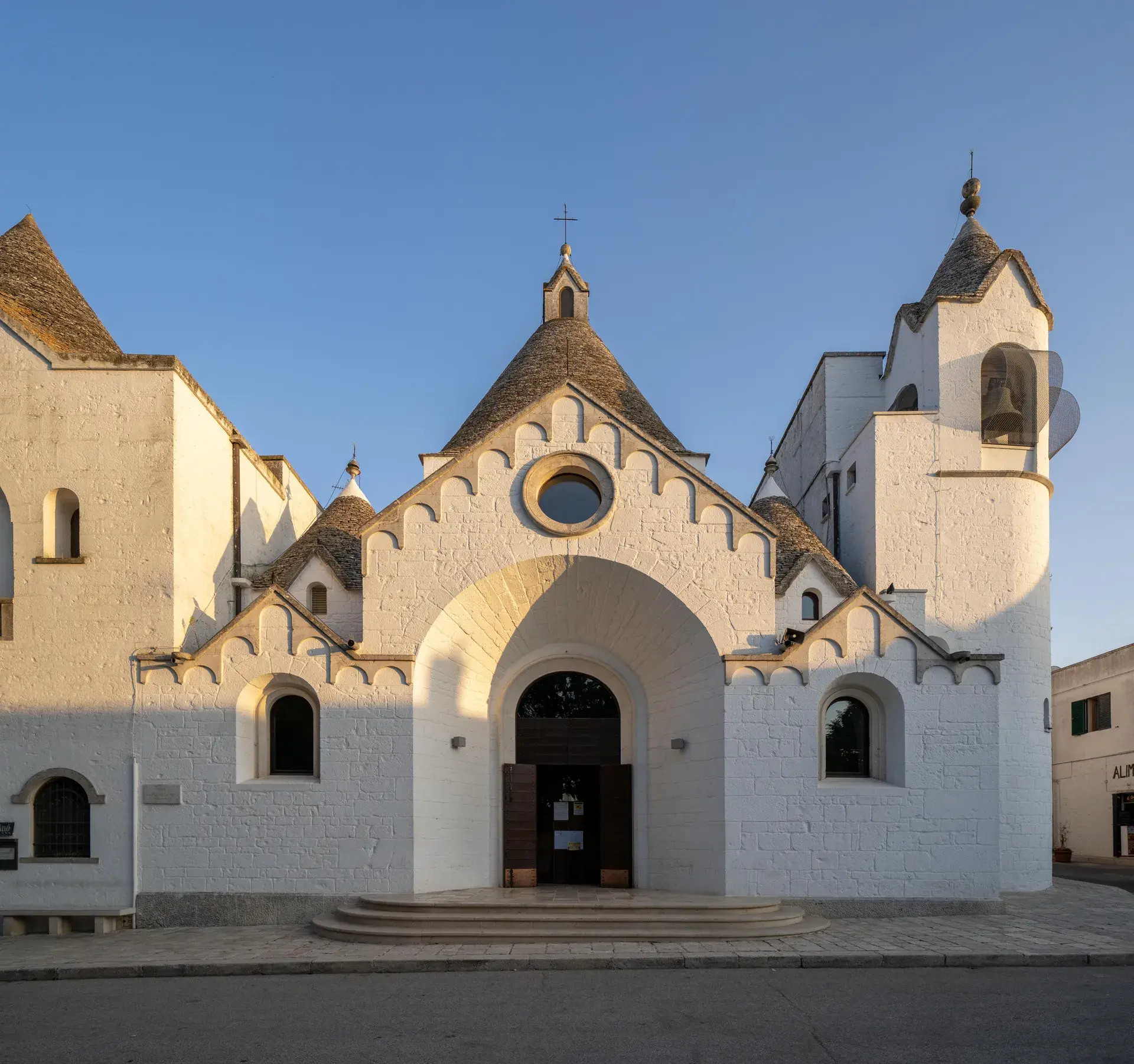
More than 1,000 trulli currently operate as artisan workshops, textile and weaving studios, ceramics outlets, regional enoteche, souvenir stores, and restaurants. At the highest point of the district stands the Chiesa di Sant'Antonio da Padova. Built between 1926 and 1927 in the traditional trullo style to comply with national monument regulations, it continues to serve as an active Roman Catholic parish church.
FAQ
Why were the trulli in Rione Monti built without mortar?
They were constructed without mortar during the 17th century under the orders of Count Giangirolamo II Acquaviva d'Aragona. The dry-stone construction allowed peasants to rapidly dismantle the buildings before royal inspectors arrived, avoiding taxes levied on permanent settlements by the Kingdom of Naples.
What do the painted white symbols on the trulli cones mean?
The symbols painted on the roof cones with lime milk include Christian emblems, astronomical figures, and ancient apotropaic signs intended to bring protection to the home.
What is the difference between Rione Monti and Rione Aia Piccola?
Separated by Largo Martellotta, Rione Monti is Alberobello's commercial hub containing over 1,000 trulli used for shops, workshops, and restaurants, whereas Rione Aia Piccola is a quieter residential district of around 400 trulli preserved from retail development.