Ascoli Piceno Cathedral: The Duomo of Sant'Emidio
The Religious Anchor of Piazza Arringo
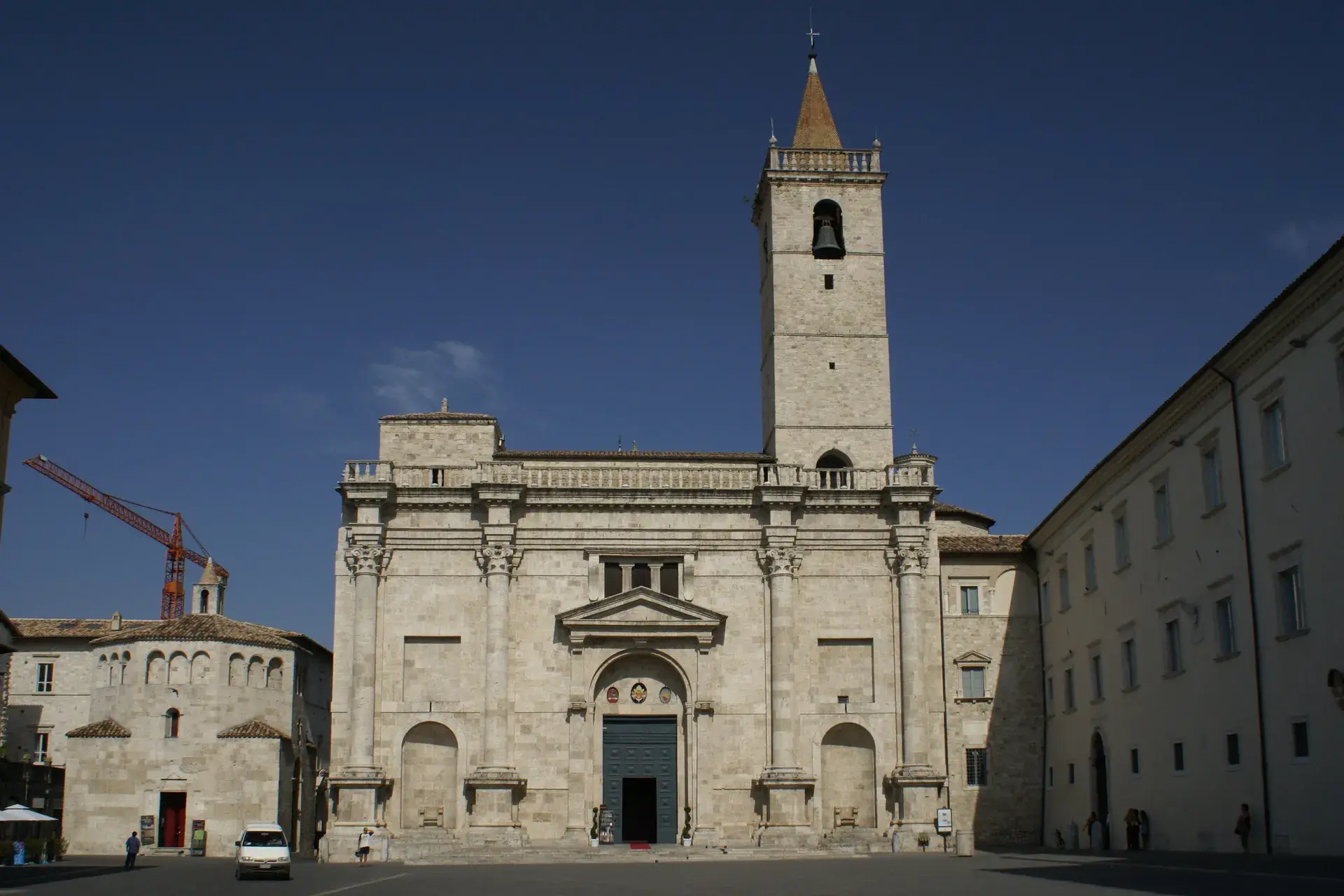
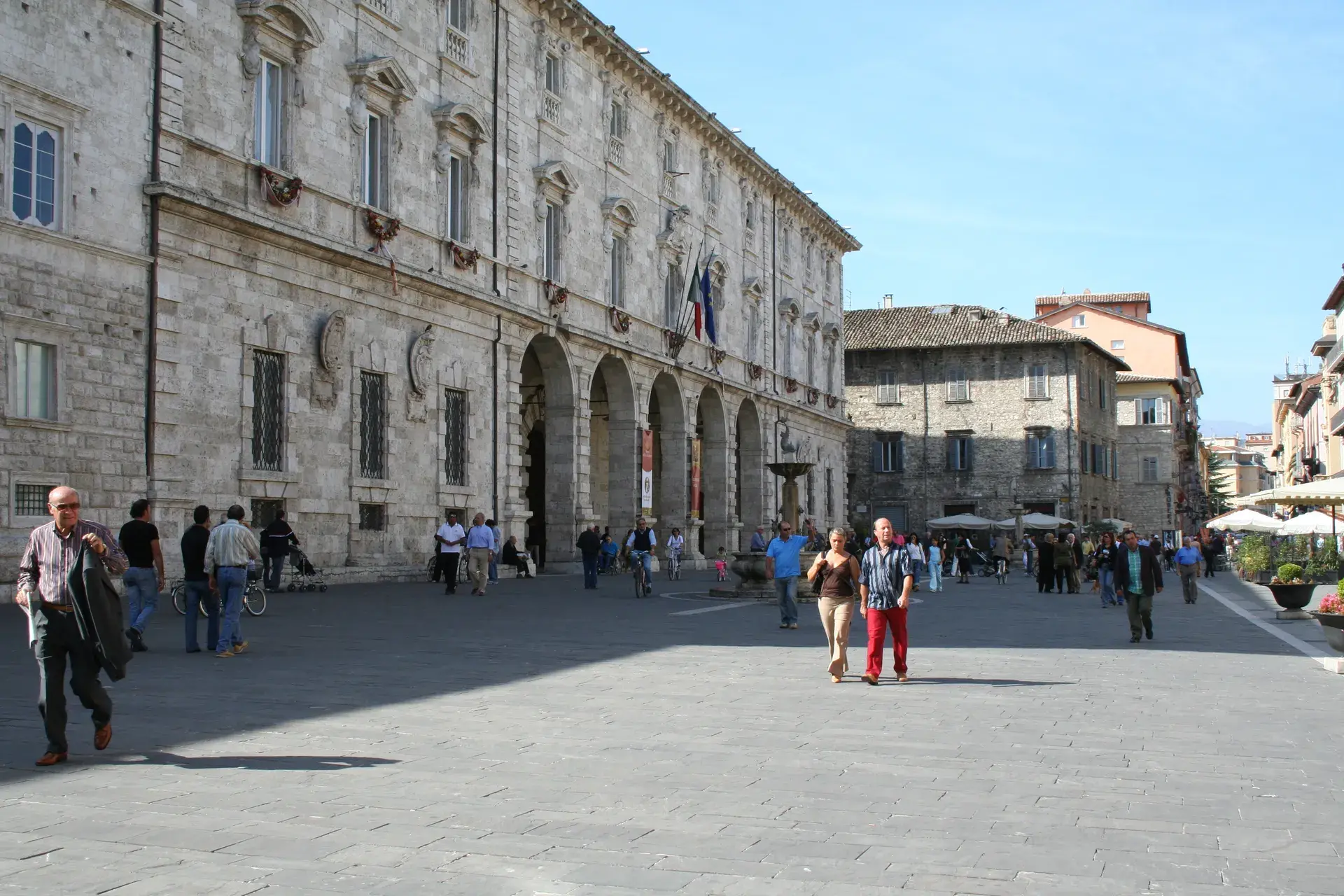
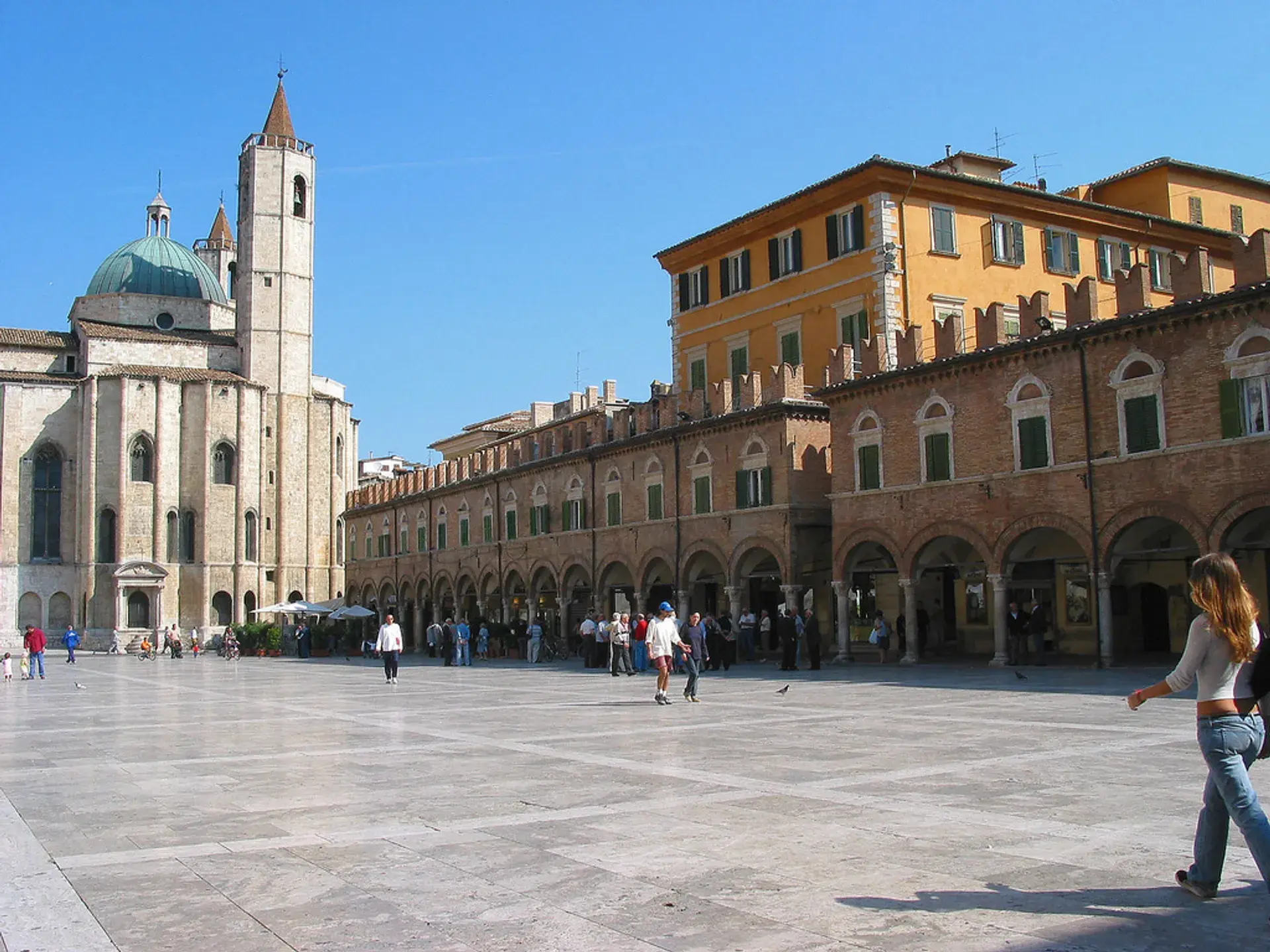
The Ascoli Piceno Cathedral, officially dedicated to Santa Maria Madre di Dio and Sant'Emidio, dominates the eastern end of Piazza Arringo. Formed from local Tronto valley travertine, the cathedral stands opposite the Palazzo dell'Arengo and alongside the octagonal Romanesque Baptistery of San Giovanni. Historically, this precinct served as the ecclesiastical center and public assembly grounds of Ascoli Piceno, balancing the secular and mercantile activity centered at Piazza del Popolo.
Constructed over the remnants of an ancient Roman civil basilica, the church evolved over multiple centuries. In the mid-11th century, Bishop Bernardo II transferred the relics of Saint Emidio into the crypt. Pope Leo IX formalized this translation through a papal bull, incorporating the martyr's name into the cathedral's official Marian dedication.
Renaissance Facade and Exterior Architecture
The monumental travertine facade was designed between 1529 and 1539 by the Renaissance architect and painter Cola dell'Amatrice. The classical composition is framed by two Romanesque towers, though the tower on the left remains unfinished. A decorative balustrade was later added across the top of the facade in 1592.
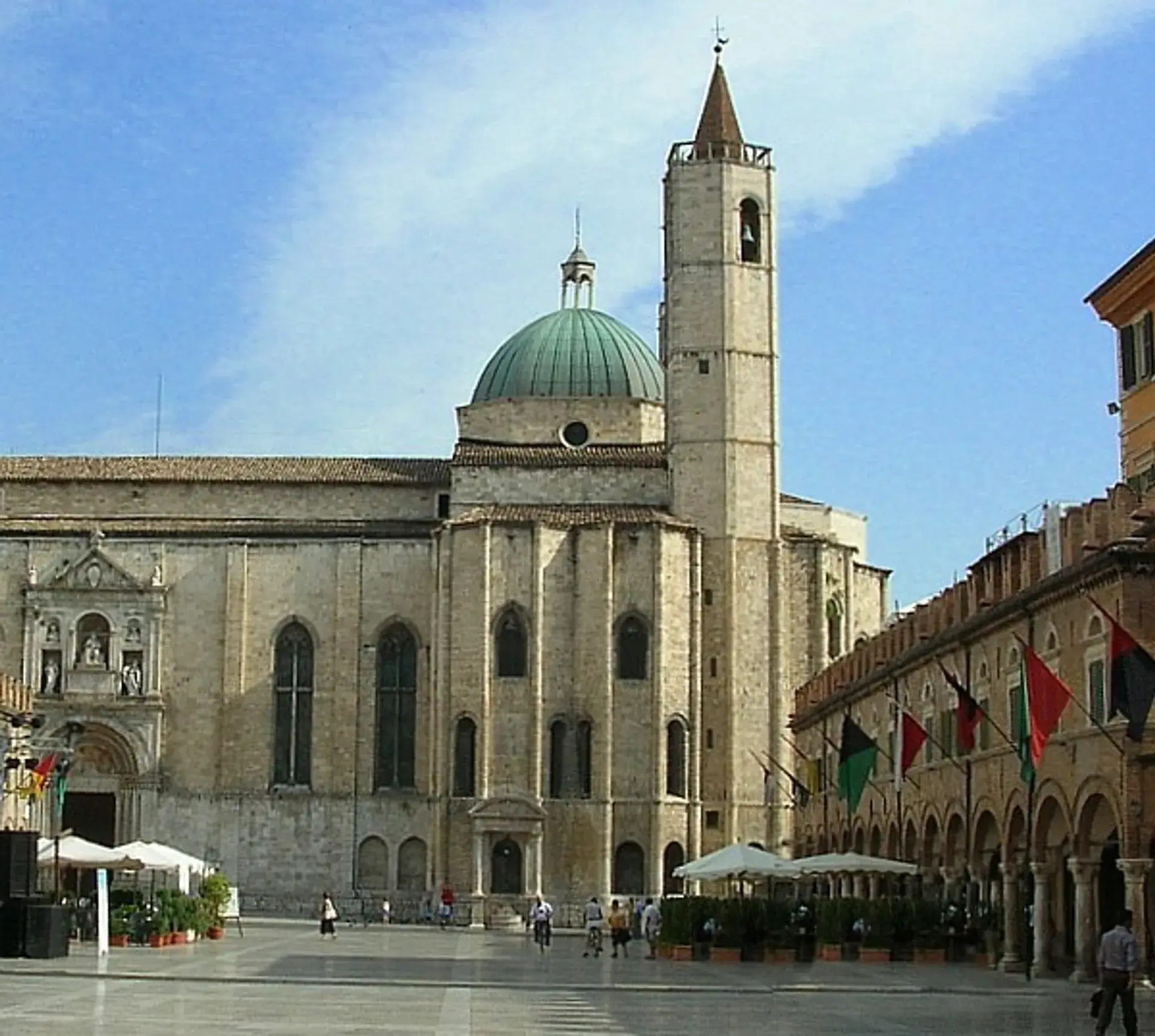
The exterior masonry also preserves humanist historical markers. Along the side wall, the doorway known as the Porta della Musa takes its name from an ancient Latin humanist epigram engraved directly into the adjacent stone.
Carlo Crivelli's Masterwork and the Nave
The upper church features an expansive nave adorned between 1884 and 1894 by Cesare Mariani, who painted extensive fresco cycles across the nave and dome drum detailing the missionary life and martyrdom of Sant'Emidio.
In the south aisle, the Chapel of the Blessed Sacrament holds one of the region's most celebrated Renaissance treasures: the Sant'Emidio Polyptych. Painted in 1473 by Venetian master Carlo Crivelli, the altarpiece remains entirely intact within its original carved wooden frame, making it a rare surviving example of Crivelli's complete multi-panel works.
The Crypt and 20th-Century War Mosaics
Beneath the main floor lies the 11th-century crypt, an atmospheric space supported by 63 columns consisting of Romanesque travertine and polished red Verona marble shafts. Low devotional lighting illuminates the subterranean chamber, casting warm reflections across the stonework and contrasting with the dry, pale travertine of the exterior.
The crypt houses a reused fourth-century Roman marble sarcophagus containing the relics of Sant'Emidio. In the early 18th century, architect Giuseppe Giosafatti altered the crypt by elevating its central ceiling, while his son, sculptor Lazzaro Giosafatti, added the marble group depicting Saint Emidio baptizing Polisia.
At the crypt's apse, visitors encounter an unexpected modern decorative program. Installed in 1954 by the Vatican Mosaic Studio from designs by Pietro Gaudenzi, these mosaics illustrate scenes from World War II. They document local experiences between 1943 and 1944, including Ascoli residents enduring wartime bombardments and joining penitential processions to seek Sant'Emidio's protection.
Patron Saint Against Earthquakes
Sant'Emidio is venerated internationally as the patron saint invoked against earthquakes, traditionally portrayed holding up fractured walls or leaning towers. This reputation was cemented in early 1703, when a sequence of severe seismic shocks flattened nearby Apennine settlements, including Norcia and L'Aquila. Ascoli Piceno suffered negligible damage, an escape the populace credited entirely to the saint's intercession. The event led neighboring communities to formally petition for Ascoli citizenship in hopes of receiving the martyr's protection.
Veneration of Sant'Emidio subsequently crossed the Atlantic; following the 1906 San Francisco earthquake, Italian immigrant communities in North America dedicated altars and churches to the saint. In Ascoli Piceno, his veneration remains central to local civic life, culminating annually in patronal celebrations from late July through August 5 with religious liturgies, crypt visits, and civic processions.
FAQ
What significant artwork is housed inside the Ascoli Piceno Cathedral?
The Chapel of the Blessed Sacrament contains the Sant'Emidio Polyptych, painted by Carlo Crivelli in 1473 and preserved in its original carved wooden frame.
Why is Sant'Emidio invoked as a protector against earthquakes?
Sant'Emidio gained renown after Ascoli Piceno escaped severe damage during the powerful 1703 Apennine earthquakes that devastated neighboring cities such as Norcia and L'Aquila.
What is unique about the mosaics in the cathedral's crypt?
Installed in 1954 by the Vatican Mosaic Studio, the crypt apse mosaics depict modern World War II history from 1943 to 1944, including citizen processions and air bombardments, rather than ancient religious scenes.
Who designed the facade of the cathedral?
The travertine facade was designed between 1529 and 1539 by Renaissance architect and painter Cola dell'Amatrice.