Chiesa di San Francesco in Ascoli Piceno
Romanesque-Gothic Foundations at the Roman Crossroads
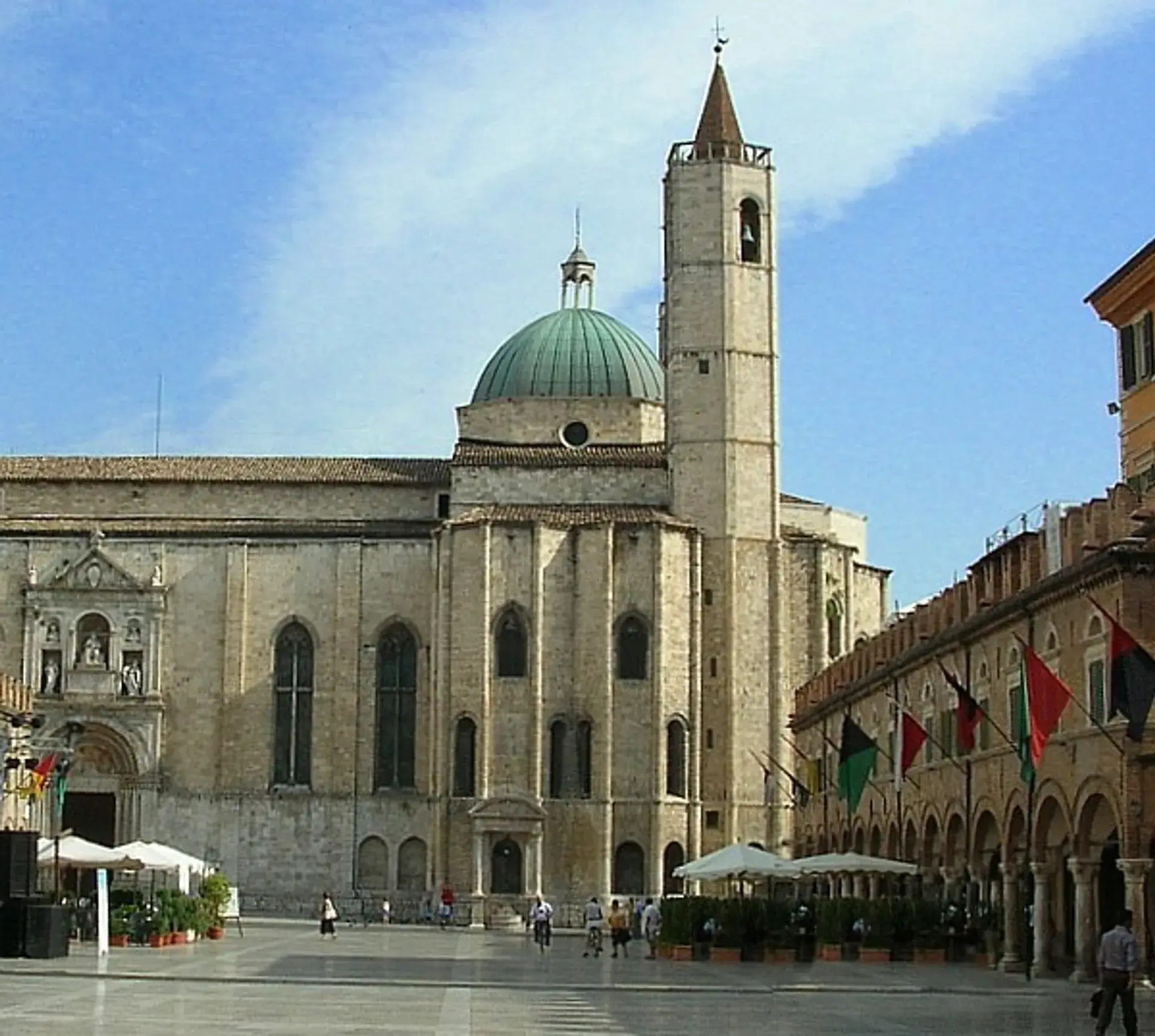
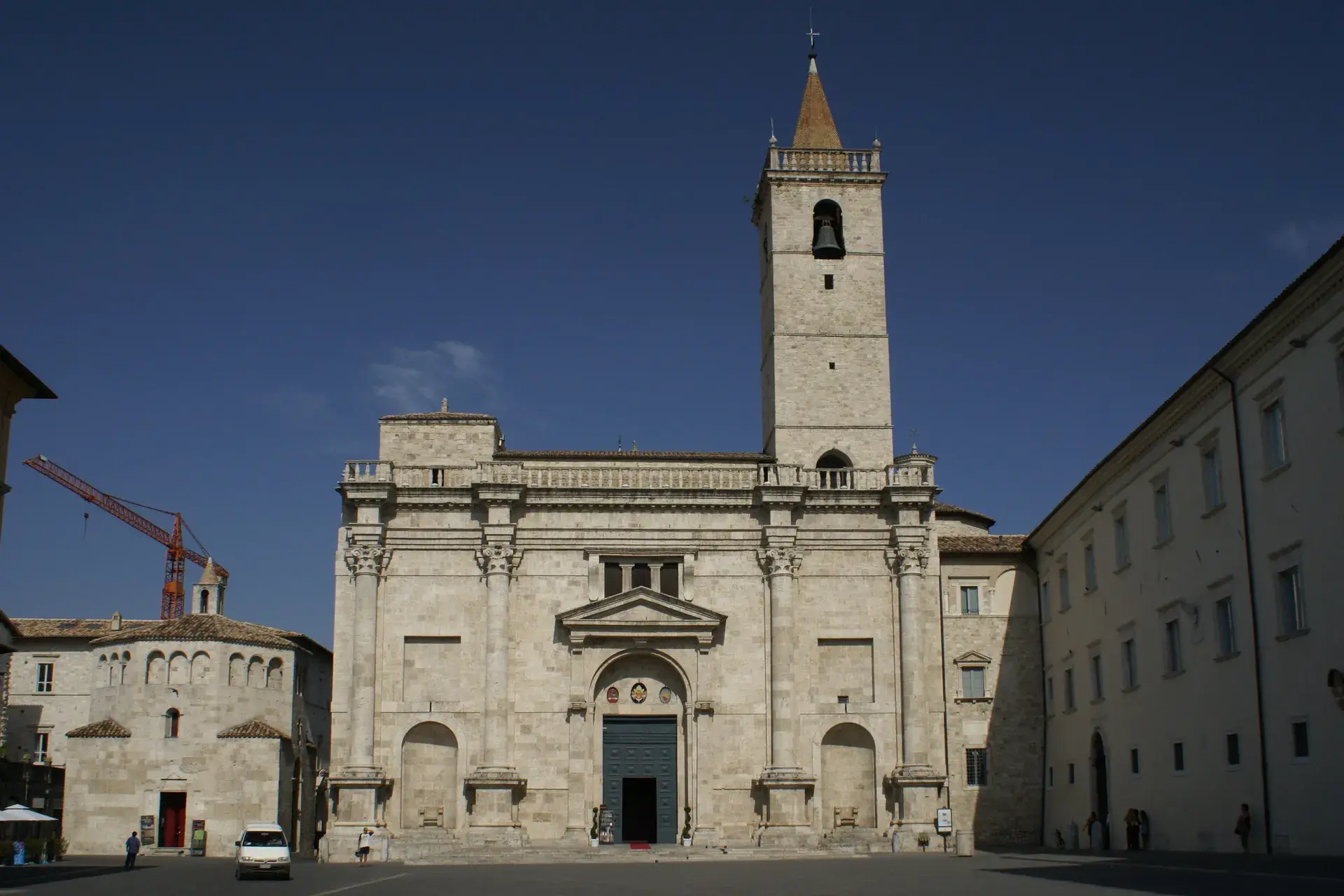
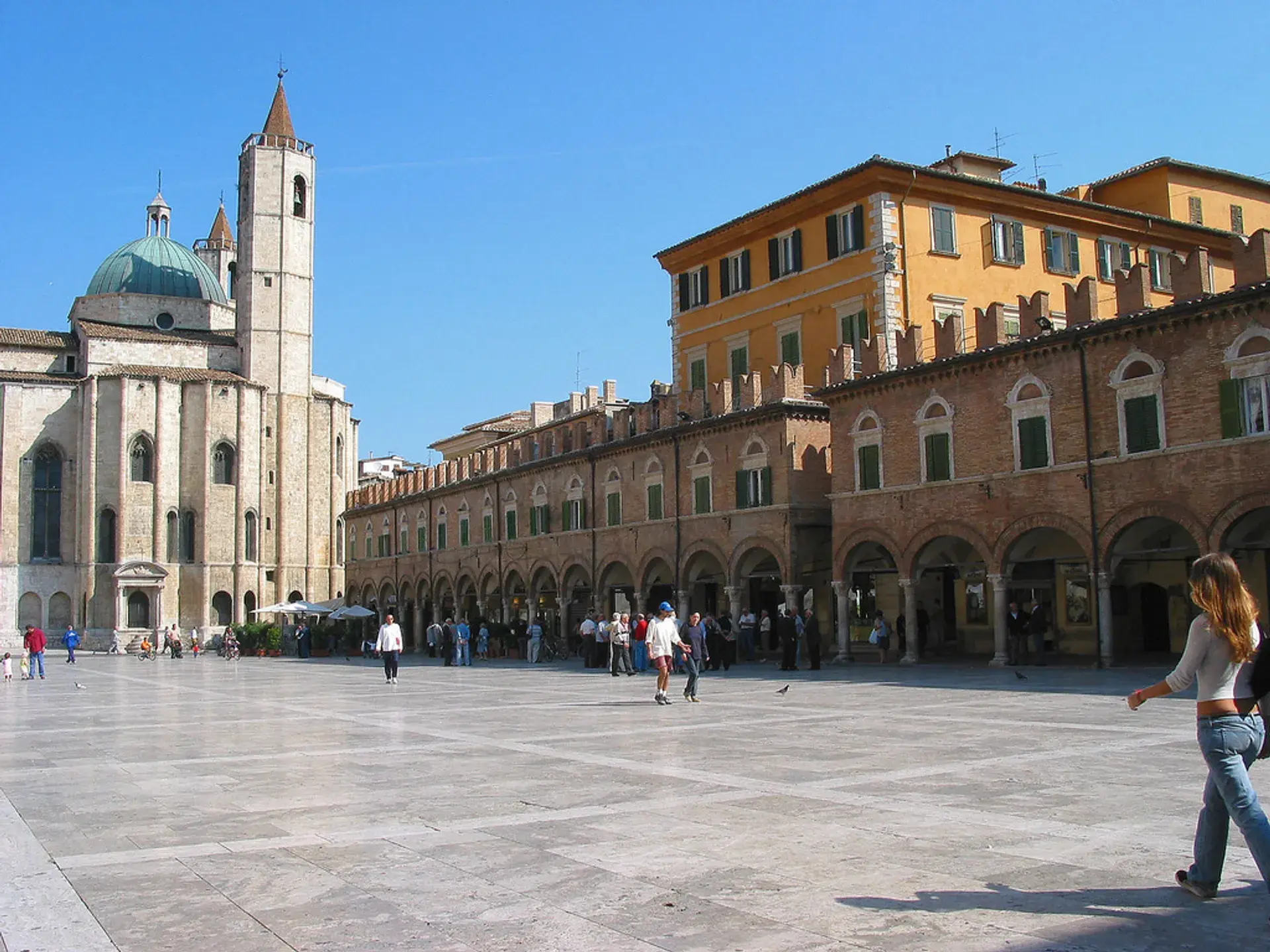
The Chiesa di San Francesco anchors the northern edge of Piazza del Popolo in Ascoli Piceno, situated at the ancient intersection of the Roman Cardo (Via del Trivio) and Decumanus (Corso Mazzini). Constructed from pale local travertine, the church's origins are traditionally linked to a preaching mission by Saint Francis of Assisi in 1215. Building began in the mid-13th century, culminating in its consecration in 1371, while the cross-vaulting and central dome were completed during the 16th century.
While the church's elongated southern wall frames Piazza del Popolo, the main western entrance faces Via del Trivio. On the eastern exterior, seven polygonal apses are dramatically flanked by two slender hexagonal bell towers, creating one of the most distinctive Romanesque-Gothic silhouettes in central Italy.
The Loggia dei Mercanti and Structural Adaptations
Directly attached to the southern flank of the church stands the Loggia dei Mercanti, an elegant five-bay Renaissance portico resting on Corinthian columns. Commissioned by the local wool merchants guild (Corporazione dei Lanai) to serve as a covered commercial exchange, construction began in 1508 under Bernardino di Pietro da Carona and was finalized in 1513 by Francesco Rubei da Villagona.
The weight of the loggia's cross vaults soon led to structural instability in 1519. To secure the building, stonecutters and engineers added low base walls between the column plinths and installed sturdy iron tie-rods anchored directly into the church's travertine perimeter. Decorative brick Ghibelline swallowtail merlons were set along the roofline, visually harmonizing the structure with the civic square.
Historic Portals and Curiosities
Several historic details mark the exterior of San Francesco. Above the Gothic side portal facing Piazza del Popolo rests a 1510 monument with a seated statue of Pope Julius II. Ascoli's civic council commissioned this sculpture in gratitude after the pontiff intervened to banish the tyrannical Guiderocchi family from the city.
Adjacent to the church wall on the piazza stands a classical travertine aedicula built in 1639 by Silvio Giosafatti. Historically, this shrine served as a solemn milestone where condemned prisoners stopped to offer a final prayer before being marched down Via Ancaria to the gallows.
At the western portal on Via del Trivio, the entrance is framed by slender travertine shafts known as musical columns (colonne musicali). When struck or rubbed, these resonant stones produce distinct acoustic pitches. Worn grooves remain visible across the shafts, carved into the stone by centuries of churchgoers testing the resonance with their keys.
Civic Standards and Modern Use
The integration of religious space and civic commerce is also preserved on the exterior wall beneath the Loggia dei Mercanti. Embedded in the stone is an official municipal tablet dated October 3, 1568. It displays carved templates for standard building components—such as tiles and bricks—alongside a 63-centimeter linear measurement called the brazolaro, installed to prevent vendor fraud under threat of a 10-scudi fine.
Today, the Chiesa di San Francesco remains an active Catholic church and public monumental landmark. The Loggia dei Mercanti serves as a covered pedestrian link connecting Corso Mazzini to Piazza del Popolo, while the adjacent Great Cloister (Chiostro Maggiore) hosts the city’s daily produce market, known locally as Piazza della Verdura.
FAQ
What are the musical columns of the Chiesa di San Francesco?
The musical columns are slender travertine shafts flanking the western entrance on Via del Trivio that produce resonant musical pitches when rubbed or struck. Centuries of people rubbing keys against them have left noticeable grooves in the stone.
What is the Loggia dei Mercanti?
The Loggia dei Mercanti is a five-bay Renaissance portico built directly against the southern flank of the church between 1508 and 1513. It was commissioned by the wool merchants guild as a covered trading venue.
What is the stone tablet displayed beneath the Loggia dei Mercanti?
Dated October 3, 1568, the carved travertine plaque outlines municipal standard measurements for bricks and tiles alongside a 63-centimeter linear scale called the brazolaro, designed to curb trade fraud under penalty of a fine.