Palazzo dell'Arengo: Civic Seat of Ascoli Piceno
Origins and Civic Architecture
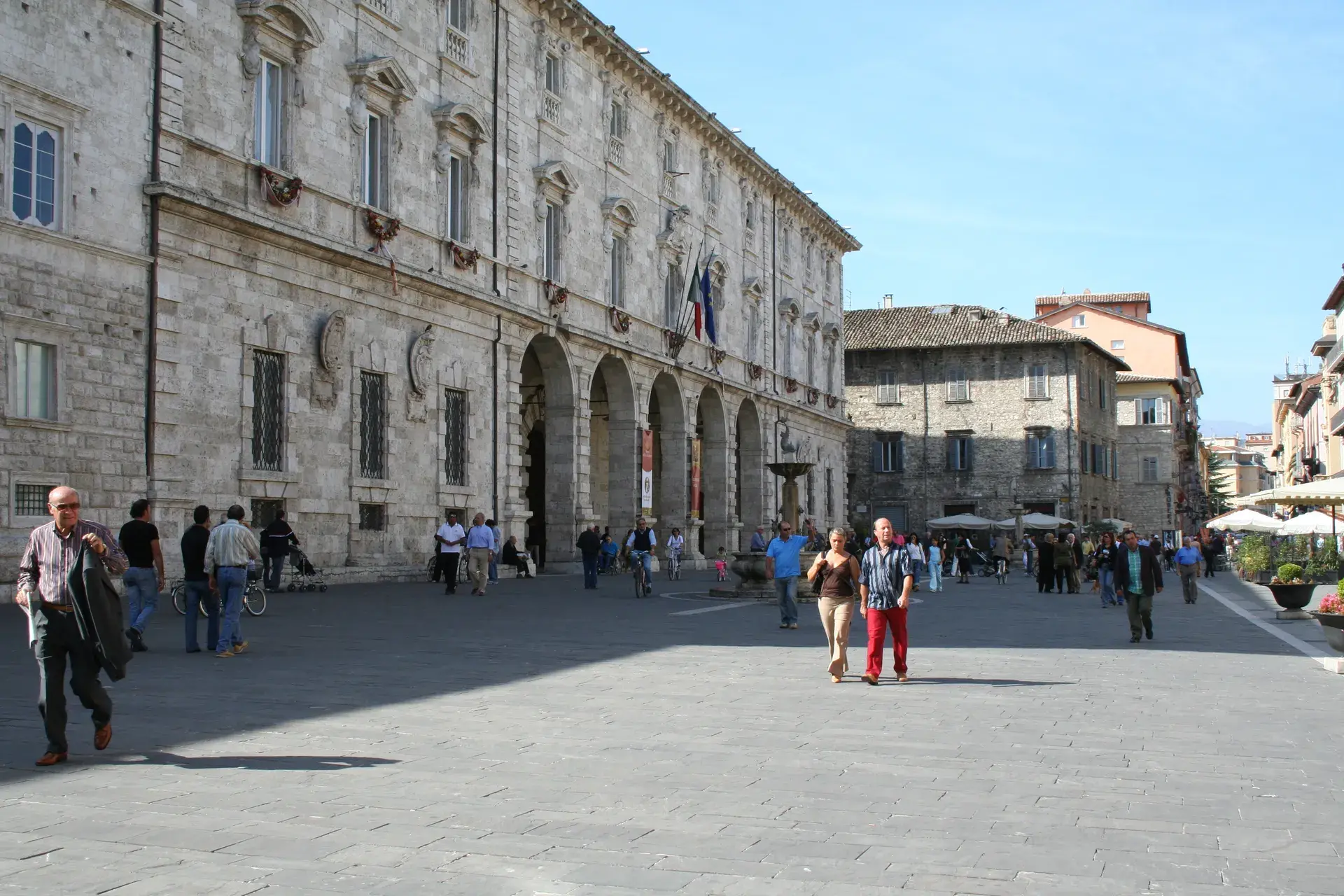
Palazzo dell'Arengo, historically documented as the Palatium Aringhi, stands as one of the defining architectural anchors of Ascoli Piceno. Originating in the late 12th to 13th century, the palace was constructed as an enduring center of communal authority. Like the rest of the perimeter around Piazza Arringo, the structure is shaped predominantly from local pale travertine stone, reflecting the distinct masonry that characterizes the historic city.
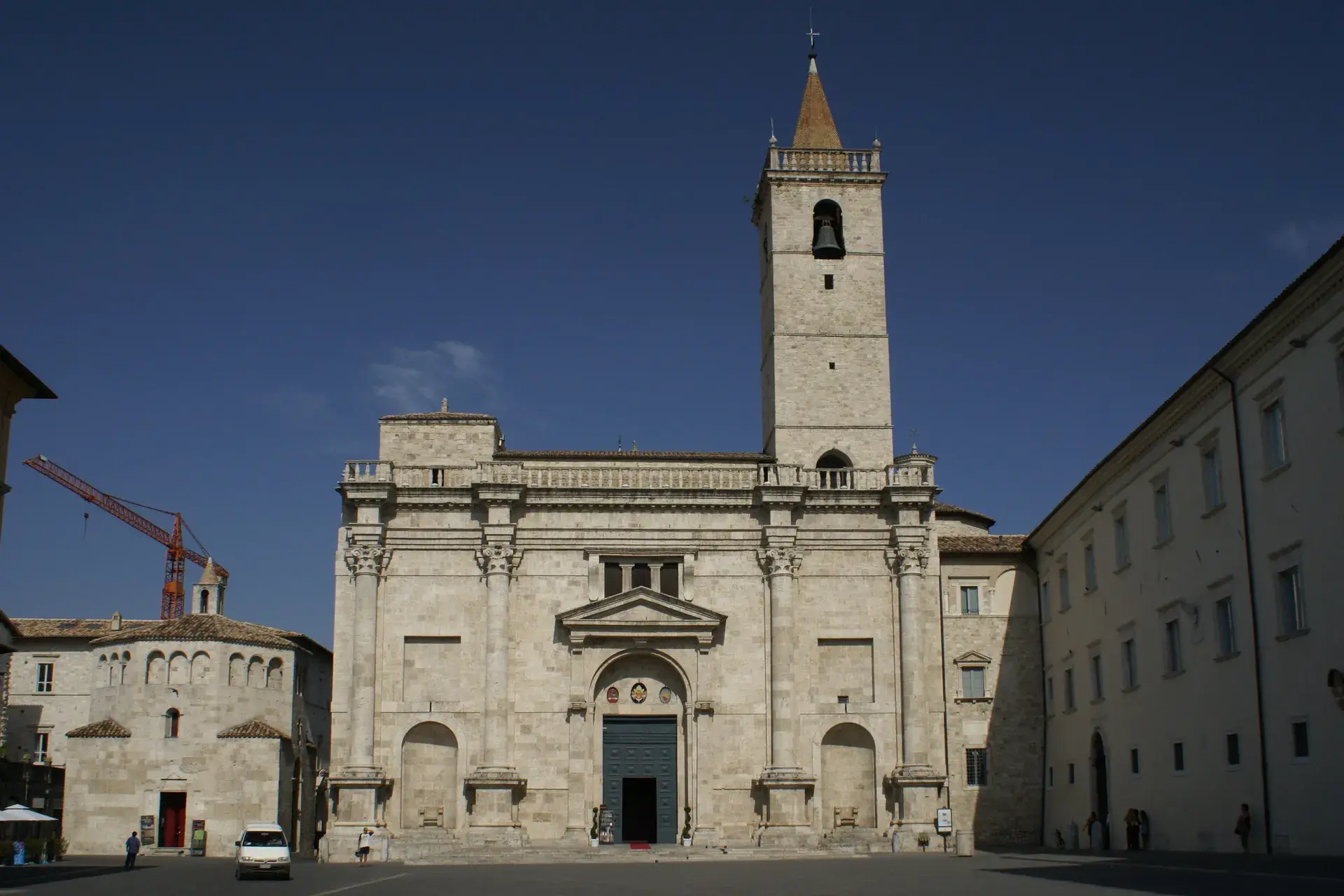
Positioned on what archaeological research identifies as a likely forum of ancient Roman Asculum, the palace exemplifies the monumental layout of medieval civic power. It sits directly opposite the city's ecclesiastical centers—the Cathedral of Saint Emygdius and the Episcopal Palace—preserving the historic visual confrontation between local secular governance and the church hierarchy.
The Forum of Civic Assembly
The building and the vast 3,900-square-meter piazza before it draw their identity from the medieval popular assemblies known as arringhi or arenghi. These gatherings brought citizens together to deliberate laws, participate in judicial trials, and oversee the administration of the free commune. Linguistically, this heritage lives on beyond Italian: the English word "harangue" shares the same origin, tracing through the square's assembly name back to an ancient Germanic root referring to a ring of gathered people.
Throughout the Middle Ages, the civic space in front of the palace was the focal point of pivotal moments in the city's political history. In 1152, a stone rostrum was erected nearby for public addresses, providing a platform where figures such as Saint Francis of Assisi in 1215 and Saint James of the Marches in the 15th century preached. In May 1355, following the overthrow of the lords Galeotto I Malatesta and Vanni di Vendibene, Ascoli's citizens assembled in the square to draft the Statuti del Popolo.
Modern Functions and Cultural Role
Palazzo dell'Arengo continues to serve as the administrative center of Ascoli Piceno. It accommodates active municipal government offices, including the Mayor's office, ensuring its unbroken continuity as a seat of civil authority for over eight centuries.
Beyond its administrative purpose, the palace serves as a primary cultural attraction by housing the Pinacoteca Civica (Civic Art Gallery). Alongside the neighboring State Archaeological Museum in Palazzo Panichi and the Diocesan Museum in the Episcopal Palace, Palazzo dell'Arengo forms part of a major museum cluster. The open square beneath its facade remains an active public venue, accommodating regular Saturday markets, open-air café seating, and major historical gatherings such as the Quintana festival and the annual feast of Saint Emygdius.
The Piazza Arringo Setting
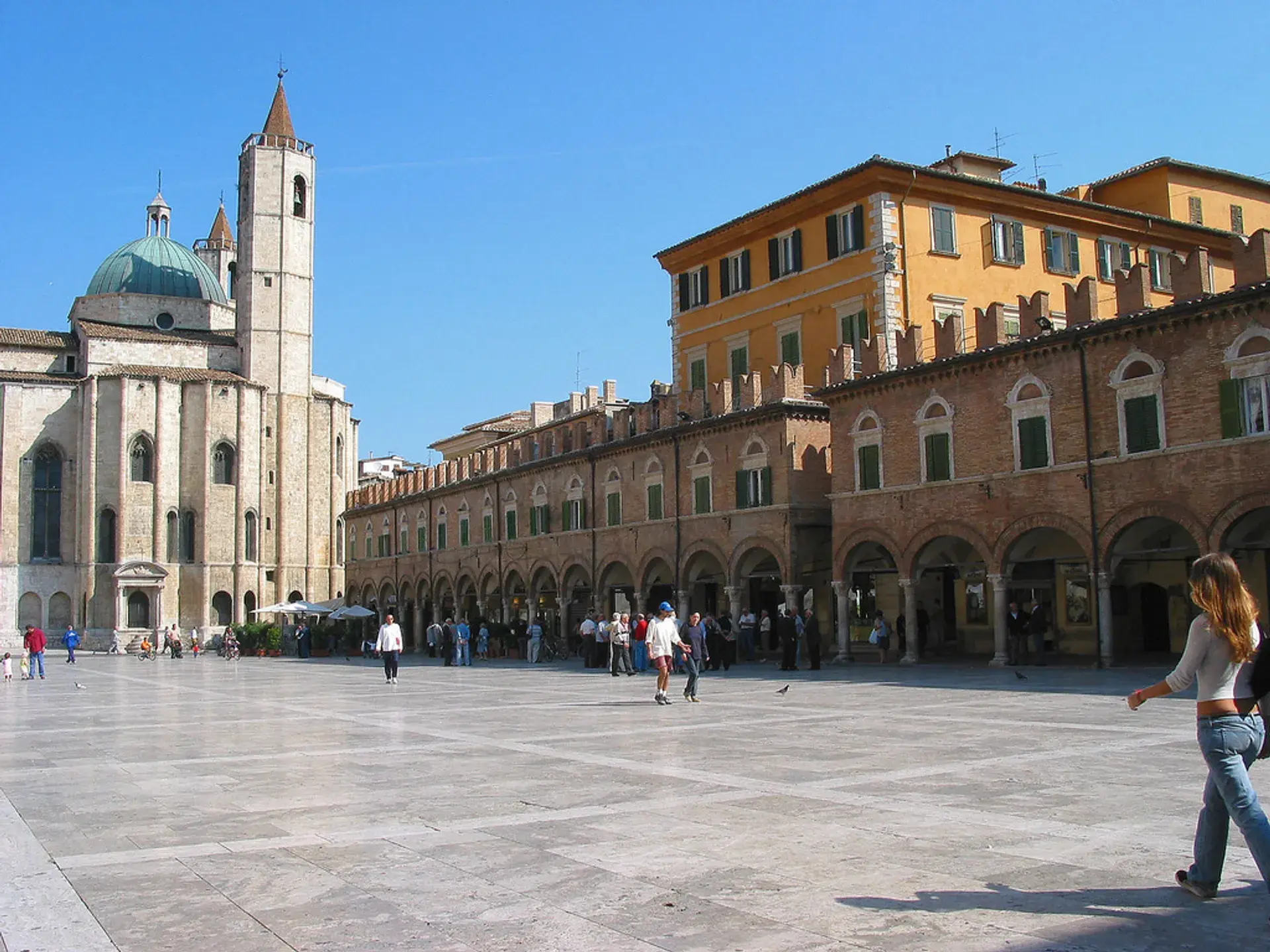
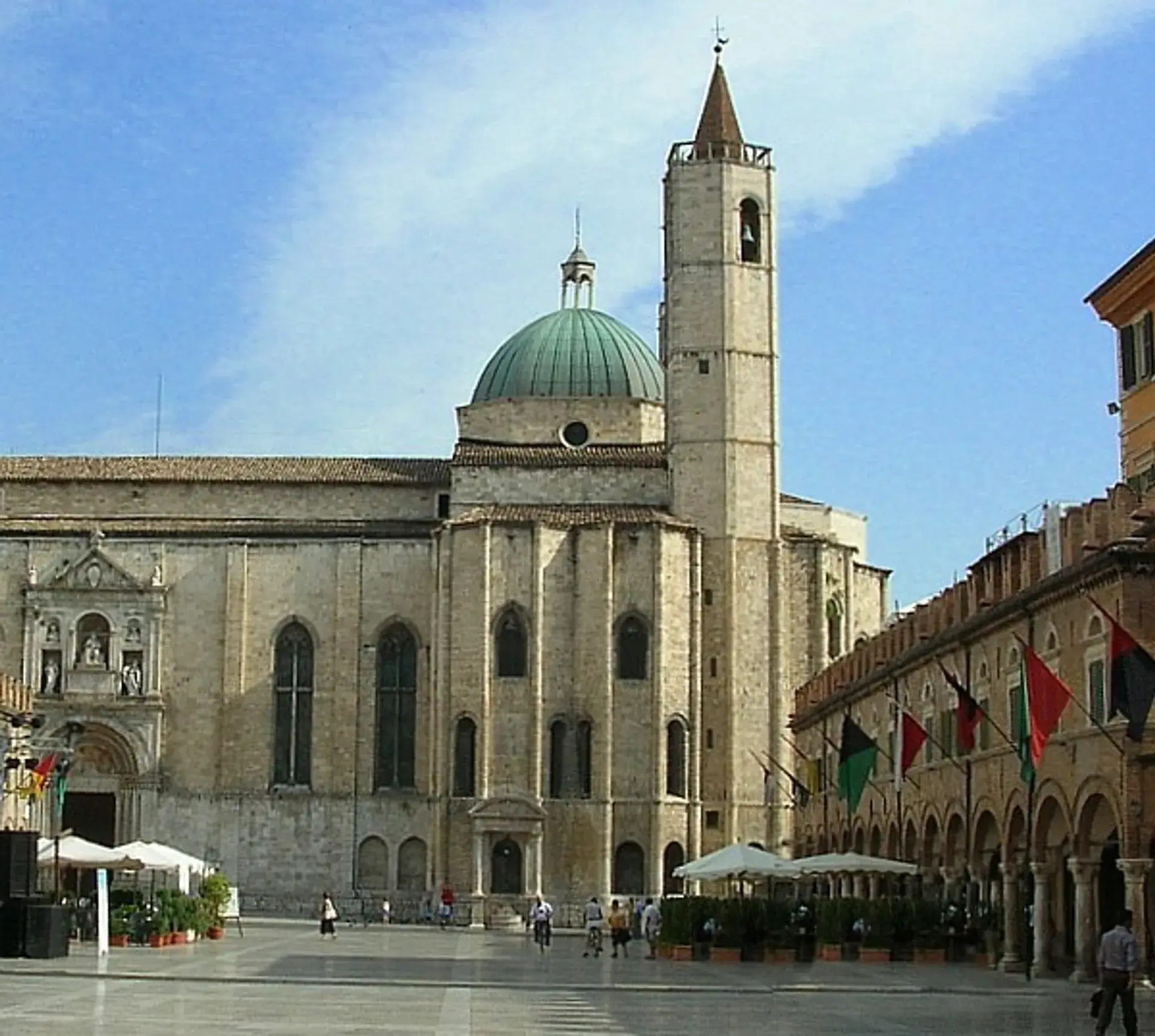
Unlike the Renaissance-era Piazza del Popolo, which historically evolved into a commercial and social salon for merchants, the setting of Palazzo dell'Arengo retains a more solemn, monumental scale. Immediately facing the palace's travertine facade are two elliptical fountains inaugurated in 1884. Sculpted by Giorgio Paci with bronze seahorses, putti, and mascarons, these basins are connected to the municipal drinking water system, continually splashing water across the open travertine flagstones.
FAQ
What is housed inside Palazzo dell'Arengo?
Palazzo dell'Arengo houses Ascoli Piceno's municipal government offices, including the Mayor's office, as well as the Pinacoteca Civica (Civic Art Gallery).
When was Palazzo dell'Arengo constructed?
The origins of Palazzo dell'Arengo date back to the late 12th to 13th century, built during the rise of the self-governing medieval commune.
What does the name Palazzo dell'Arengo mean?
The name comes from 'arringhi' (or 'arenghi'), the medieval civic assemblies convened in the adjacent public square where citizens gathered to debate legislation and participate in trials.