Piazza del Popolo: Ascoli Piceno's Travertine Square
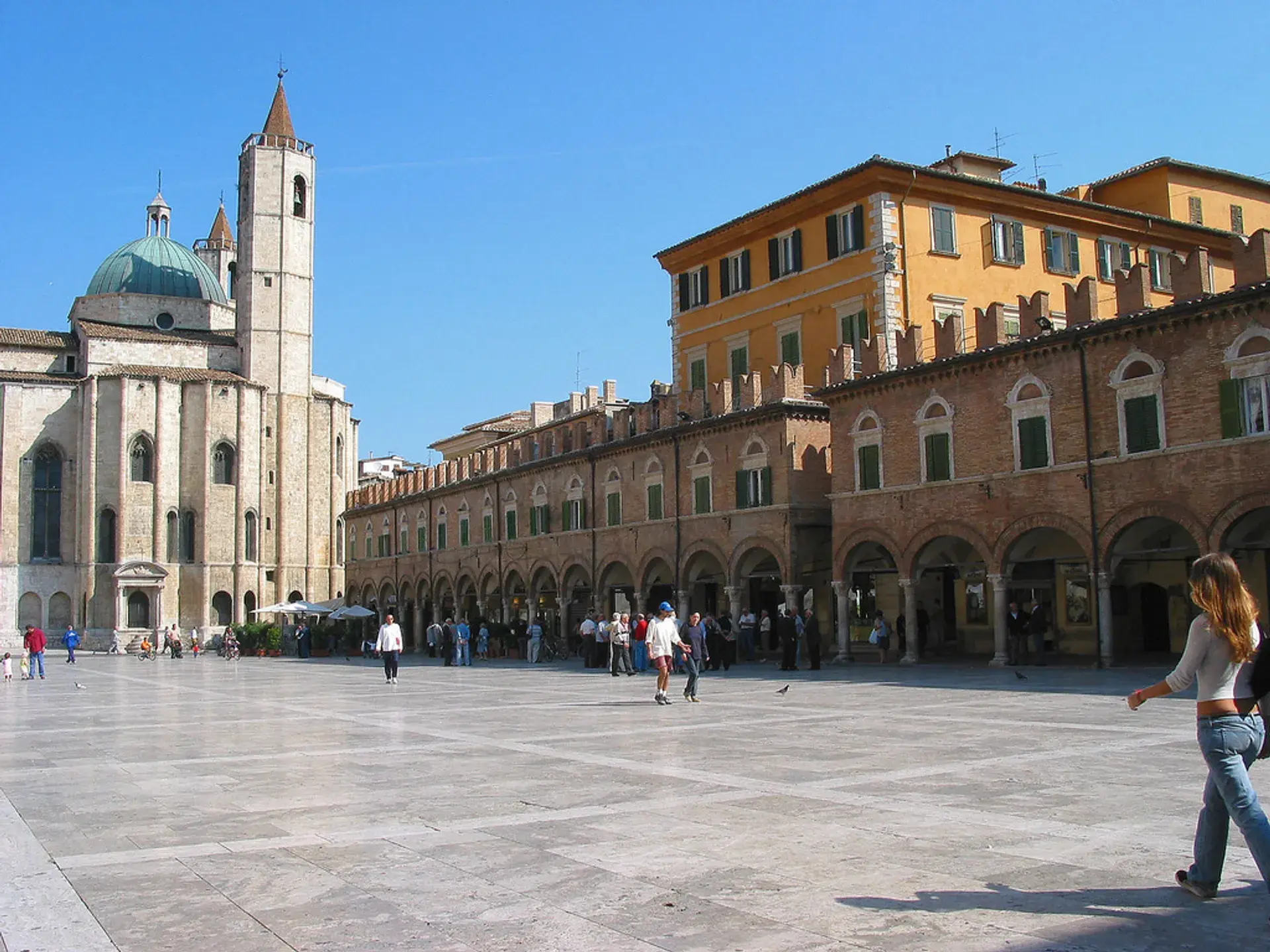
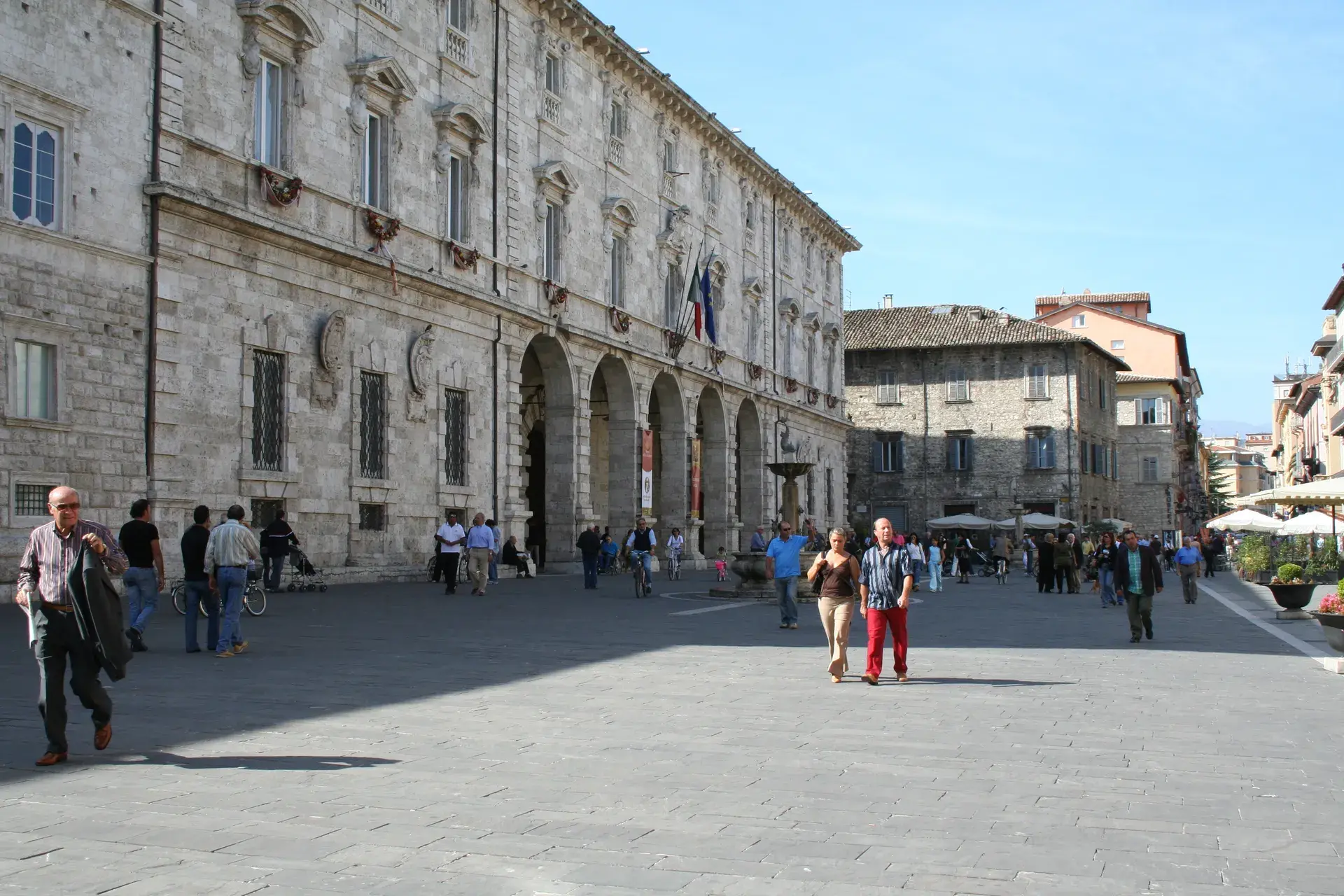
Piazza del Popolo is the civic and social center of Ascoli Piceno. Measuring roughly 29 by 87 meters and covering approximately 2,500 square meters, this pedestrian rectangular square is situated in the city's historic core near the crossroads of the ancient Roman cardo and decumanus. Positioned along Corso Mazzini, the square serves as a communal counterweight to nearby Piazza Arringo, which houses the city's primary religious and administrative institutions.
Known locally as the salotto cittadino (the city drawing room), the square functions as the heart of daily life, evening gatherings, and major municipal celebrations.
The Polished Travertine Surface
The entire floor of Piazza del Popolo is surfaced with honed slabs of local travertine limestone. Decades of foot traffic have polished the pale stone, giving it a distinct response to changing ambient light.
In the low light of late afternoon and evening, the travertine takes on a warm golden tone. Following rain, the wet stone functions as a reflective mirror, doubling the warm glow of the surrounding arcade lanterns and historic facades.
The 1507 Renaissance Screen
While medieval records refer to the area as Platea superior or Platea magna, it also carried the local dialect nickname Piazza delle scaje ("square of the chips"). This arose during the construction of the Church of San Francesco, when stonemasons worked on site, cutting and carving travertine blocks directly on the square and leaving it blanketed in stone fragments.
In 1507, pontifical governor Raniero de' Ranieri, carrying out orders from Pope Julius II, commissioned a comprehensive public works project completed around 1509. The project operated as an early urban facade screen: rather than clearing and rebuilding the chaotic medieval tenements, workshops, and butcher stalls, the authorities walled them off behind an orderly, harmonious perimeter.
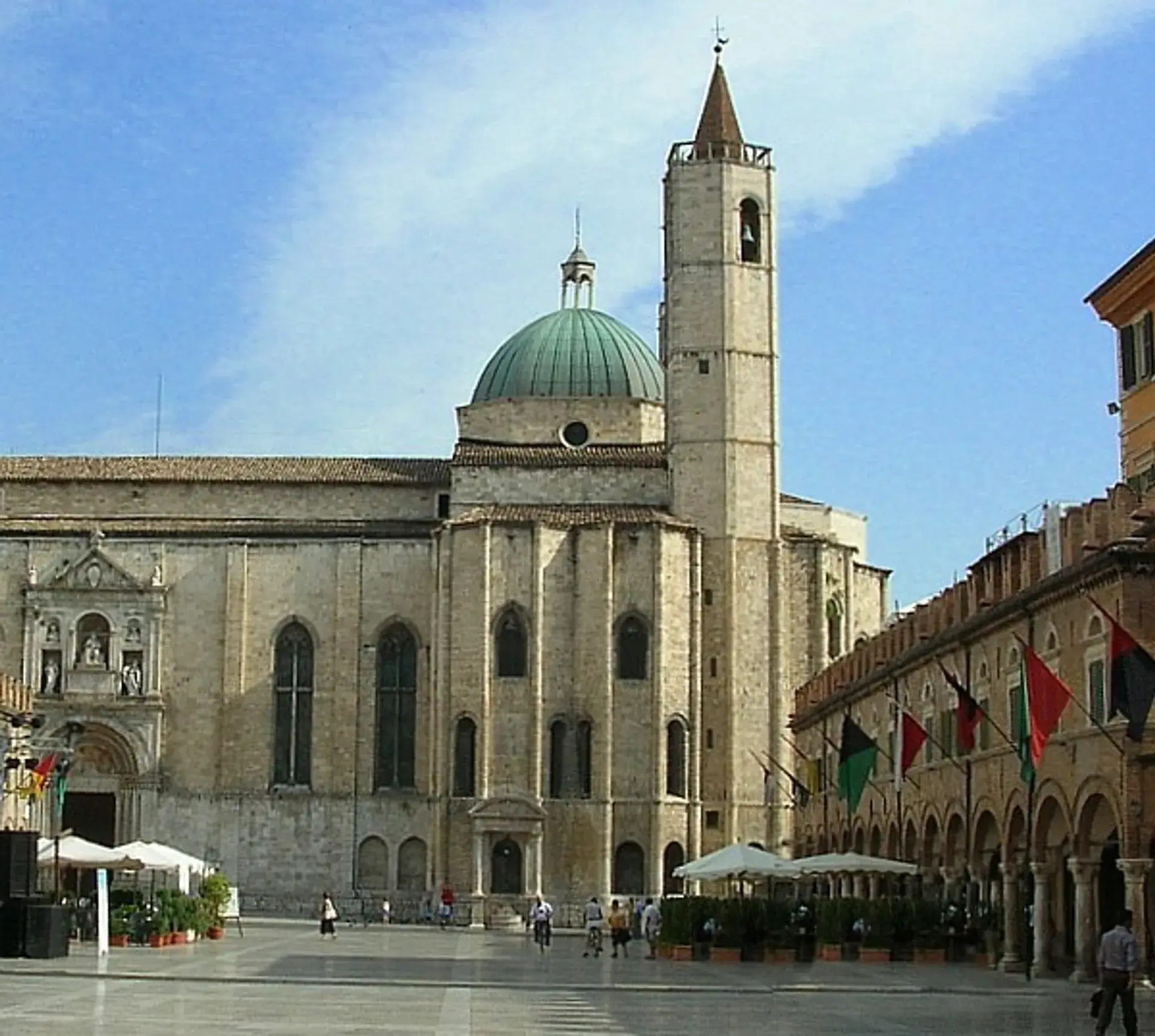
The square was enclosed on three sides by a continuous colonnade of 59 round arches supported by travertine columns and covered by red-brick barrel vaults. Municipal rules strictly governed the private structures raised above the public loggia. Property owners could add only a single floor above the arches, adhered to a uniform roofline, and used red-brick masonry punctuated by standardized travertine window frames. These windows, carved with rounded pediments and palmette motifs, are attributed to Lombard master Bernardino di Pietro da Carona. Ghibelline swallowtail battlements were added in subsequent adjustments.
Historic Monuments and Cafés
Several historic buildings define the square's perimeter:
- Palazzo dei Capitani del Popolo: Positioned on the western edge, this palace features a crenellated medieval bell tower, an inner Renaissance courtyard, and a prominent portal monument dedicated to Pope Paul III.
- Church of San Francesco: Enclosing the northern side, this Gothic church presents its lateral facade and polygonal apse to the square, along with an attached Baroque niche (Edicola) designed by Lazzaro Morelli.
- Loggia dei Mercanti: Completed around 1513 for the wool merchants' guild (Corporazione dei Lanai), this five-bay portico abuts the flank of San Francesco.
- Caffè Meletti: Located beside the Palazzo dei Capitani, the café was opened in May 1907 by Silvio Meletti, producer of the anise liqueur Anisetta Meletti. Converted from an 1880s post office, it features a pastel-pink exterior and a preserved Liberty-style interior with ground-floor ceiling frescoes showing cupids among anise plants.
Hidden Curiosities
Piazza del Popolo holds several specific historical artifacts preserved in its stonework. Under the Loggia dei Mercanti, set into the wall near the side portal of the church, is a 1568 carved travertine tablet. It displays the official municipal standards for construction elements, including bricks and roof tiles, which the governor used to inspect and fine dishonest manufacturers.
Another architectural detail survives on the protective stone balustrade at the base of the San Francesco bell tower, where a medieval carving of male genitalia served as a traditional apotropaic lucky charm.
Civic Gatherings and Celebrations
As the civic centerpiece of Ascoli Piceno, Piazza del Popolo hosts the daily evening passeggiata and outdoor café patronage. It also provides the backdrop for the city's largest public assemblies and cultural events, including the Ascoli Carnival (Carnevale ascolano), open-air musical performances, recurring antique markets, and the historical Quintana re-enactment.
FAQ
Why was the square historically nicknamed "Piazza delle scaje"?
The nickname means "square of the chips" in dialect. It originated during the construction of the Church of San Francesco, when stonemasons carved travertine blocks directly on the open ground, scattering stone chips across the area.
What was the purpose of the 1507 redevelopment?
Ordered by pontifical governor Raniero de' Ranieri under Pope Julius II, the redevelopment created a uniform 59-arch colonnade to screen irregular medieval houses, workshops, and stalls behind an orderly Renaissance facade.
What is the carved stone tablet under the Loggia dei Mercanti?
It is a 1568 travertine measurement tablet carved with official municipal standards for bricks and roof tiles, instituted by the city governor to inspect building supplies and penalize fraudulent brickmakers.
What is the history behind Caffè Meletti?
Caffè Meletti was opened in May 1907 by Silvio Meletti, producer of the regional liqueur Anisetta Meletti. He transformed a former 1880s post office into a Liberty-style venue featuring a pastel-pink facade and ceiling frescoes of cupids among anise plants.