Caffè Meletti: Historic Anisetta Café in Ascoli
An Art Nouveau Gem on Piazza del Popolo
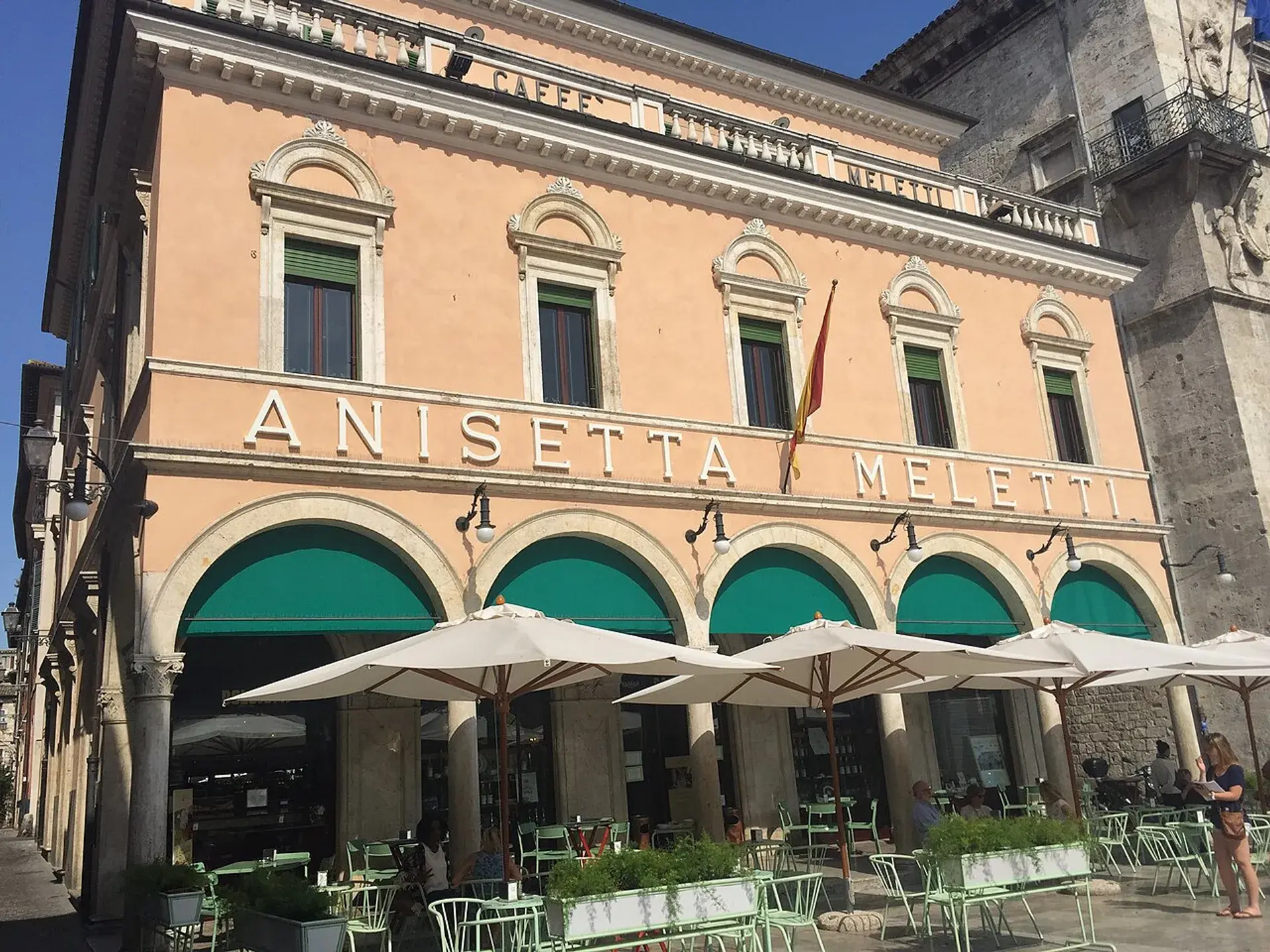
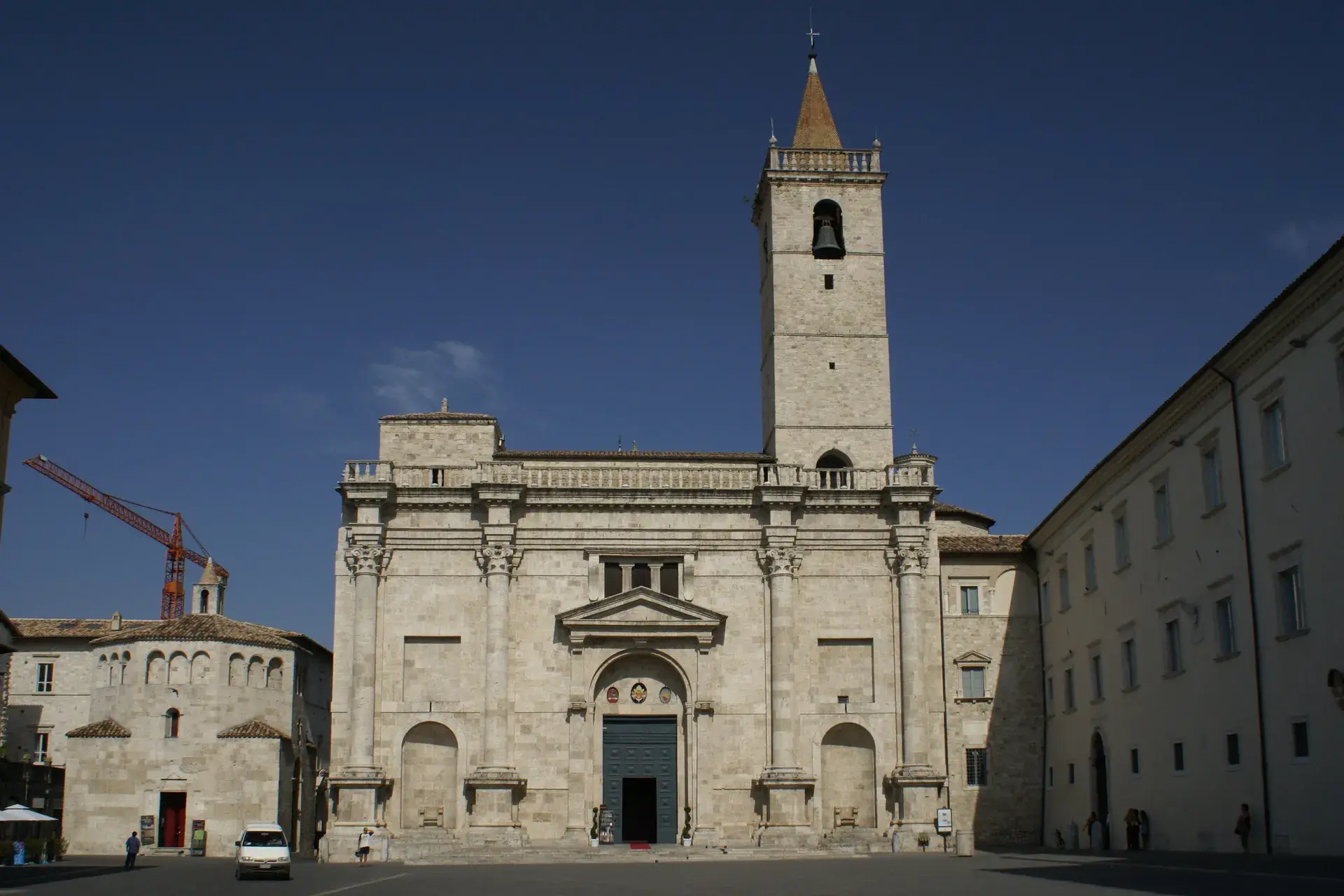
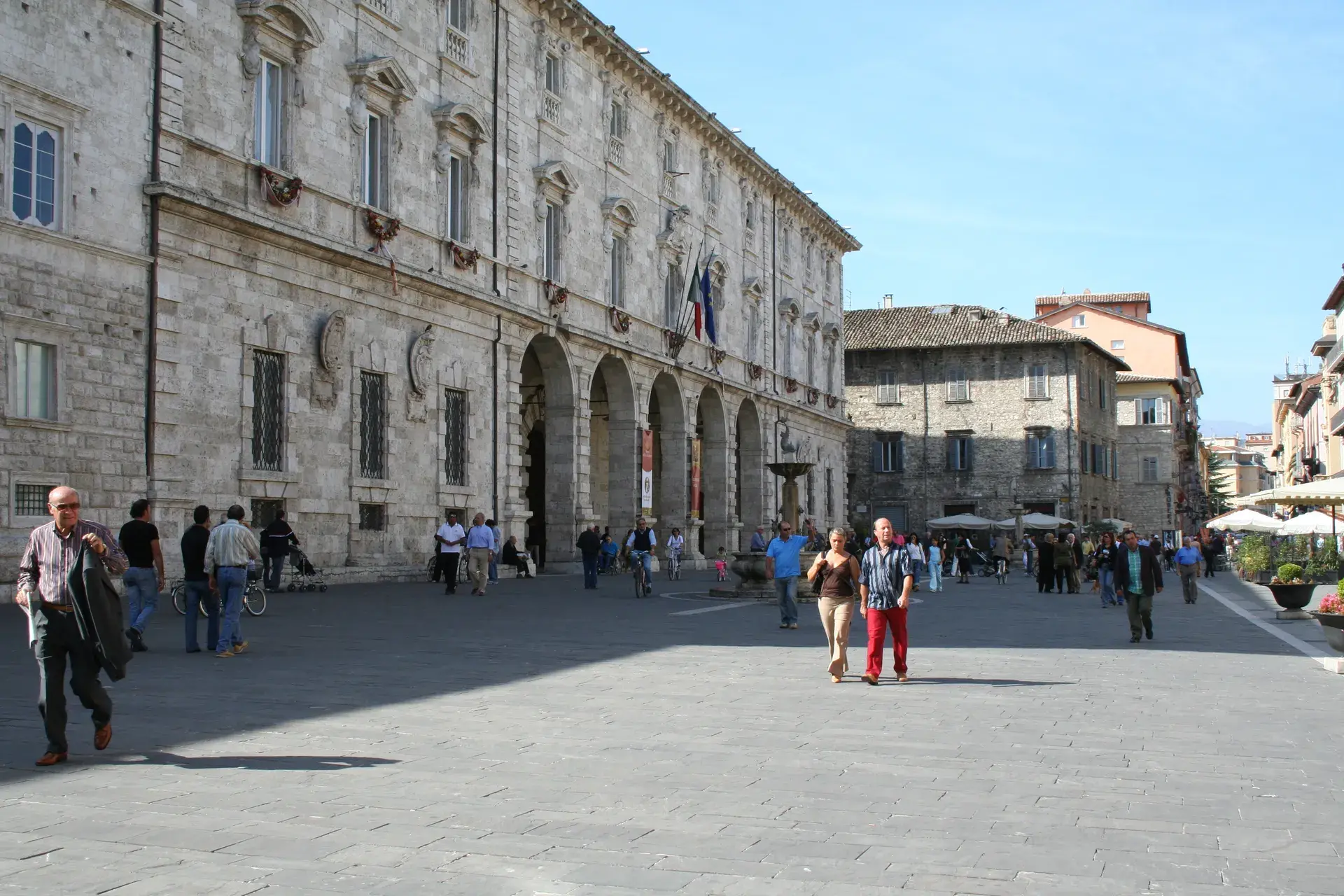
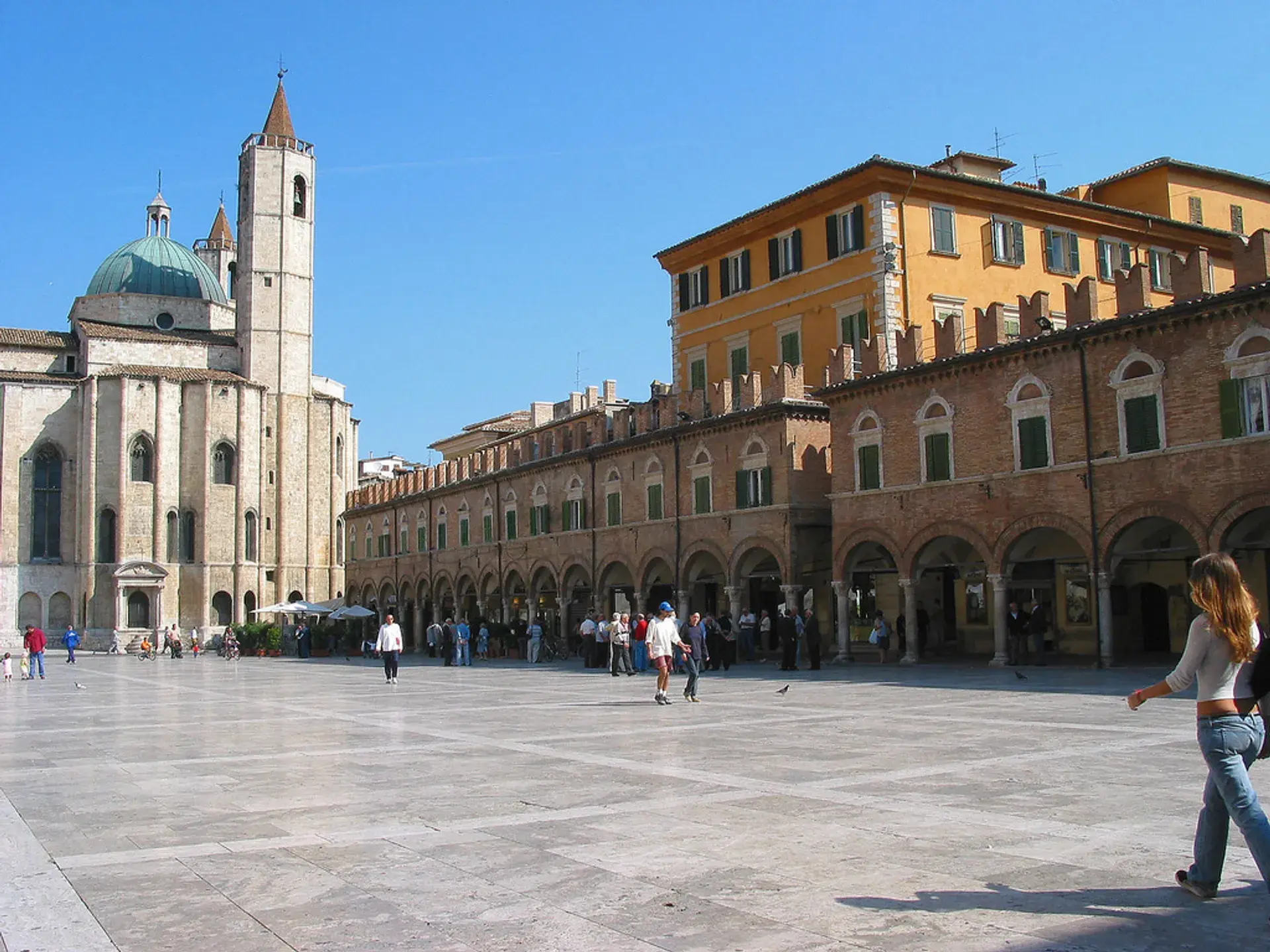
Standing at Piazza del Popolo 56 in Ascoli Piceno, Caffè Meletti presents a striking dusty-pink neoclassical facade that immediately distinguishes it from the surrounding medieval and Renaissance grey travertine stone. Situated directly adjacent to the Palazzo dei Capitani del Popolo and opposite the Church of San Francesco, the establishment officially opened on the evening of May 18, 1907. It was founded by industrialist Silvio Meletti to serve as an elegant flagship venue for his signature anise-flavored liqueur, Anisetta Meletti.
Before its transformation into a celebrated salon, the structure was originally erected between 1881 and 1884. Designed by Marco Massimi, it stood on the former site of a customs guard post (Picchetto della Dogana) and served as the city's Post and Telegraph offices. After postal operations relocated in the early 20th century, Silvio Meletti purchased the building in 1905, commissioning engineer Enrico Cesari to oversee its structural conversion and painter Pio Nardini to execute the interior decorations.
Stile Liberty Interiors and Anise Artistry
The interior of Caffè Meletti is one of Italy's finest preserved expressions of Stile Liberty, the Italian branch of Art Nouveau. The salon features deep-green velvet banquettes, rich dark wood paneling, large reflective wall mirrors, and small round tables topped with white Carrara marble set on heavy cast-iron bases. In 1981, the Italian Ministry of Cultural Heritage formally designated the building as a site of historical and artistic interest.
Among the room's most distinctive artistic features is the ground-floor ceiling fresco executed by Pio Nardini between 1906 and 1907. The artwork bridges commercial agriculture and classical motif by depicting putti and cupids frolicking among flowering green anise plants (Pimpinella anisum). Another enduring emblem of the café is an antique cage-shaped music box housing an automaton singing bird, which remains preserved and operational inside the main salon.
"Il Senato" and Cultural Prominence
Shortly after opening, the café earned the nickname "Il Senato" (the Senate) as it evolved into the primary meeting place for local administrators, intellectuals, and citizens to debate regional affairs. Its fame quickly spread beyond the Marches region. King Victor Emmanuel III visited the venue in 1908 and 1910 to purchase Anisetta, subsequently granting Meletti the prestigious title of Supplier to the Royal Household (Fornitore della Real Casa).
Over the decades, Caffè Meletti welcomed prominent international authors, artists, and musicians. Jean-Paul Sartre and Ernest Hemingway both visited the salon, while composer Pietro Mascagni began working on his opera Lodoletta at its tables. The painter Renato Guttuso conceived the postwar cultural publication L'Orsa Maggiore within the café. Roman dialect poet Trilussa was so fond of the house spirit that he composed a dedicated rhyme: "Quante favole e sonetti m'ha ispirato la Meletti" ("How many fables and sonnets Meletti has inspired in me").
The venue has also made appearances in Italian cinema. It served as a primary filming location for Citto Maselli's 1960 drama I delfini and was later featured in Pietro Germi's 1972 comedy Alfredo, Alfredo, starring Dustin Hoffman.
Restoration and Contemporary Legacy
Following a temporary closure during the 1990s, the historic property was purchased in 1996 by the Fondazione Cassa di Risparmio di Ascoli Piceno. The foundation directed a meticulous conservation effort that restored the original Art Nouveau details, allowing the establishment to reopen its doors in 1998, followed by updated technological renovations in 2011.
Today, Caffè Meletti remains fully operational as a historic café, artisanal pastry bar, and first-floor restaurant named Ristorante 1907, which holds a Michelin Guide recommendation. Patrons continue to gather inside among the original turn-of-the-century furnishings or outside beneath the stone arcade facing the travertine expanse of Piazza del Popolo, sampling regional cuisine and traditional Anisetta served neat, mixed into espresso as a caffè corretto, or stirred into cocktails.
FAQ
What is the historical significance of Caffè Meletti?
Opened in 1907 by liqueur producer Silvio Meletti, the café was a major meeting ground for intellectuals, cultural icons, and royal figures, earning the nickname 'Il Senato.' In 1981, it was declared a site of historical and artistic interest by the Italian Ministry of Cultural Heritage.
What architectural style is found inside Caffè Meletti?
The interior is designed in the Stile Liberty (Italian Art Nouveau) manner, featuring furnishings like deep-green velvet banquettes, dark wood paneling, Carrara marble tables, and ceiling frescoes by painter Pio Nardini.
What appears on the ground-floor ceiling fresco of the café?
Painted between 1906 and 1907 by Pio Nardini, the ceiling fresco shows putti and cupids playing among flowering aniseed plants (Pimpinella anisum), paying tribute to the agricultural foundation of the Meletti liqueur brand.
Which movies have been filmed at Caffè Meletti?
Caffè Meletti served as a backdrop in Citto Maselli's 1960 film 'I delfini' and Pietro Germi's 1972 movie 'Alfredo, Alfredo,' which starred Dustin Hoffman.