Solestà Bridge: Augustan Engineering in Ascoli
An Augustan Masterpiece in Picene Travertine
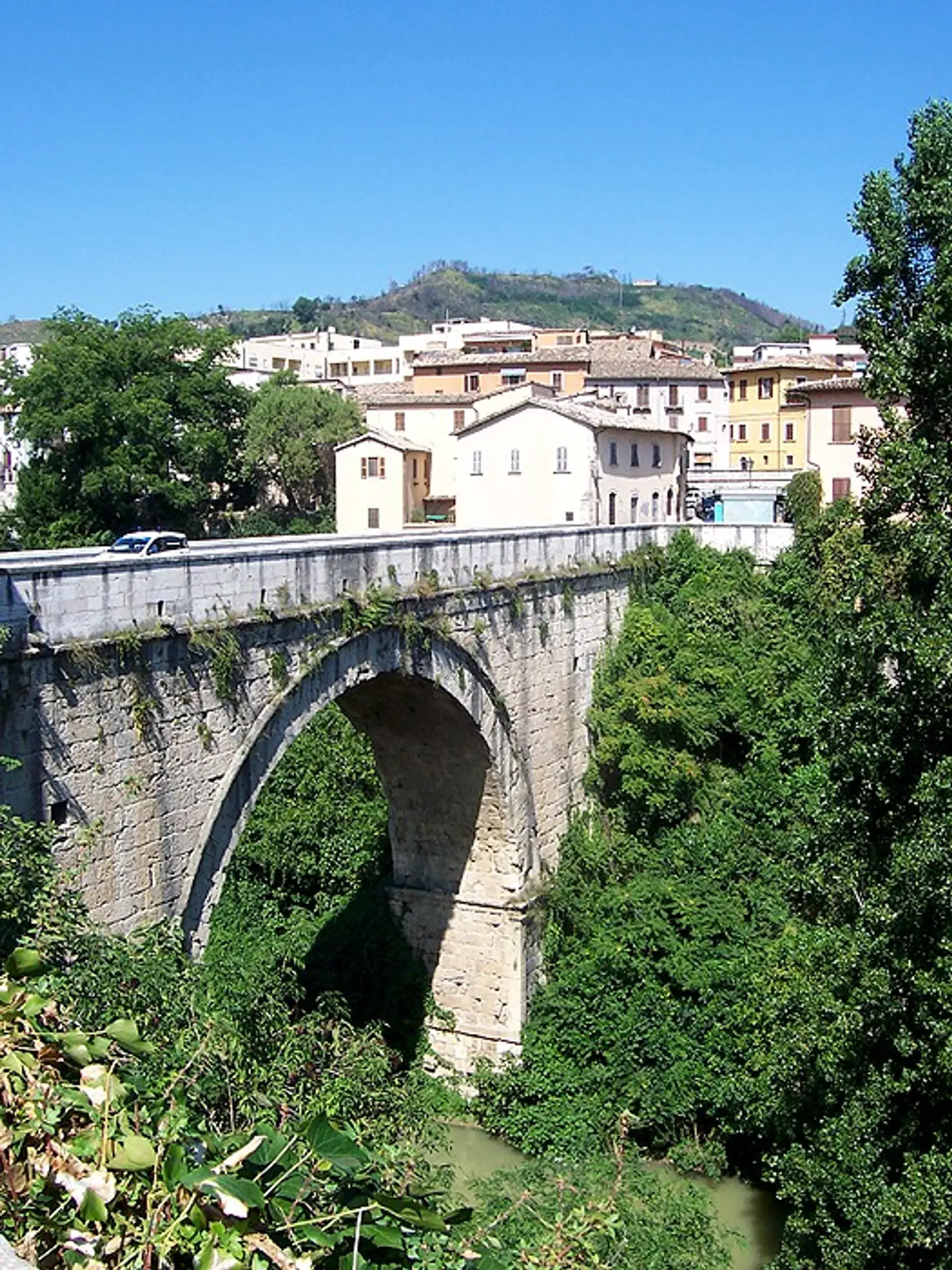
Constructed around 25 BCE during the reign of Emperor Augustus, the Solestà Bridge (Ponte di Solestà) spans the deep Tronto River gorge at the northern boundary of Ascoli Piceno. Commissioned to connect the Roman town of Asculum to regional networks leading toward Fermo and branches of the Via Salaria, the structure remains one of antiquity's best-preserved single-arch bridges. At the time of its completion, its semicircular span of 22.20 meters ranked among the widest arches constructed in the Roman world.
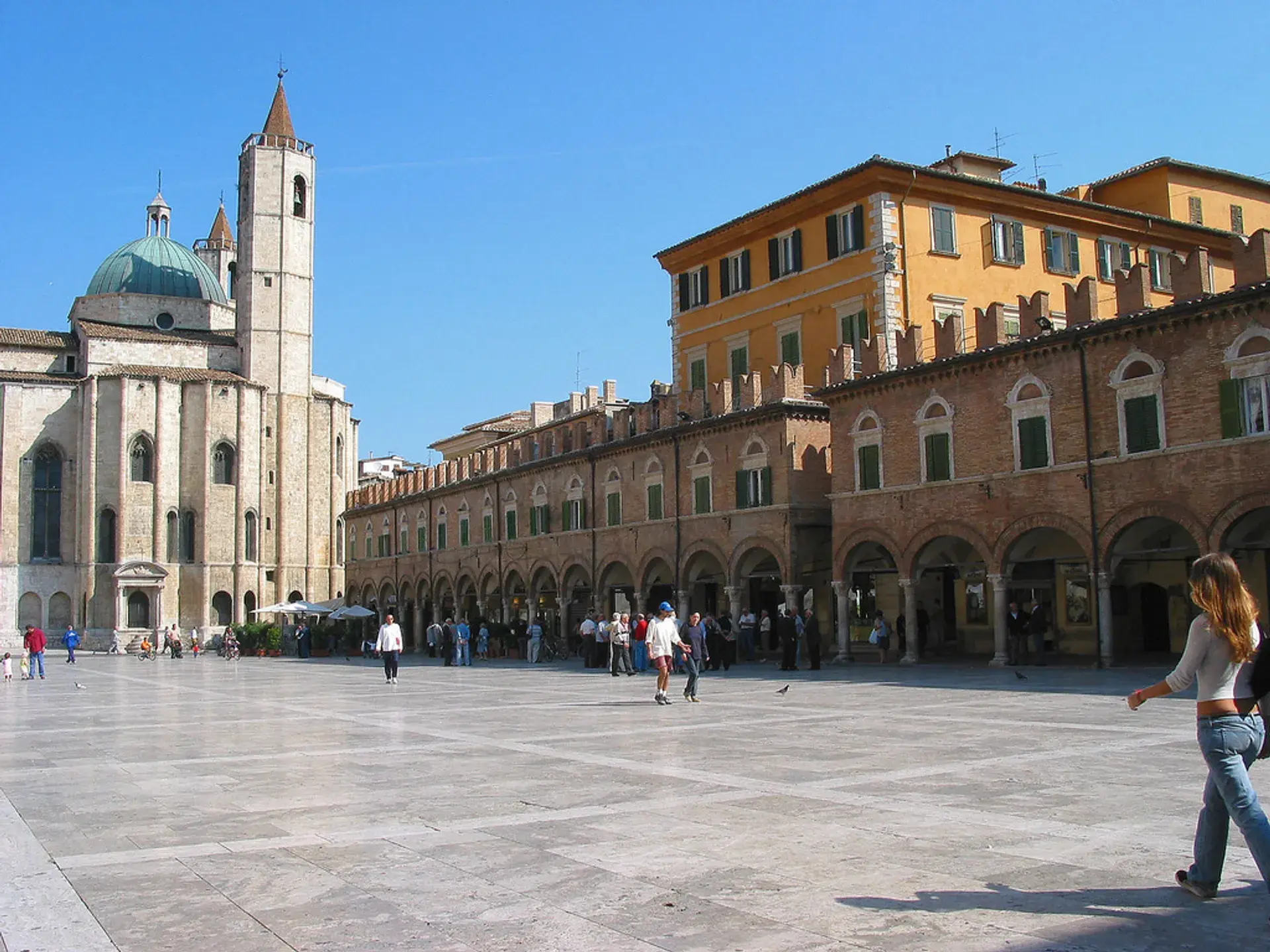
The bridge was built using dry-stone masonry (opus quadratum), fitted without mortar from local Picene travertine—the same pale stone that defines Ascoli's central urban monuments, including Piazza del Popolo. Rising roughly 25 meters above the riverbed, the bridge measures 62 meters in total length with an overall width of 6.50 meters, including a 5.50-meter roadway designed to accommodate ancient vehicle traffic.
Medieval Defenses and Historical Transformations
Over two millennia of continuous service, the bridge accumulated layers of regional history. Early Roman-era repairs incorporated salvaged classical fragments, including sections of Doric friezes, directly into the masonry. In 1230, Podestà Fildesmilio da Mogliano reinforced the river crossing by constructing Porta Solestà, a defensive gatehouse built using repurposed Roman travertine blocks. In 1450, coats of arms commemorating an alliance and peace treaty between Ascoli and Fermo were set above the gate.
Modern structural preservation occurred between 1929 and 1938 under the supervision of engineer G. Viccei for the Bimillenary of Augustus. To absorb mechanical vibrations and heavy modern loads, the original loose rubble fill (emplekton) was hollowed out and replaced with an internal reinforced concrete framework. Following the fall of the Fascist regime on July 25, 1943, the Fascist dating and littorio emblem on the bridge's 1938 commemorative milestone were removed and replaced with the civic crest of Ascoli.
The Hollow Interior Chamber
Unlike most ancient bridge superstructures, the Solestà Bridge features an engineered internal hollow inspection corridor. This interior passage allows visitors during civic events or special bookings to walk beneath the travertine roadbed. From within the core, the underside of the original Roman stones remains clearly visible alongside preserved cart wheel ruts (carreggiate) worn into the paving blocks and exposed road stratigraphy.
Urban Setting and Cultural Traditions
The bridge establishes the historic northern gateway of Ascoli Piceno, counterbalancing the southern river crossings over the Castellano River. Crossing the span brings a sudden transition in sound and climate, as the resonant, stone-walled street corridors of the historic center open into the Tronto gorge, filled with drafts and rushing water.
Local tradition links the name Solestà to two classical origins: Solis Statio, referencing a temple or festival honoring the sun god Sol, or Sullae Statio, commemorating the Roman dictator Sulla. Today, the crossing functions as an active pedestrian artery connecting the historic center with the Borgo Solestà and Porta Cappuccina districts, serving as the namesake and geographic anchor for Sestiere Porta Solestà in the city's annual Quintana tournaments.
FAQ
When was the Solestà Bridge built and what are its dimensions?
The bridge was constructed around 25 BCE during the Augustan age. It measures 62 meters in total length, stands approximately 25 meters above the Tronto River, and features a single semicircular arch spanning 22.20 meters.
Can the interior of the Solestà Bridge be visited?
Yes. The bridge contains an internal inspection corridor beneath the roadway that is accessible during scheduled civic events or by prior booking, allowing visitors to view the underside of the ancient Roman road and preserved cart wheel ruts.
What is Porta Solestà?
Porta Solestà is a fortified medieval gatehouse at the bridgehead, erected in 1230 by Podestà Fildesmilio da Mogliano using salvaged Roman travertine blocks. It bears coats of arms from 1450 marking a peace treaty between Ascoli and Fermo.
Where does the name Solestà originate?
Local tradition suggests the name derives either from 'Solis Statio', referring to a pagan festival or lost temple of the sun, or from 'Sullae Statio', in reference to the Roman dictator Sulla.