Basilica di Santa Maria dei Servi: Bologna's Gothic Heart
The Basilica di Santa Maria dei Servi stands as an imposing Gothic landmark in Bologna, Italy. Founded in 1346 by the Servite Community of the Blessed Virgin Mary, its expansive portico wraps around a tranquil courtyard, offering timeless shelter along the busy thoroughfare. This Roman Catholic basilica, elevated to its status by Pope Pius XII in the 20th century, is a cornerstone of the city's distinctive urban landscape.
Architectural Design and Construction
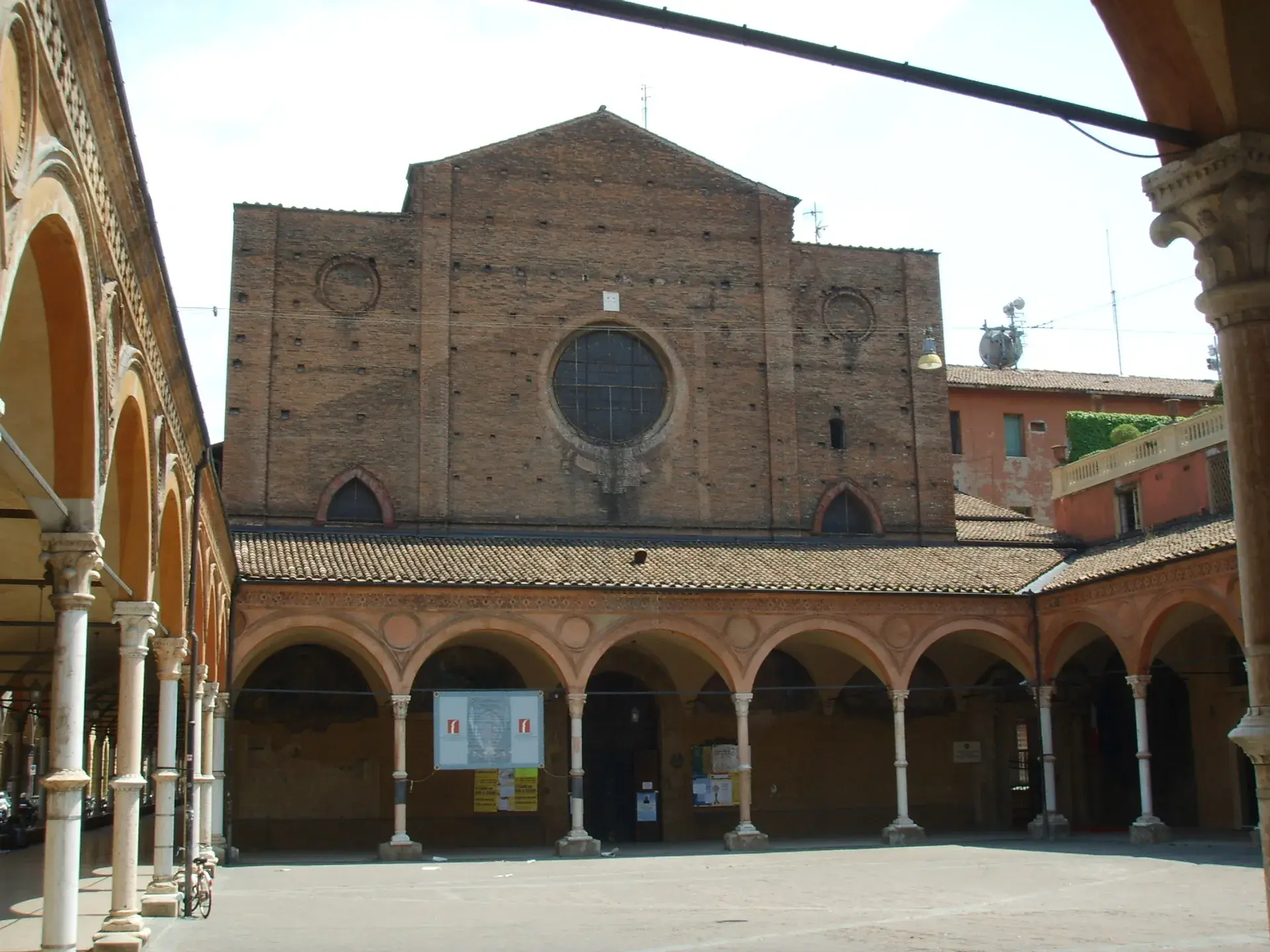
The basilica's construction began in 1345 under the primary design of Andrea da Faenza, a head friar and architect. The church features a classic Gothic style with a Latin cross plan, three naves divided by stout columns and pointed arches, and a shallow, five-segmented octagonal apse. The main structure was largely complete by the end of the 14th century, with the bell tower added in 1453.
A surprising detail is the basilica's facade, which has remained unfinished and undecorated. This plain brick exterior presents a stark contrast to the elaborate and monumental portico that defines the complex.
The Monumental Portico
A defining feature of the basilica is its monumental portico, a crucial element of Bologna's UNESCO World Heritage-listed covered walkways. Construction of this quadriportico began in 1393 and was progressively extended over centuries, with final completion not occurring until 1855, making it one of the longest construction projects among Bologna's porticoes.
At approximately six meters wide, it is one of the widest porticoes in the city, functioning as a public "linear porticoed plaza." The design includes a peculiar architectural detail: a molded ring that interrupts the shaft of its columns, a feature that influenced later Bolognese building traditions. While most of the vaults are brick, three sections are uniquely made from light wooden canes filled with chalk cement.
Historical Milestones
The basilica's history is marked by significant events. Following its foundation in the 14th century, it experienced a period of turmoil during the Napoleonic era. In 1797, Napoleon's troops occupied the building and used it as barracks. It became a parish church in 1802, and the adjacent convent was expropriated. The Servite Order was able to return to the basilica in 1815 after the Restoration.
Art and Cultural Legacy
Santa Maria dei Servi houses significant works of art. The most revered is the "Maestà" (Madonna Enthroned) altarpiece by the painter Cimabue. The work was so severely damaged and overpainted through the centuries that it was misattributed until its definitive identification in 1885. Another notable piece is the marble altarpiece of the Annunciation, sculpted in 1558 by Giovanni Angelo Montorsoli, a pupil of Michelangelo.
The basilica has also found its place in modern culture. Its portico was featured in a scene from Pier Paolo Pasolini's 1967 film "Edipo Re" (Oedipus Rex). Bolognese singer-songwriter Francesco Guccini also mentioned the portico and its Christmas market in his 1978 song "Eskimo."
The Basilica Today
Today, the Basilica di Santa Maria dei Servi is an active place of worship, open daily to visitors. It contains a musical chapel and a notable Tamburini pipe organ from 1968, and it periodically hosts classical music concerts. The portico continues its role as a public gathering space, famously hosting the traditional Fiera di Santa Lucia Christmas market, a tradition dating back to the 16th century. The former convent is now used as a Carabinieri station.
FAQ
Why is the portico of Santa Maria dei Servi so famous?
Its portico is famous for being one of the widest in Bologna, part of a UNESCO World Heritage site, and for its exceptionally long construction period, which spanned from 1393 to 1855. It also hosts the city's historic Fiera di Santa Lucia Christmas market.
What famous art is inside the Basilica di Santa Maria dei Servi?
The basilica houses the celebrated "Maestà" (Madonna Enthroned) by the painter Cimabue and a marble altarpiece of the Annunciation sculpted by Giovanni Angelo Montorsoli, a pupil of Michelangelo.
Is the Basilica's facade finished?
No, the facade of the Basilica di Santa Maria dei Servi remains unfinished. Its plain brick exterior stands in stark contrast to its elaborate and monumental portico.
When was the Basilica di Santa Maria dei Servi built?
The basilica was founded in 1346. Construction on the church itself began around 1345-1346, with the main structure largely completed by 1396. Its famous portico was built over centuries, from 1393 to 1855.