Palazzo della Mercanzia: Bologna's Heart of Commerce
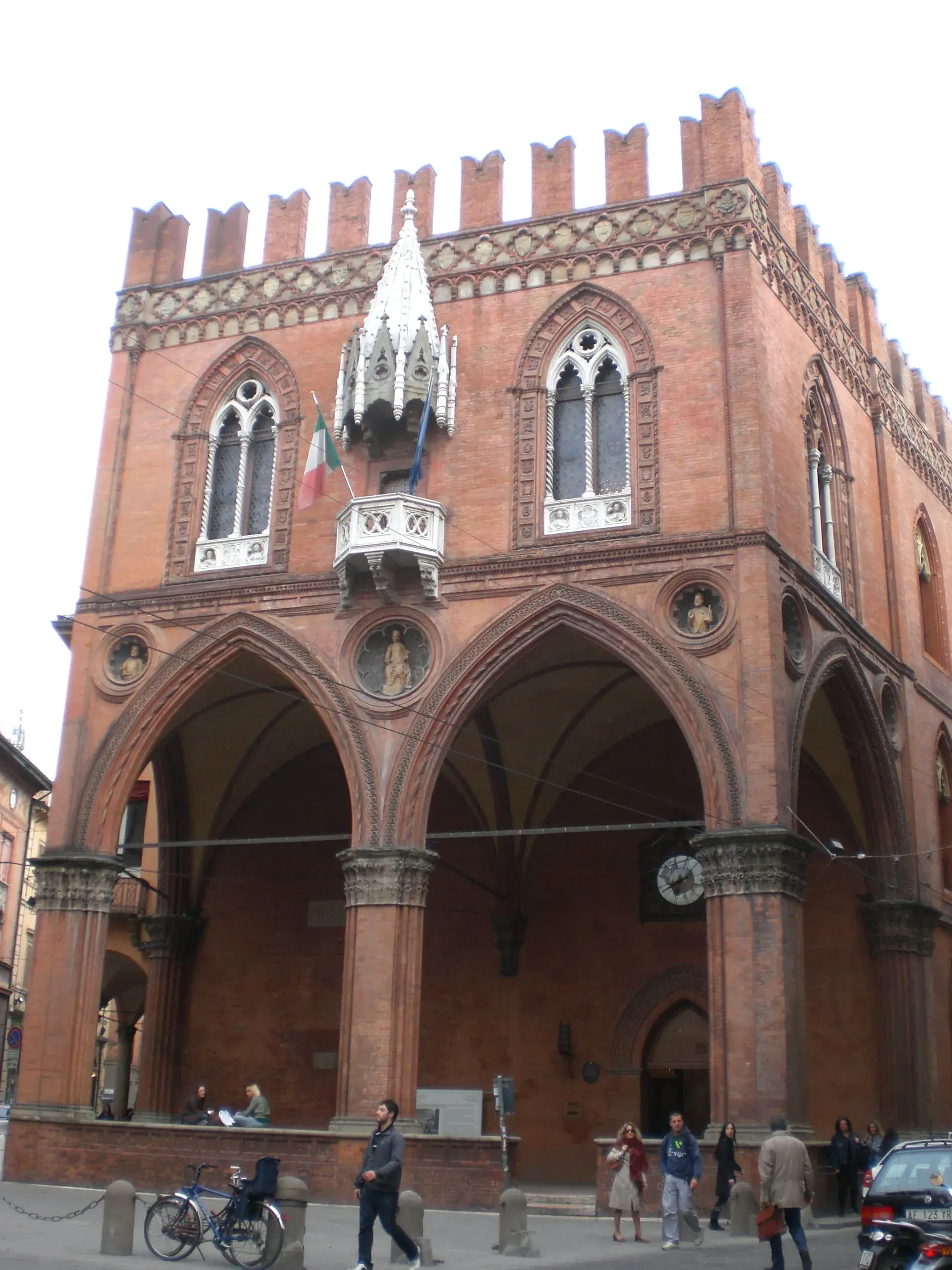
Palazzo della Mercanzia, also known as the Loggia dei Mercanti, stands as a striking Gothic landmark in Bologna. For centuries, this building was the bustling heart of the city's trade and justice system. Situated at a commercial crossroads dating back to Roman times, the palace continues its legacy of commerce today, albeit with a surprising modern twist.
A Gothic Masterpiece
The construction of the Palazzo della Mercanzia began between 1382 and 1384, reaching completion in 1391. The design was the work of architects Lorenzo da Bagnomarino and Antonio di Vincenzo, the latter of whom also contributed to the Basilica of San Petronio. The building's Gothic style is a key feature of its design. Over its long history, the palace has undergone several major restorations, notably in 1484 after being damaged by a collapsing tower, in the late 19th century, and again in 1949 following damage sustained during World War II.
The Hub of Trade and Justice
In 1382, the Municipality of Bologna commissioned the palace to serve as a formal seat for the Merchants' Forum (Universitas Mercatorum). From its marble balcony, the Mercantile Court would publicly announce its judgments, signaled by the ringing of the 'Lucardina' bell. The palace was also the site of public punishment; merchants found guilty of fraudulent bankruptcy were chained to a central pillar in the loggia for public ridicule. This system of mercantile law and trade regulation persisted until the Napoleonic occupation in 1797.
A Legacy of Commerce
After the French occupation, the building's role evolved. Since 1797, the Palazzo della Mercanzia has served as the headquarters for the Chamber of Commerce, Industry, Agriculture and Crafts of Bologna, continuing its long association with the city's economic life. While the building is primarily used for official business and is not generally open to the public, its internal library contains a valuable collection of historical documents related to Bologna's commercial activities. An early 15th-century plaque on the building's side also details historic privileges granted to students, including rights to free books and supplies.
Guardian of Culinary Traditions
In a surprising twist, this historic center of law and commerce is now the official guardian of Bologna's most famous culinary traditions. The Chamber of Commerce officially preserves and protects the original recipes for iconic local dishes. These include tagliatelle (deposited in 1972), tortellini (1974), ragù bolognese (1982), certosino (2003), and green lasagna (2003). A 'golden tagliatella' is also kept within the palace, serving as a definitive measure for the exact dimensions of the traditional pasta.
FAQ
Can I visit the Palazzo della Mercanzia?
The Palazzo della Mercanzia serves as the official headquarters for the Chamber of Commerce and is generally not open to the public. Access may be granted for specific events or purposes.
What is the Palazzo della Mercanzia's connection to food?
The palace is the official custodian of original recipes for traditional Bolognese dishes, including tagliatelle, tortellini, and ragù. It even holds a 'golden tagliatella' to establish the pasta's precise dimensions.
What was the Palazzo della Mercanzia originally used for?
From its completion in 1391, the palace was the seat of the Merchants' Forum. It housed the Mercantile Court, which regulated trade, administered justice, and publicly announced judgments from its balcony.