Cathedral of Santa Maria Assunta in Brescia
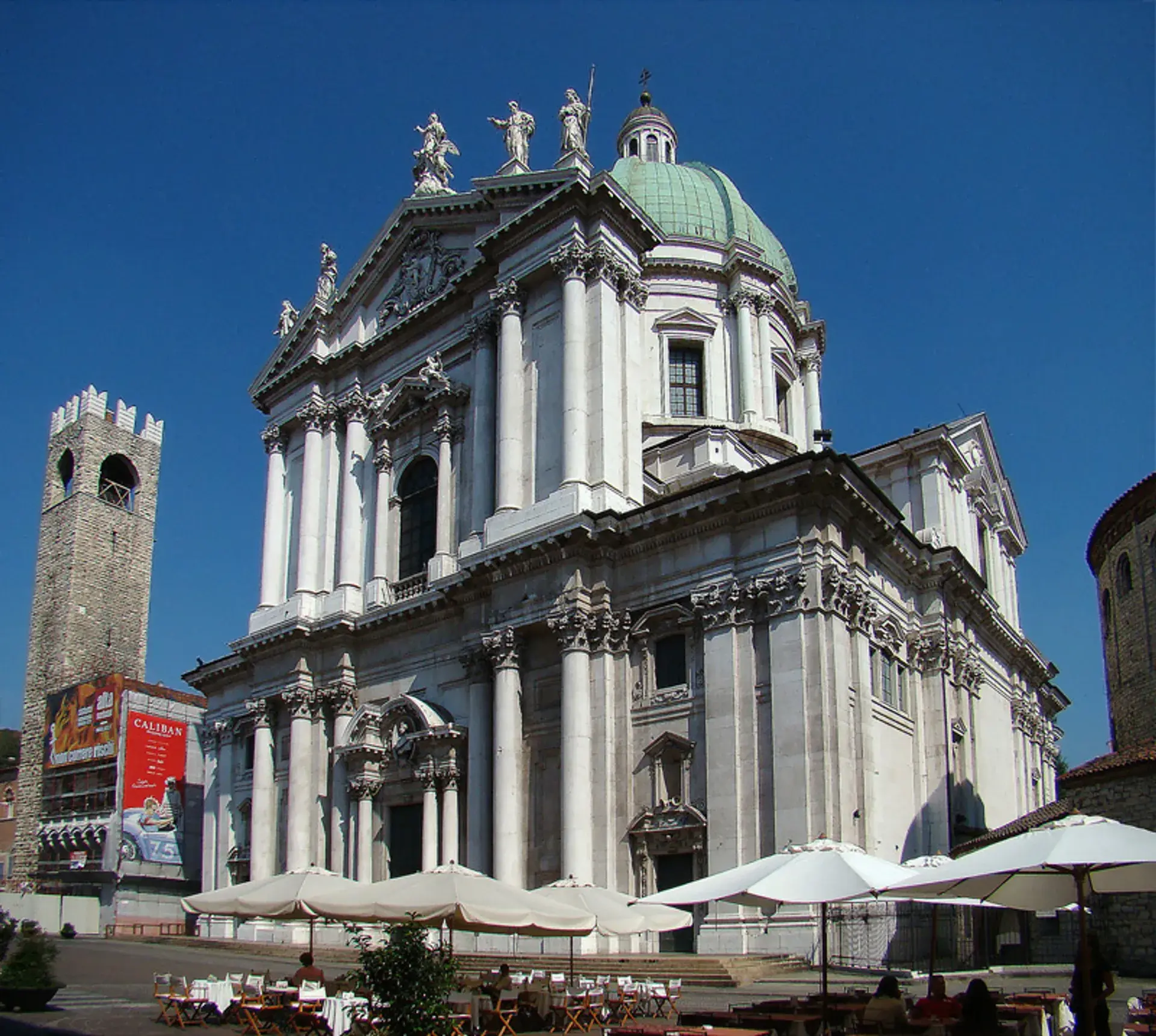
Visitors commonly gaze up at the impressive bulk of the Cathedral of Santa Maria Assunta dominating Paul VI Square with its distinctive stone facade. Widely known as the Duomo Nuovo, or New Cathedral, this towering co-cathedral anchors the historic spine of Brescia. Standing directly adjacent to the 11th-century Duomo Vecchio, it creates a striking visual contrast between ancient Romanesque masonry and soaring Neoclassical design.
A Centuries-Long Construction
The creation of this grand Counter-Reformation cathedral required the demolition of San Pietro de Dom, a 5th- to 6th-century paleochristian basilica that originally occupied the site. Construction began in 1604 but faced a staggering 221 years of delays. Chronic financial shortages, fierce architectural disputes, and the catastrophic plague of 1630 brought progress to a halt over the centuries.
The monumental structure was not fully realized until 1825 when the massive dome was finally completed. The cathedral also faced modern challenges, requiring significant restoration and reconstruction of the dome structure after it sustained severe damage during World War II.
Architectural Grandeur and Luminous Interiors
Built from local white Botticino marble, the cathedral features a classic Greek cross layout supported by monumental Corinthian pillars and massive arches. Over its long construction, several prominent architects contributed to the design. Initial plans are attributed to Andrea Palladio, followed by the work of Giovanni Battista Lantana and Pietro Maria Bagnadore. The facade was shaped by Giovanni Battista and Antonio Marchetti, while Luigi Cagnola ultimately designed the dome.
Reaching 80 meters in height, the dome is ranked as the third-highest church dome in Italy. Inside, high vaulted ceilings define the atmosphere. Light pours in through the windows beneath the towering dome, reflecting brightly off the pale Botticino marble and white stucco surfaces of the vast interior.
Art, Monuments, and Hidden Details
The Duomo Nuovo is home to a wealth of historical art and hidden curiosities. Just above the central entrance portal, below the upper pediment, sits a sculpted portrait bust of Cardinal Angelo Maria Querini. Inside, below the base of the dome, the four curved pendentives display marble bust reliefs of the Four Evangelists.
The side chapels hold further historical significance. The Trinity Chapel features a grand ex-voto altarpiece painted by Giuseppe Nuvolone, created to thank God for the end of the devastating 1630 plague. The cathedral also houses major works by prominent Renaissance and Baroque painters, including Girolamo Romanino, Il Moretto da Brescia, and Jacopo Zoboli, alongside the Arca di Sant’Apollonio, a 1510 funerary monument featuring reliefs attributed to Maffeo Olivieri.
Because the cathedral stands on Piazza Paolo VI, named for the Brescia-born Pope Paul VI, the left transept features a modern bronze monument dedicated to the local pontiff, sculpted by Raffaele Scorzelli.
Visiting the Cathedral
The Duomo Nuovo functions as Brescia's active episcopal cathedral and is open daily to the public. The building is completely wheelchair accessible. Guests can view the architecture, attend masses, or use the space for prayer, though mid-day church closures and liturgical schedules should be considered when planning a visit.
FAQ
How tall is the dome of the Duomo Nuovo in Brescia?
The dome of the Cathedral of Santa Maria Assunta reaches 80 meters in height, making it the third-highest church dome in Italy.
Why did the Duomo Nuovo take so long to build?
Construction began in 1604 and lasted for 221 years due to architectural disputes, chronic financial shortages, and the devastating 1630 plague.
Is the Cathedral of Santa Maria Assunta wheelchair accessible?
Yes, the cathedral is fully wheelchair accessible and open daily to the public, though it may close during mid-day or specific liturgical services.