Piazza del Mercato: Brescia's Historic Merchant Square
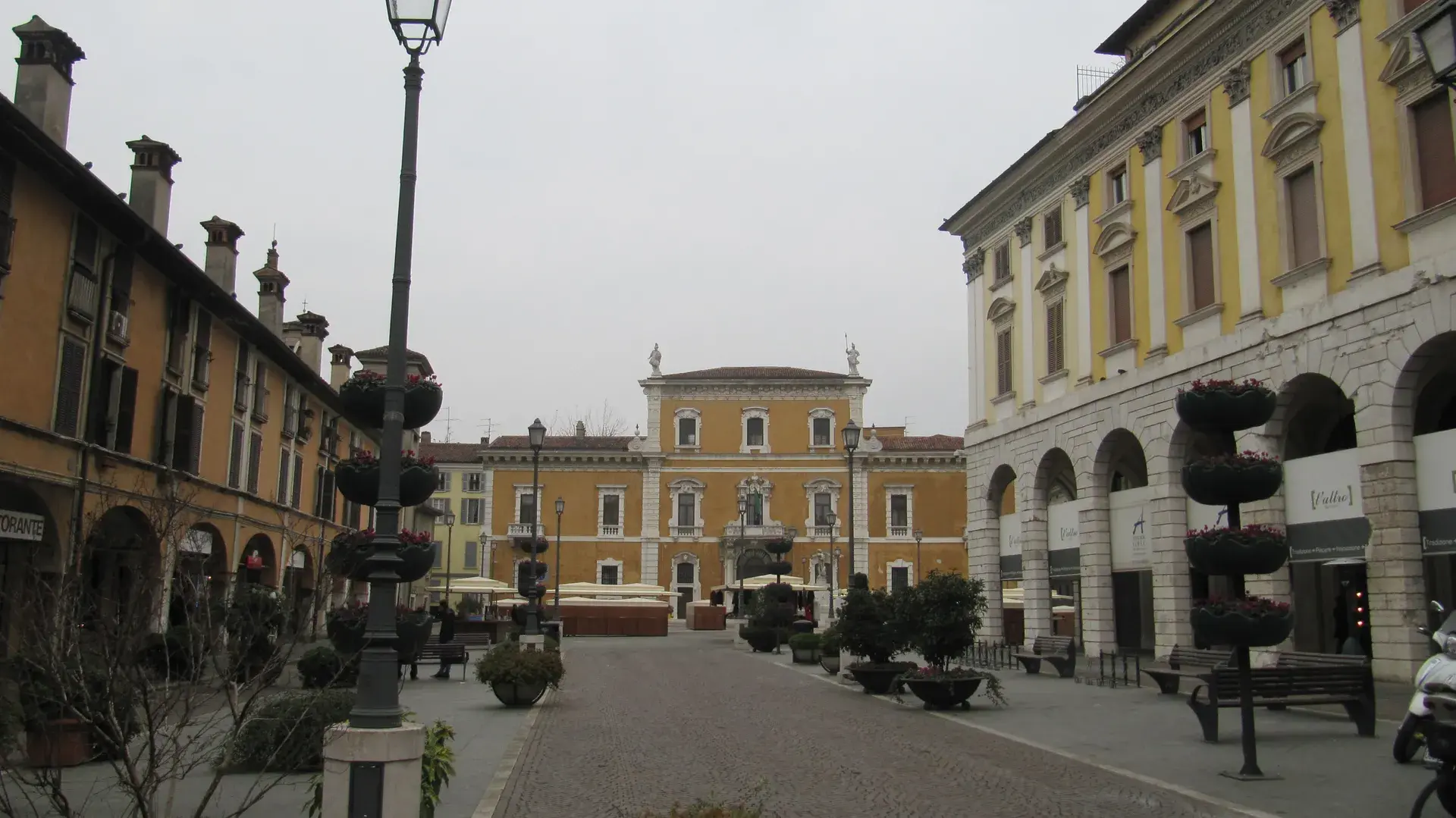
Born from dismantled city walls, Brescia's historic merchant square evolved from wooden market huts into a grand commercial theater. Soak in the historic atmosphere of Piazza del Mercato from the square's open edges. For centuries, this rectangular plaza served as the city's essential trading core, providing a commercial counterpoint to Brescia's administrative, religious, and political centers.
The Commercial Heart of Historic Brescia
The area took shape in the 15th century following the demolition of the city's 12th-century defensive walls. Designated as a trading hub in 1435, merchants initially sold linen, fabrics, and produce from temporary wooden huts. To formalize this bustling commodity trade, the Brescia municipality constructed permanent southern arcades in 1481. These structures featured ground-floor shop spaces with merchant residences built directly above.
An Architectural Timeline
The square is defined by structures spanning several centuries. To the north stands the 1558 Renaissance-style Palazzo Beretta, designed by civic architect Lodovico Beretta. The western edge is dominated by the Baroque Palazzo Martinengo Palatini, crowned with statues of Mars and Minerva.
At the center of the plaza, the steady sound of water emanates from the 1820s Fontana dell'Abbondanza. Designed by Giovanni Donegani, the fountain features a statue of Abundance sculpted by Giovanni Antonio Labus, creating an acoustic focal point buffered by the continuous building facades.
A Square of Legends and Transformations
In the southwest corner sits the early 17th-century Church of Santa Maria del Lino. The church was erected in 1608 following a 1604 local legend about a mysterious, vanishing traveler who sought shelter for a donkey packed with liturgical vestments.
Over the centuries, the square's name shifted to reflect its evolving trade, transitioning from Piazza dei Panni (Cloth Square) and Piazza del Lino (Linen Square) to Piazza delle Erbe, before officially becoming Piazza del Mercato in 1909. The area underwent significant physical changes during the 1920s and 1930s creation of the neighboring Piazza della Vittoria. It later required extensive reconstruction after World War II air raids severely damaged Palazzo Martinengo Palatini, the church, and leveled the local covered market.
Modern Revival
After serving as an open-air car park for decades in the late 20th century, Piazza del Mercato was officially pedestrianized in 2011. Today, the square hosts outdoor café seating, dining venues, and artisanal craft markets. The historic Palazzo Martinengo Palatini now functions as the Rectorate for the University of Brescia. The space offers a dramatic visual transition from the wide, open paving into the deep shadows and low stone vaults of the 15th-century southern arcades.
FAQ
What is the history behind the name Piazza del Mercato?
The square's name changed repeatedly to reflect its commercial uses. It was historically known as Piazza dei Panni (Cloth Square), Piazza del Lino (Linen Square), and Piazza delle Erbe (Herb Square) before officially becoming Piazza del Mercato in 1909.
What is the legend of the Church of Santa Maria del Lino?
The church, located in the square's southwest corner, was built in 1608 in response to a 1604 local legend. The story involves a mysterious, vanishing traveler who requested shelter for a donkey carrying liturgical vestments.
Can vehicles drive through Piazza del Mercato?
No, the square is entirely pedestrianized. Although it was utilized as an open-air car park for decades in the late 20th century, the city reclaimed the space for pedestrians in 2011.