Adlerbrücke: Brixen's Historic Rienz River Bridge
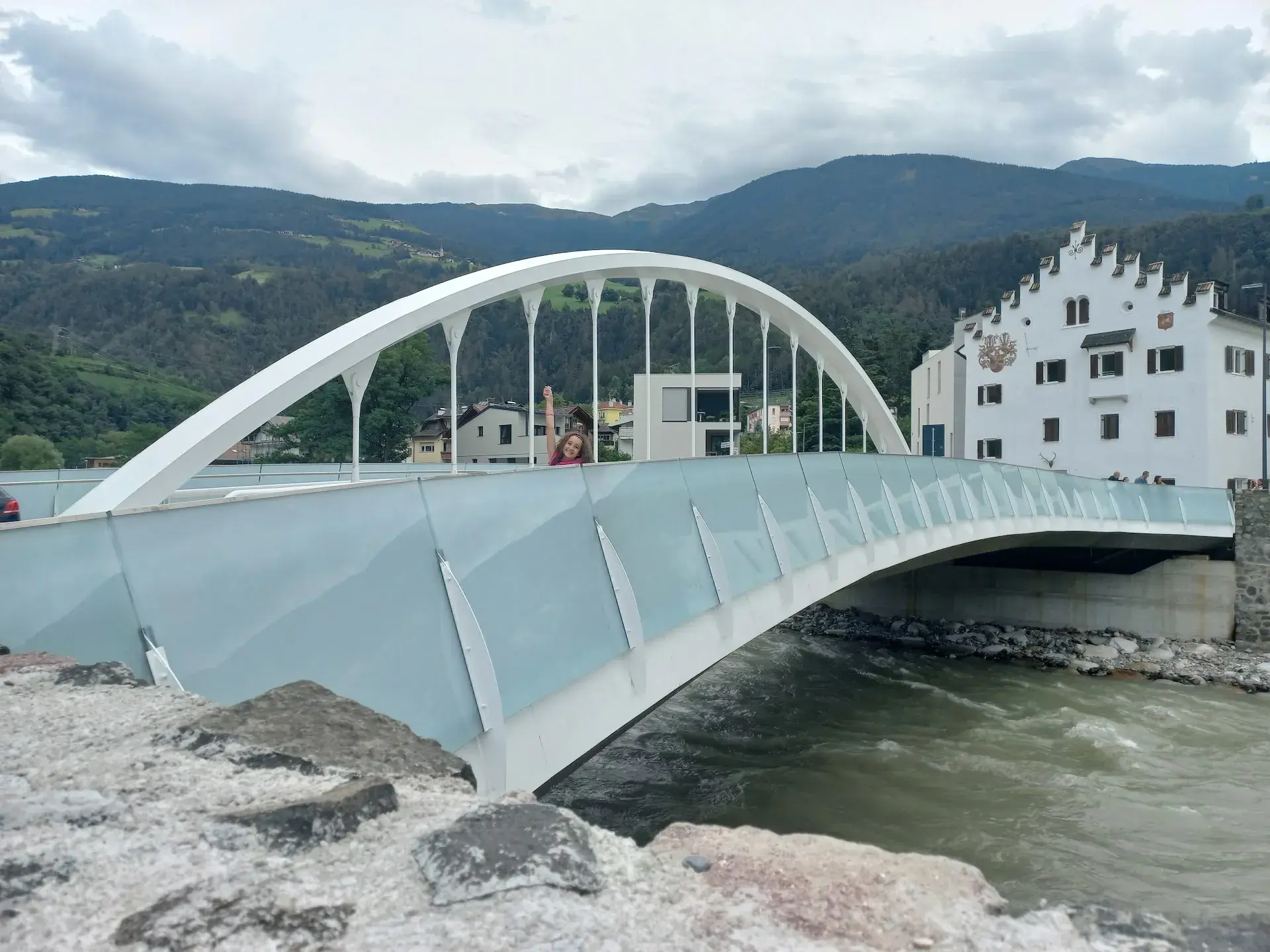
The Adlerbrücke, or Eagle Bridge, is a significant crossing in Brixen, Italy, that spans the Rienz river at its confluence with the Eisack. For centuries, it has served as a vital link connecting Brixen's historic old town with Stufels, the city's oldest district. The bridge's history reflects a long struggle between human infrastructure and the powerful forces of nature.
A History of Floods and Reconstruction
The first crossing at this site was a wooden bridge, first documented in 1233. Throughout its history, the bridge was repeatedly destroyed by severe floods from the Rienz and Eisack rivers. A major flood in 1882 prompted significant river regulation efforts and the subsequent rebuilding of the bridge.
In 1883, the current iron structure was completed. Its design is a reflection of late 19th-century engineering, emphasizing robust, practical iron construction to withstand the river's power. This version of the bridge has served the city for over a century.
The Protector of the Bridge
At the bridgehead stands a statue of Saint John of Nepomuk, the patron saint of bridges and a protector against floods. The statue was erected in 1760 as a response to the persistent threat of high water. Originally, the statue faced the city's White Tower, a plea for divine protection over the town.
Following the river regulation projects of the late 19th century, the statue's orientation was changed. In a symbolic shift from faith to engineering, its gaze was reoriented to look directly over the newly controlled river, a testament to humanity's changing relationship with the natural world.
Connecting Brixen's Oldest Districts
The Adlerbrücke provides a crucial connection between the main city, once the seat of powerful Prince-Bishops, and the ancient district of Stufels. Stufels has origins dating back to the Neolithic period and was historically considered the 'poor side of the river.' Today, it has transformed into a vibrant artists' quarter.
The bridge crosses the Rienz just as it flows into the Eisack. Interestingly, despite being a tributary, the Rienz contributes a greater volume of water at the confluence than the Eisack, making it the river's most significant water supplier.
The Future of the Adlerbrücke
While continuing to serve pedestrians and cyclists and offering picturesque views, the Adlerbrücke is undergoing a significant transformation. To further mitigate the historical threat of flooding, the 1883 iron bridge is being replaced by a new hydraulic lift bridge.
This modern engineering solution will allow the bridge deck to be raised by up to one meter during high water events. This innovative feature will facilitate the unimpeded passage of water and debris, providing enhanced flood protection for the city of Brixen.
FAQ
When was the first bridge at the Adlerbrücke location built?
The first documented bridge was a wooden structure recorded in 1233. The current iron bridge was built in 1883 after frequent destruction by floods, and it is now being replaced by a modern structure.
Why is there a statue on the Adlerbrücke?
The statue depicts Saint John of Nepomuk, the patron saint of bridges and a protector against floods. It was placed at the bridgehead in 1760 to seek protection from the river's destructive power.
What districts does the Adlerbrücke connect?
The bridge connects Brixen's historic old town with the ancient district of Stufels. Stufels is the oldest part of the city, with evidence of habitation from the Neolithic period.
Why is the Adlerbrücke being replaced?
The Adlerbrücke is being replaced with a modern hydraulic lift bridge to improve flood protection. The new design allows the bridge to be raised by one meter during high water, allowing water and debris to pass underneath more easily.
Discover Brixen like never before
Dive into Brixen hidden stories and secret spots with Ciceru interactive tours.
Explore tour
Audioguide
Quizzes
Maps
Solo
Couples
Groups & families

© Photo by Roberto Valente via Google Maps · Google Places