Hofburg Brixen: Palace of the Prince-Bishops
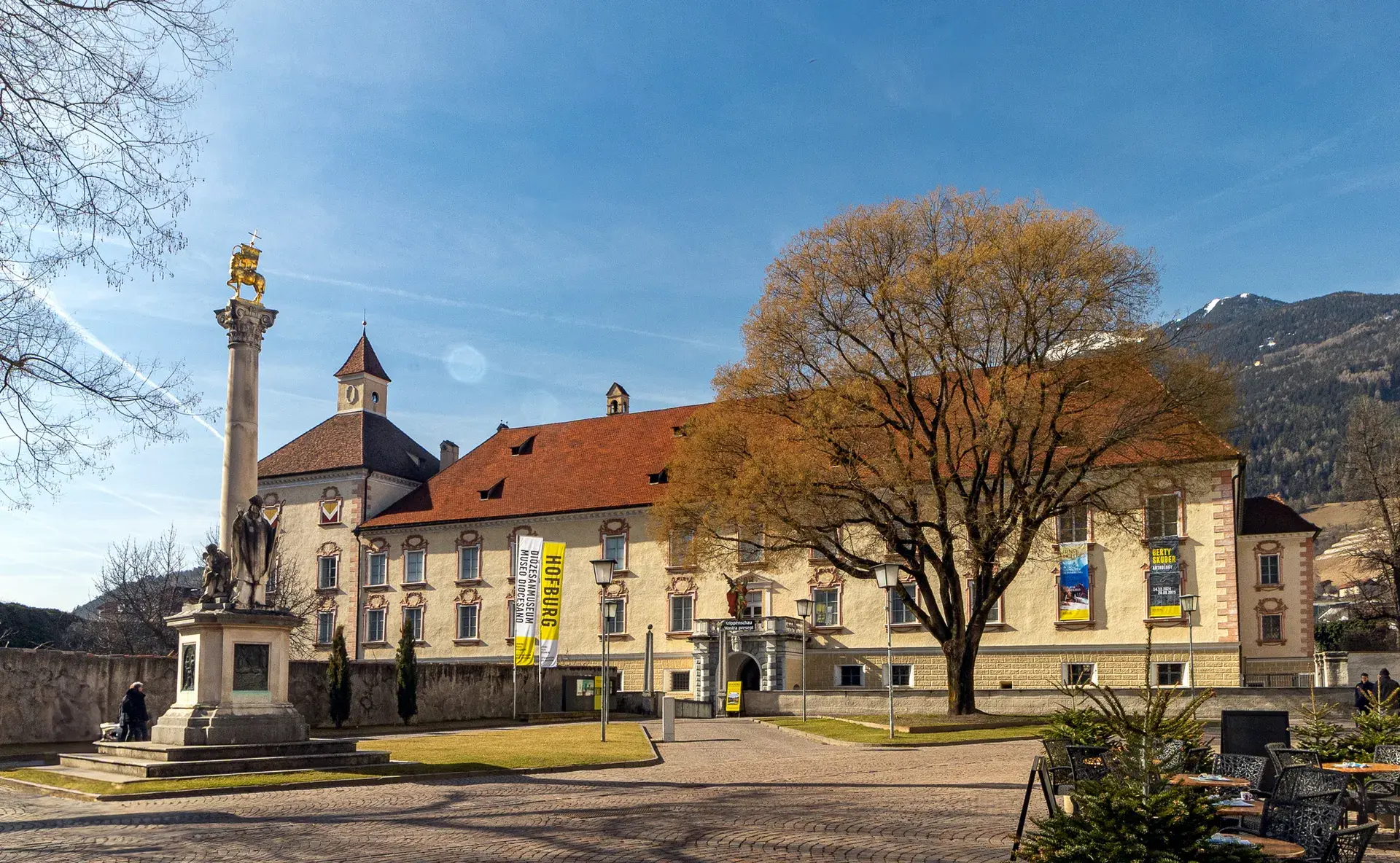
The Hofburg in Brixen stands as a majestic symbol of the temporal and spiritual power once wielded by the region's Prince-Bishops. Originally a 13th-century fortified castle, it became the official episcopal residence in 1265 under Bishop Bruno von Kirchberg, marking the beginning of its centuries-long history as a center of authority.
A History of Power and Turmoil
The city of Brixen became the capital of a Prince-Bishopric of the Holy Roman Empire in 1027, when Emperor Conrad II granted its bishops secular authority alongside their religious duties. The Hofburg's history reflects this power. In 1080, a controversial synod was held here which declared Pope Gregory VII deposed. The palace also witnessed significant social upheaval. During a peasants' uprising in 1525, the Hofburg was stormed and briefly occupied by rebels led by Michael Gaismair, who had ironically once served as the Prince-Bishop's own secretary.
Renaissance and Baroque Transformations
The palace's architecture evolved significantly over the centuries. A major transformation began in 1595 when Prince-Bishop Cardinal Andreas von Österreich commissioned a grand Renaissance courtyard. The plan, designed by court architect Albrecht Lucchese, included an ambitious series of 44 terracotta sculptures representing the Habsburg family tree. However, this vision was never fully realized, with only a portion of the sculptures ever installed.
Further extensive renovations in the early 18th century gave the palace its present Baroque appearance. Under Prince-Bishop Kaspar Ignaz Graf Künigl, the opulent Imperial Wing was added, intended for visiting members of the imperial family. This wing features impressive frescoes by Kaspar Waldmann, completed in 1708, and includes a fashionable "Chinese cabinet," reflecting the tastes of the era.
From Residence to Museum Complex
The Hofburg's role as a seat of power ended with the secularization of the Prince-Bishopric in 1803. It continued to serve as a bishop's residence until 1973, when the episcopal seat was transferred to Bolzano. Today, the Hofburg is a vibrant public museum complex and cultural center.
It houses the Diocesan Museum, the Diocesan Archives, and the Nativity Scene Museum (Crib Collection). Across more than 70 exhibition rooms, visitors can explore sacred art from the Romanesque period to modern times, the Cathedral Treasury, and a monumental nativity crib composed of over 5,000 figures. The museum tour also offers a unique, elevated view into the Court Church of St. Mary Immaculata from a gallery. The palace courtyard continues to be a lively space, hosting events and popular light and music shows during the Christmas season.
FAQ
What is the Hofburg in Brixen today?
The Hofburg is now a public museum complex that houses the Diocesan Museum, the Nativity Scene Museum, and the Diocesan Archives. It also serves as a cultural center, hosting special tours and seasonal events.
When did the Hofburg stop being a bishop's residence?
The Prince-Bishops lost their temporal power in 1803. The Hofburg officially ceased to be a bishop's residence in 1973 when the episcopal seat was moved from Brixen to Bolzano.
What are some highlights of the Hofburg's museum collections?
Highlights include the Diocesan Museum's 70 rooms of sacred art, the Cathedral Treasury, and the Crib Collection's monumental Probst crib, which features over 5,000 individual figures depicting the life of Jesus.