Kreuzgangtor: Gateway to Brixen's Cathedral Cloister
The Kreuzgangtor, or Cloister Gate, stands as one of Brixen's most ancient city gates. This arched doorway, with its heavy wooden door wing, provides access to the celebrated cloister of the Brixen Cathedral, a site of immense artistic and historical significance.
A Medieval Portal
The Kreuzgangtor dates back to medieval times, serving as a crucial access point to the cathedral complex. The gate features a smaller, built-in door which historically facilitated nocturnal entry for those attending the cathedral school or accessing the Bruderhof courtyard. Today, it continues to welcome visitors into the peaceful confines of the cloister.
The Heart of the Cathedral Complex
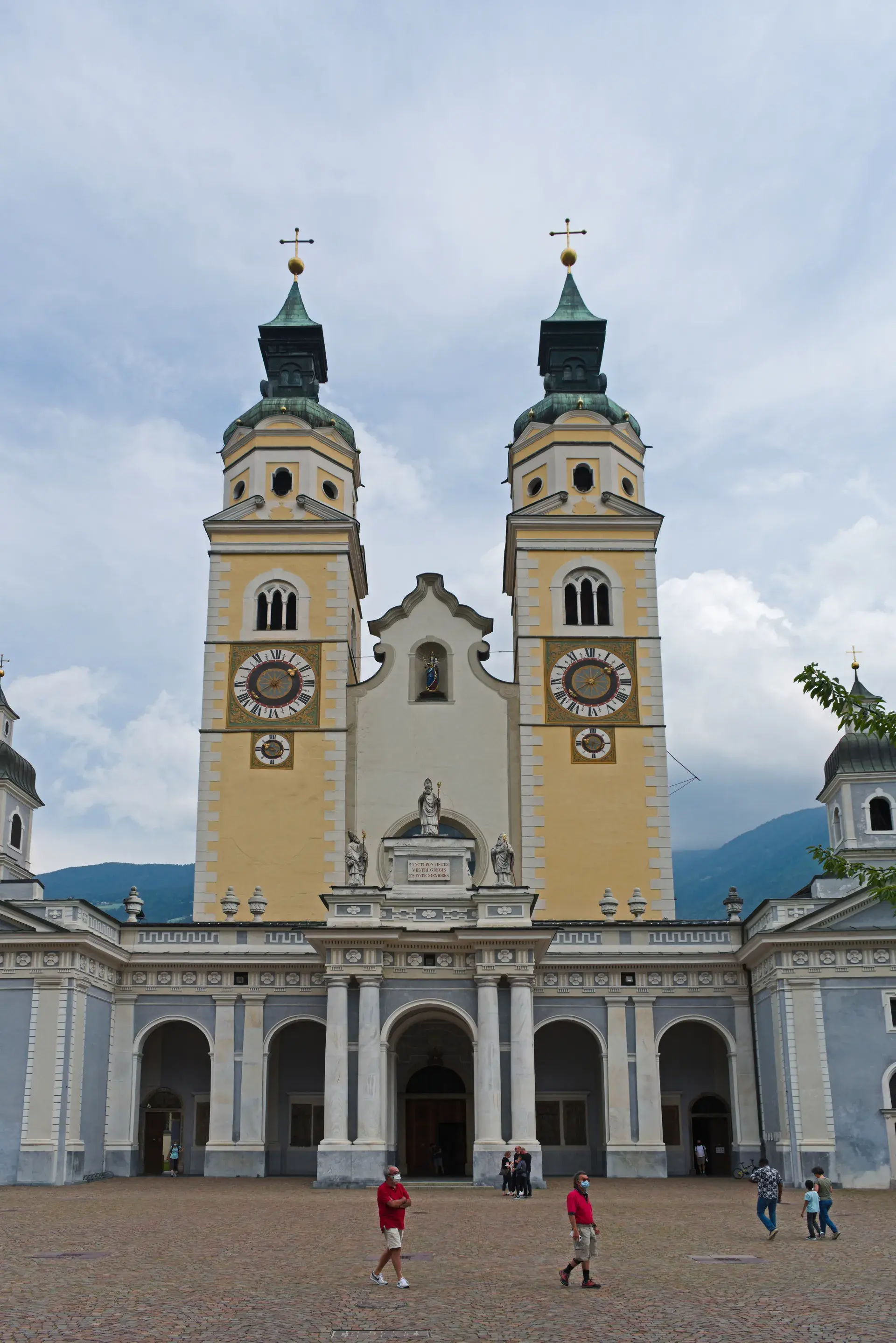
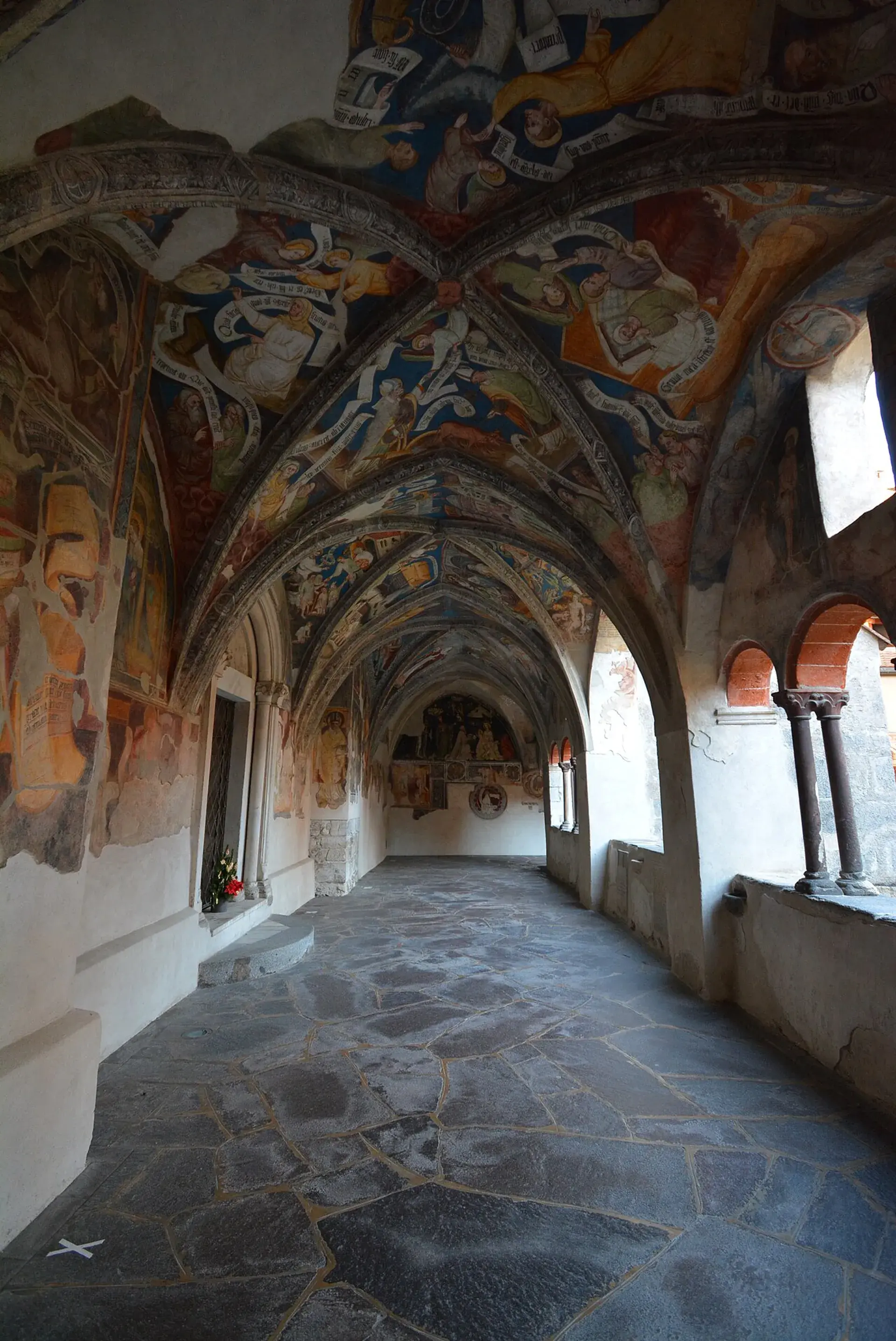
The cloister itself was the functional heart of the cathedral grounds, connecting key ecclesiastical buildings such as the Cathedral, the Bishop's residence, the chapter house, a school, and the baptistery. The complex has pre-Romanesque origins and underwent significant rebuilding in the Romanesque style in the 12th century. During the 14th century, the cloister received its characteristic Gothic groined vaults.
A Gallery of Sacred Art
The cloister is one of South Tyrol's most significant art monuments, renowned for its extensive collection of frescoes. These artworks do not form a single, continuous narrative. Instead, they were commissioned individually over time as decorations for burial sites, resulting in a diverse collection by various artists. Among the named masters are Leonhard von Brixen, who painted frescoes in the 5th arcade around 1472, and Ruprecht Potsch, who worked on the 7th arcade in the late 15th century.
The artworks include symbolic Old Testament prefigurations of Christ's resurrection, such as Jonah emerging from the whale and Samson raising the gates of Gaza. In the 3rd arcade, a particularly surprising fresco depicts an elephant.
Legacy of the Prince-Bishops
The grandeur of the Brixen Cathedral and its cloister is a direct reflection of the city's history as the capital of a powerful Ecclesiastical Principality. From 1027 until 1803, the Prince-Bishops of Brixen wielded extensive temporal and spiritual authority. The monumental scale and artistic wealth of the complex stand as a testament to their enduring legacy and the historical importance of medieval Brixen.
The Cloister Today
The Kreuzgangtor remains the entrance to a site that draws more visitors than any other in Brixen, apart from the cathedral itself. The cloister continues to be a cherished space, with locals and tourists frequently walking through its peaceful arcades to appreciate the profound artistic and historical ambiance.
FAQ
What is the Kreuzgangtor?
The Kreuzgangtor, or Cloister Gate, is one of Brixen's most ancient city gates. It is an arched doorway with a large wooden door that serves as the entrance to the cloister of the Brixen Cathedral.
What is special about the frescoes in the Brixen cloister?
The cloister's frescoes are a significant collection of Gothic art. They were commissioned individually over several centuries for burial sites, not as a single narrative. They include works by masters like Leonhard von Brixen and a surprising depiction of an elephant.
Why was the Brixen Cathedral and cloister so grand?
The scale and artistic richness of the complex reflect the power and wealth of the Prince-Bishops of Brixen. For centuries (1027-1803), Brixen was the capital of an important Ecclesiastical Principality, and the cathedral complex was its center.
Discover Brixen like never before
Dive into Brixen hidden stories and secret spots with Ciceru interactive tours.
Explore tour
Audioguide
Quizzes
Maps
Solo
Couples
Groups & families

© Photo by Sarah Norris via Google Maps · Google Places