Porta Sabiona: A Historic Medieval Gate in Brixen
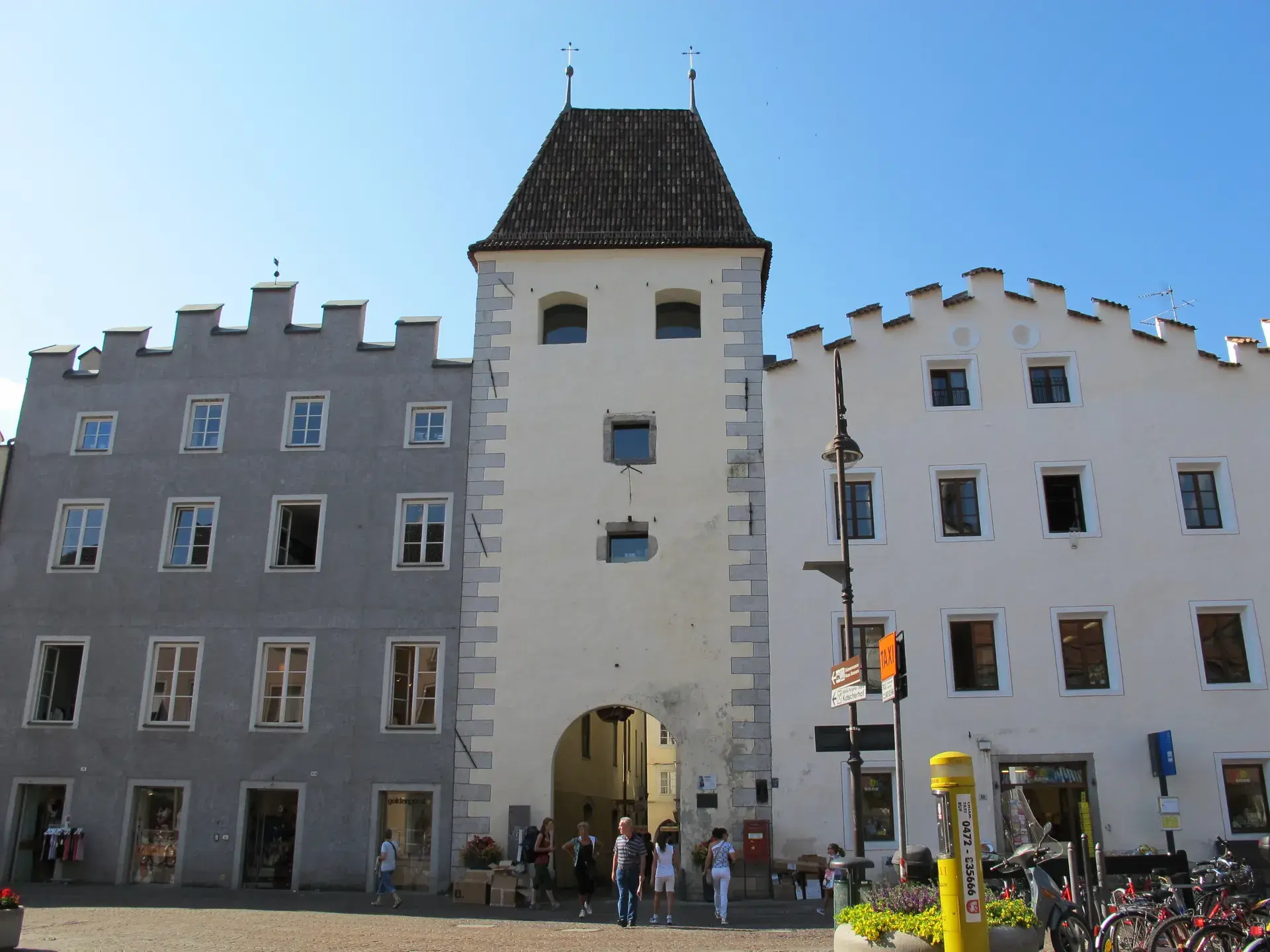
Porta Sabiona stands as one of the four ancient city gates of Brixen (Bressanone), a tangible remnant of the city's past as a fortified episcopal center. It formed a crucial part of the defensive walls established around 1000 AD, a period that coincided with the transfer of the bishop's seat from Sabiona to Brixen, cementing the city's role as an ecclesiastical power.
Origins and Naming
The gate's origins are deeply intertwined with the city's medieval fortifications. The earliest defensive structures near the gate were initiated by Bishop Heriward around the year 1000. Contrary to what its name might suggest, Porta Sabiona is not named for the famous Sabiona Monastery. Instead, it derives its name from the Lords of Sabiona, a noble family entrusted with the gate's defense during the 12th century. This family built their residence nearby, a building later known as Palazzo Lachmüller or Casa Lachmüller.
A Defensive Stronghold
As a key entry point, Porta Sabiona played a vital role in the city's security. The Lords of Sabiona were responsible for securing this section of the city's perimeter, and their now-faded coat of arms can still be found on the south wall. The imposing tower features four windows and loopholes, with upper floors accessible by a block staircase. Its lateral walls once had openings to a patrol path, which are now walled up. Reflecting the stringent security of the era, Porta Sabiona, along with Brixen's other three gates, was closed every evening at dusk until the early 18th century. The gate was also known as 'Porta Fienili' (Hay Gate) due to its connection to Via Fienili (Hay Street).
The Gate in Modern Times
Today, Porta Sabiona remains a prominent and well-preserved landmark in Brixen's old town, integrated into the city's pedestrian routes. While the gate largely retains its historical appearance, minor renovations occurred in the early 19th century. The adjacent Palazzo Lachmüller, once the home of the gate's defenders, now serves as the seat of the Eisack Valley Community. In 2017, restoration plans were approved for both the gate and the palazzo to preserve their historical appearance.
FAQ
Why is the gate called Porta Sabiona?
Porta Sabiona is named after the Lords of Sabiona, a noble family who was responsible for its defense in the 12th century. It is not named after the well-known Sabiona Monastery.
How old is Porta Sabiona?
The gate is part of Brixen's city fortifications, which date back to around 1000 AD. The name and its defense by the Lords of Sabiona are documented from the 12th century.
What was the historical function of Porta Sabiona?
Porta Sabiona was one of four main gates providing a fortified entry point into medieval Brixen. Until the early 18th century, it was closed every night at dusk to secure the city.
What is the building next to Porta Sabiona?
The building adjacent to the gate is Palazzo Lachmüller. Historically, it was the residence of the Lords of Sabiona who defended the gate. Today, it is the seat of the Eisack Valley Community.