Wilde Mann: Brixen's Three-Headed Guardian Sculpture
The Enigmatic Wilde Mann of Brixen
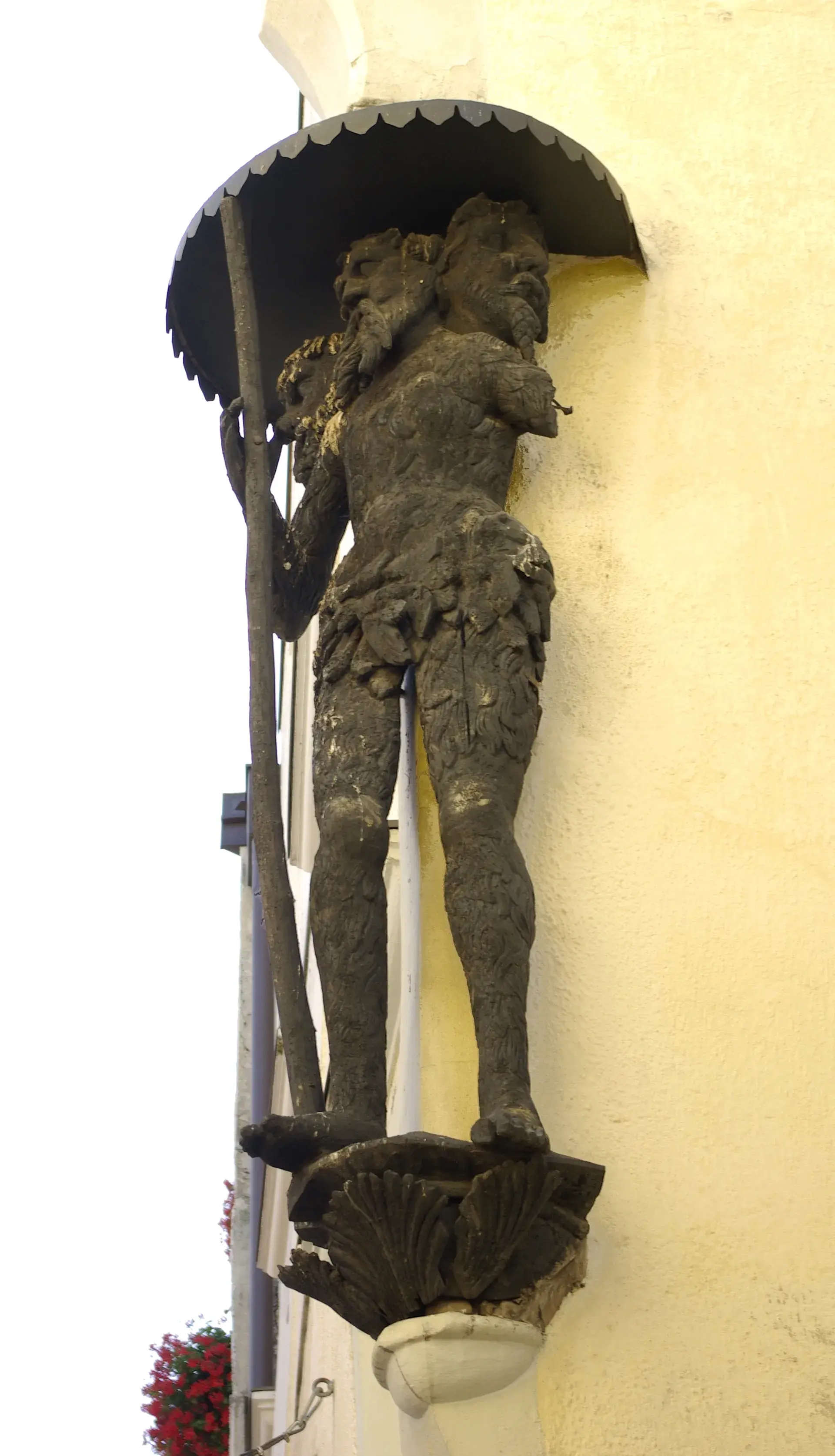
Affixed to the facade of the Gasthaus 'Zum schwarzen Adler' in Brixen is the 'Wilde Mann', a distinctive three-headed wooden sculpture. Located at the corner of the Kleine and Große Laubengasse, this Late Gothic style carving is believed to date from the late 16th century. Though its creator remains unknown, it stands as a prominent and recognizable cultural landmark in the city's historic center.
A Guardian of Three Alleys
The sculpture's most striking feature is its three heads. Each head is uniquely oriented to gaze down one of the three alleys that converge at its location. This multi-headed design is thought to symbolize the sculpture's role in overseeing the bustling commercial and civic life that has defined these lanes for centuries. The precise reasoning for this specific design remains unrecorded, adding to its mystique.
From Inn Sign to Historical Landmark
The 'Wilde Mann' originally served as a distinctive sign for the inn it adorns, which was known as 'Herberge zum Wilden Mann' until the 17th century. The name was later changed to the current 'Gasthaus Zum schwarzen Adler'. The figure of the 'Wild Man' itself is rooted in European medieval mythology, representing a creature beyond the bounds of civilization, often depicted as hairy and wielding a club. The inn continues to operate today, preserving this piece of local history. It is also believed that Wolfgang Amadeus Mozart and his father may have stayed at the inn during their travels to Italy.
Legends and Lore
A whimsical piece of local folklore claims that the 'Wilde Mann' spits gold pieces from its mouths at noon on Good Friday. However, this magical event is playfully rendered impossible by a local custom. On Good Friday, the church bells that would traditionally signal noon are silenced and replaced by the sound of wooden rattles, meaning the specific moment never officially arrives by the tolling of a bell.
A Counterpoint to Grandeur
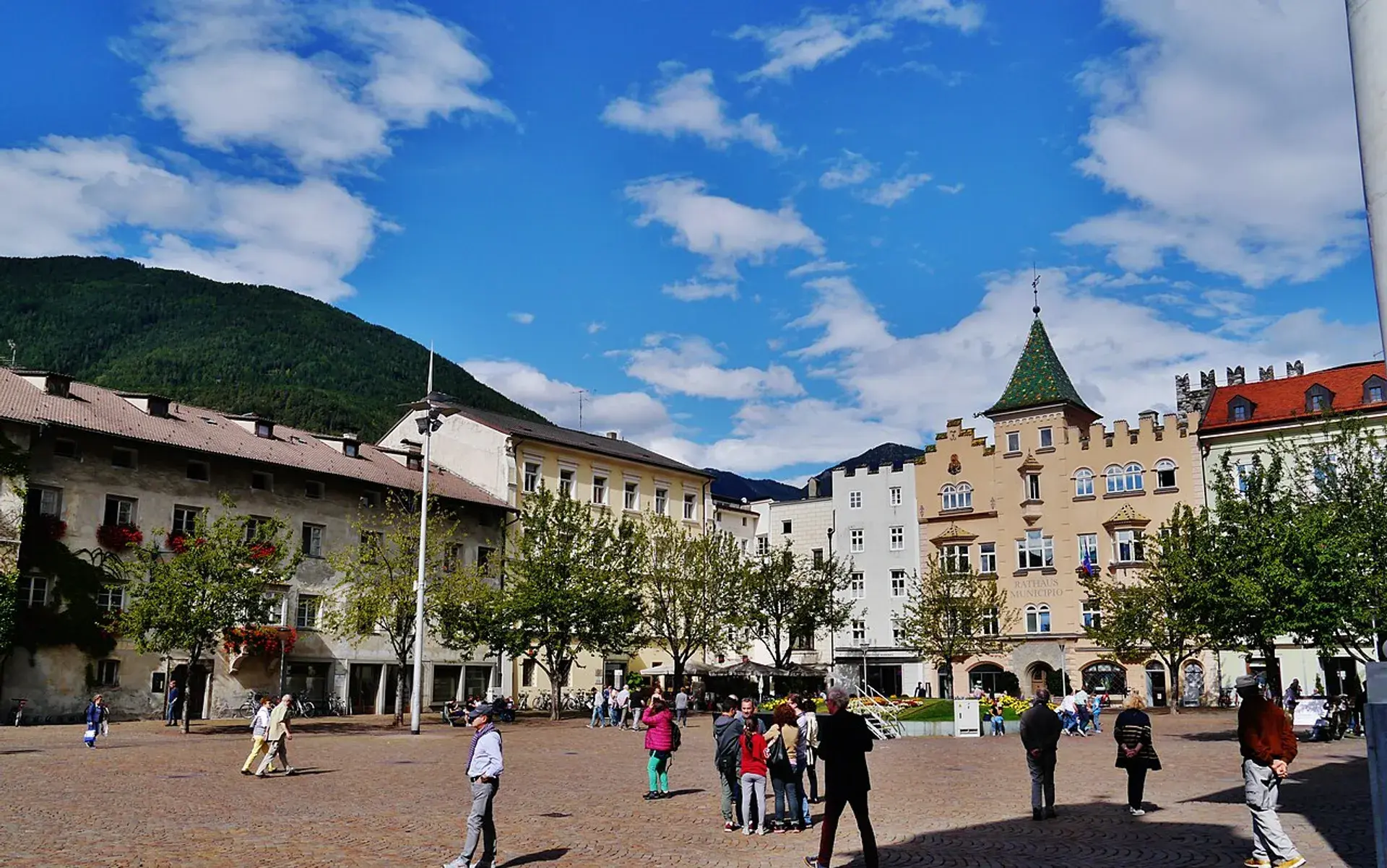
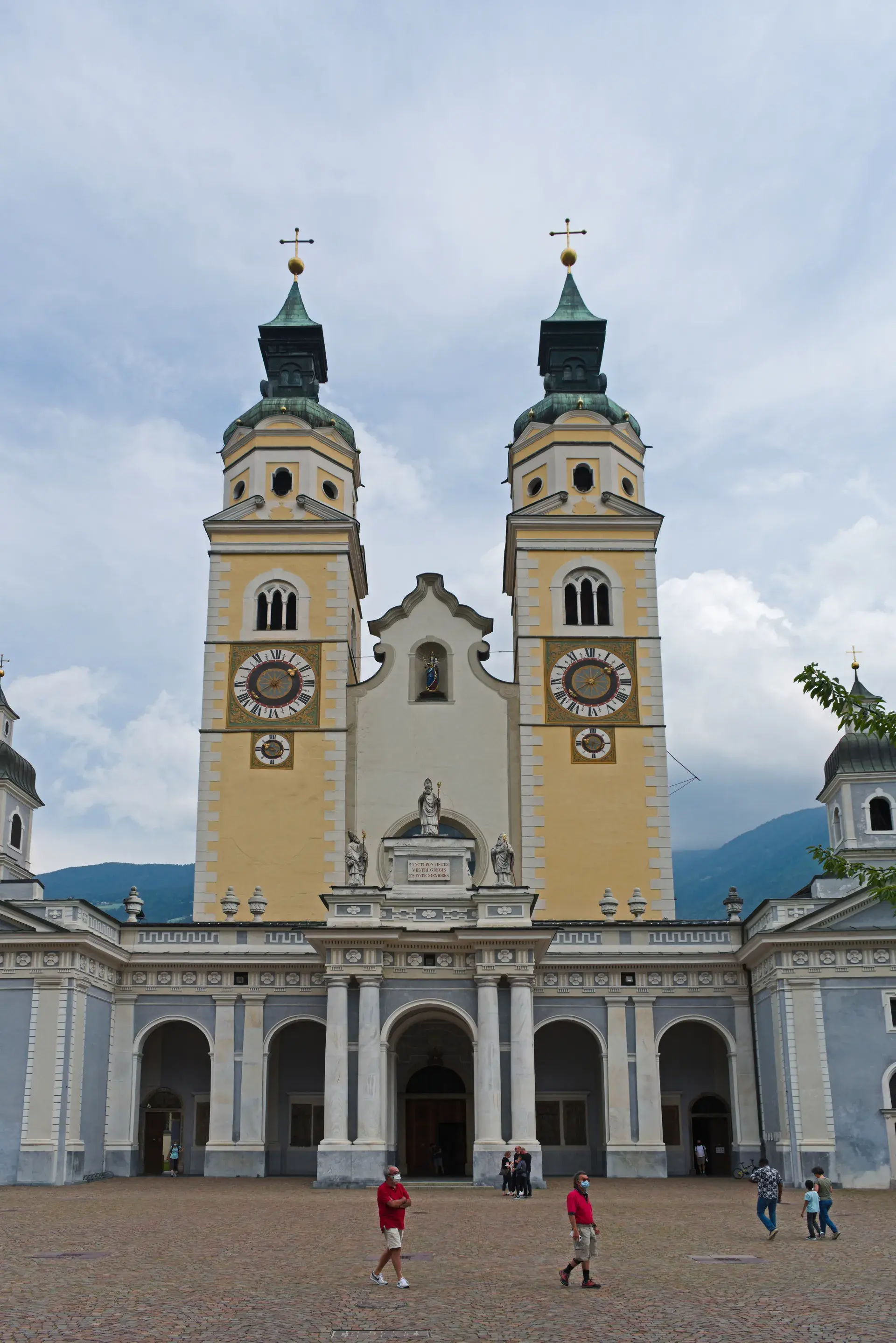
For centuries, Brixen was the capital of a powerful Prince-Bishopric, a history reflected in grand structures like the Cathedral and the Hofburg Palace. The 'Wilde Mann', in contrast, represents the enduring popular culture and mercantile activity that flourished at street level. It serves as a tangible link to the folklore and commercial heart of the city's remarkably preserved medieval old town, highlighting a different layer of historical experience.
FAQ
What is the Wilde Mann in Brixen?
The Wilde Mann is a three-headed wooden sculpture from the late 16th century, located on the facade of the Gasthaus 'Zum schwarzen Adler' in Brixen. It is considered to be in the Late Gothic style and originally served as an inn sign.
Why does the Wilde Mann have three heads?
The sculpture's three heads are positioned to look down each of the three converging alleys where it is located. This is believed to symbolize its role in overseeing the historic commercial and civic activity of the area.
Is there a legend about the Wilde Mann sculpture?
Yes, local folklore says the Wilde Mann spits gold pieces at noon on Good Friday. However, the legend includes a twist: since church bells are replaced by wooden rattles on that day, the exact moment of noon is never signaled by bells.
Did Mozart see the Wilde Mann?
It is believed that Wolfgang Amadeus Mozart and his father may have stayed at the inn, now called Gasthaus 'Zum schwarzen Adler', during their journeys to Italy, making it possible that they were observers of the unique sculpture.