El Gato: Chioggia's Famous Lion Column
In the heart of Chioggia's Piazzetta Vigo stands the Colonna con il Leone Marciano, a landmark known affectionately by locals as "El Gato," or "The Cat." This monument, a prominent and frequently photographed sight, embodies the city's unique history and its complex relationship with the powerful Republic of Venice.
History of the Column
The column itself is a piece of history rediscovered. Made of Greek marble and topped with a Byzantine capital, it was unearthed during excavations in 1763. By order of Podestà Mussato, it was formally erected in its current prominent location in 1786.
The monument's story took a dramatic turn during the French occupation. On July 14, 1797, Napoleonic troops removed the original Lion of Saint Mark, a symbol of Venetian dominion, and replaced it with a statue of Liberty. Following the end of French rule, during the Austrian period, a new lion was installed—the one seen today.
A Symbol of Rivalry
The Winged Lion of Saint Mark was the quintessential symbol of the Venetian Republic, and its display was mandated in all subject cities. However, Chioggia's version is conspicuously smaller than its Venetian counterparts, which earned it the nickname "El Gato."
Several legends attempt to explain its diminutive size. One local perspective from Chioggia suggests it was intentionally made small to subtly mock Venetian authority. Venetians, in turn, offered their own tales: one claims an unskilled sculptor, hired by the Chioggiotti to save money, kept reducing the statue's size to correct mistakes. Another whimsical story tells of a cat that fled the larger lions of Venice and took refuge on the column. The historical rivalry was so pronounced that Venetians would sometimes leave fish bones at the column's base to taunt the people of Chioggia about their "cat."
The Lion's Surprising Origin
The current lion has a peculiar backstory. It was not originally intended as a grand monument. After the first lion was removed, this replacement was adapted from a 'mazzocco,' a small, ornamental lion typically used for balustrades. Wings, a book, and a gladius were added to transform it into the symbol of Saint Mark that now sits atop the column.
The Column Today
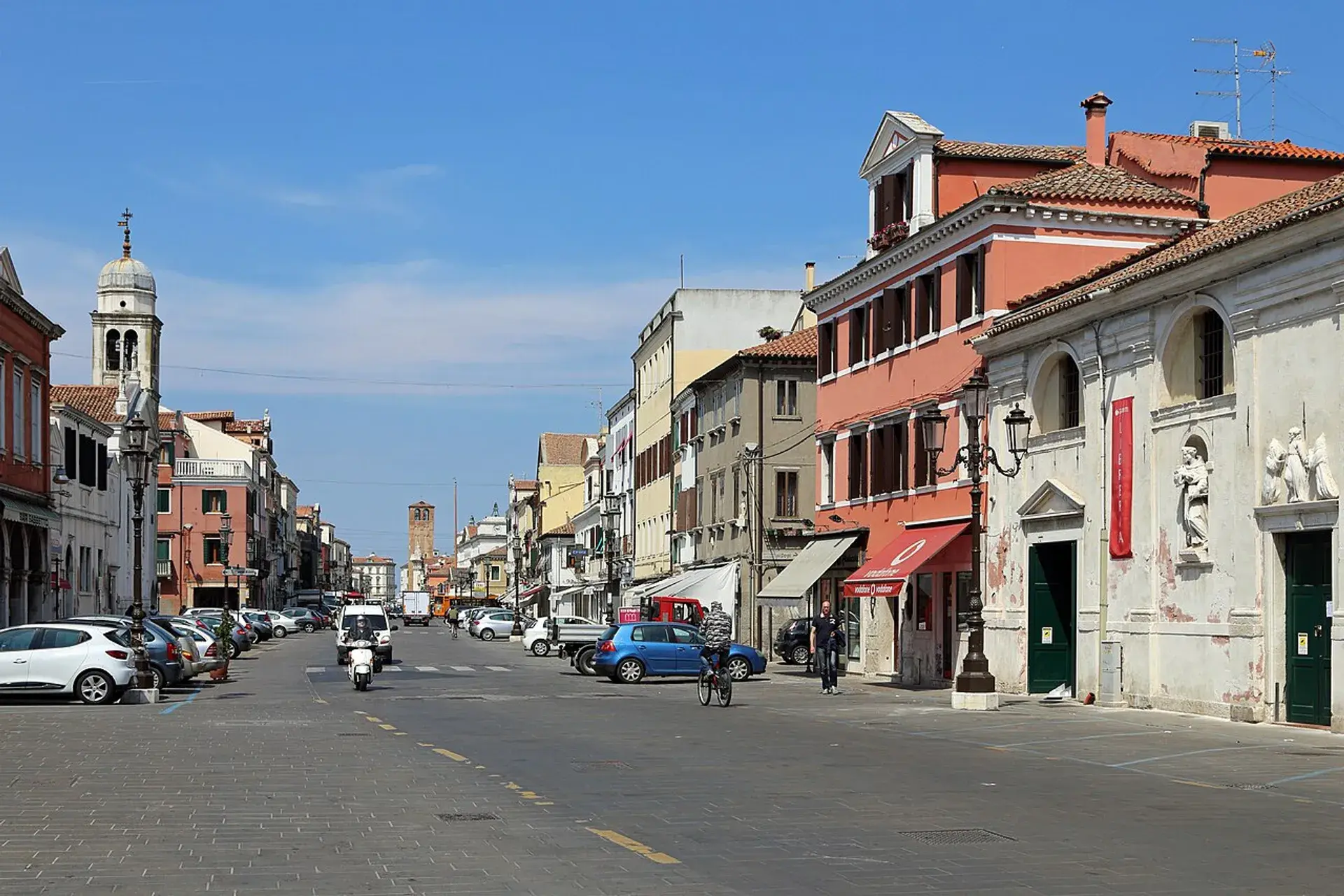
Today, the Colonna con il Leone Marciano is a central feature of public life in Chioggia. It marks the end of Corso del Popolo, the city's main thoroughfare, and serves as a popular meeting point for locals and tourists. The piazza is surrounded by majestic palaces and shops, and it is conveniently located near the embarkation points for vaporetti to Venice and the island of Pellestrina. The column underwent conservation and restoration work beginning in October 2023, ensuring its preservation for future generations.
FAQ
Why is the lion statue in Chioggia called 'El Gato' (The Cat)?
The Lion of Saint Mark in Chioggia is nicknamed 'El Gato' due to its unusually small size compared to the grand, formidable lions seen in Venice, giving it a cat-like appearance.
Is the lion on the column the original one?
No, the original Lion of Saint Mark was removed by Napoleonic troops in 1797. The current lion is a replacement installed during the Austrian period and was adapted from a smaller, ornamental piece originally intended for a balustrade.
Where is the Colonna con il Leone Marciano located?
The column is located in Piazzetta Vigo in Chioggia, Italy. It stands at the end of the city's main street, Corso del Popolo, near the waterfront.