Tempietto di Sant'Antonio (San Pieretto) in Chioggia
A Legacy in Stone
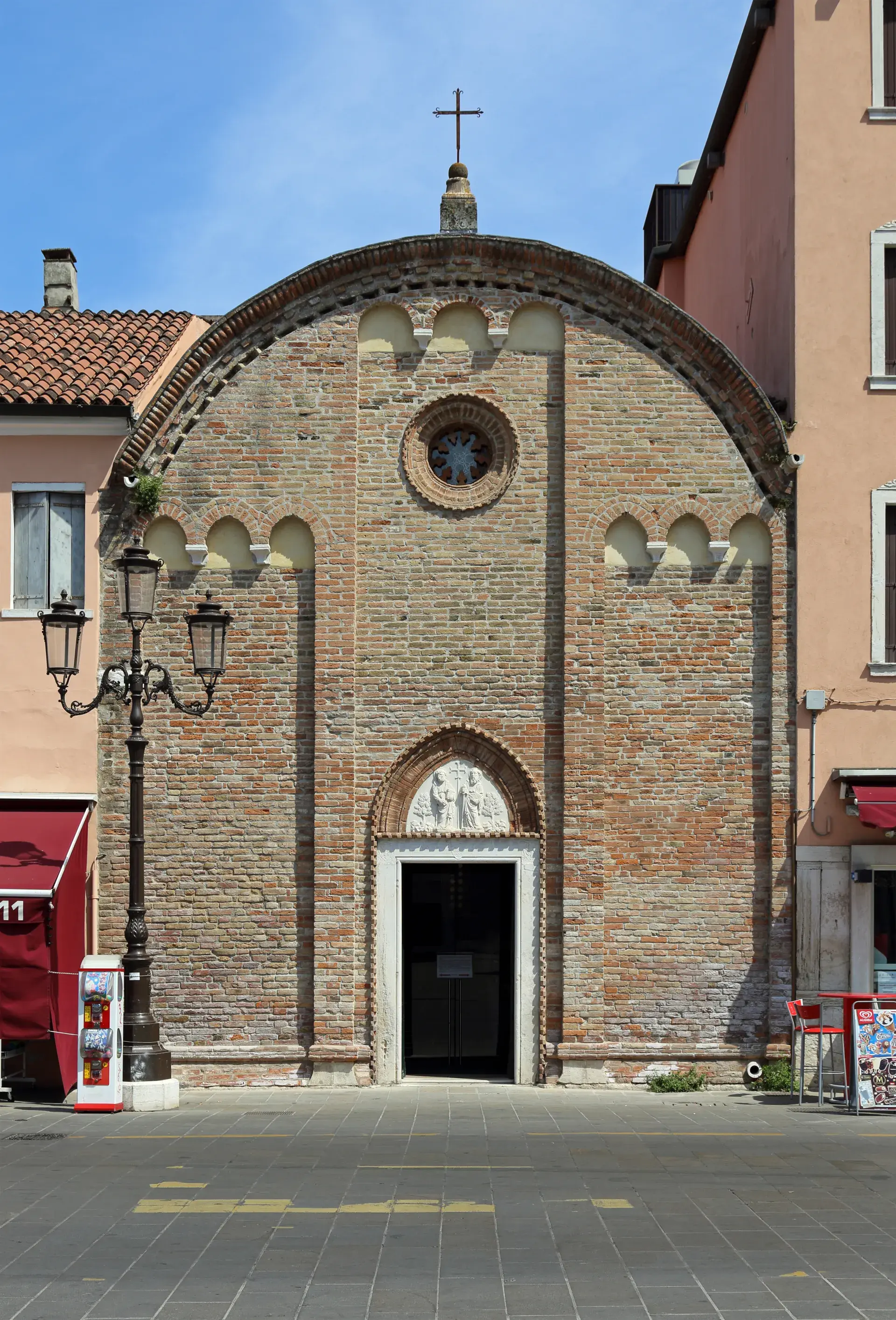
In the historic heart of Chioggia, on the east side of Campo del Duomo, stands the Chiesa dei Santi Apostoli Pietro e Paolo. Commonly known as San Pieretto due to its small size, this chapel is a fine example of modest late medieval Venetian Gothic architecture. Its origins trace back to the 1386 will of Pietro Mazzagallo, who commissioned its construction to ensure daily masses would be said for his soul and those of his relatives.
Though conceived in the 14th century, the building was constructed on communal land granted by the city in August 1431. The chapel was completed and dedicated in February 1432, marking the fulfillment of Mazzagallo's final wishes.
A Tumultuous History
Over the centuries, San Pieretto served many purposes that reflected the changing tides of Chioggia's history. Between 1525 and 1528, it temporarily housed the Confraternita dei Battuti. Throughout the 17th and 18th centuries, it functioned as a singing school and later provided a temporary base for priests of the Oratory of Saint Philip Neri.
A dramatic shift occurred after the fall of the Republic of Venice in 1797. Occupying French and Austrian forces confiscated the sacred building, repurposing it as a gunnery school and a stable for horses. During this period, its facade was altered with an enlarged entrance and the addition of two windows.
Restoration and Rededication
The early 1900s saw the Municipality of Chioggia acquire the church, leading to a significant restoration in 1921 with guidance from local historian Aristide Naccari. Ownership was transferred to the cathedral chapter in 1941. Following its most recent and thorough restoration between 2011 and 2013, Bishop Adriano Tessarollo rededicated the chapel. Today, San Pieretto serves the community as a chapel for the Adoration of the Crucifix, returning to its sacred origins.
Architectural Highlights
The facade of San Pieretto features a notable Carrara marble portal. An inscription in Lombard script honors the legacy of its founder, Pietro Mazzagallo, a detail from his will that is partly engraved on the entrance architrave. The portal is framed by his family's coats of arms, which depict rampant lions, a rooster, flames, and waves. Above the entrance, a bas-relief in the lunette portrays Saints Peter and Paul, the church's namesakes.
FAQ
Why is the church called San Pieretto?
Its official name is Chiesa dei Santi Apostoli Pietro e Paolo, but it is commonly known as San Pieretto, a diminutive name, because of its small size.
Who built the Tempietto di Sant'Antonio?
The chapel's construction was commissioned in the 1386 will of Pietro Mazzagallo. The building itself was completed between 1431 and 1432.
What is the most surprising part of San Pieretto's history?
After the fall of the Venetian Republic in 1797, occupying forces confiscated the church and used it as both a gunnery school and a stable for horses.
What is the church used for today?
Following a major restoration between 2011 and 2013, San Pieretto was rededicated and now functions as a chapel for the Adoration of the Crucifix.