Palazzo del Granaio: Chioggia's Historic Granary on Stilts
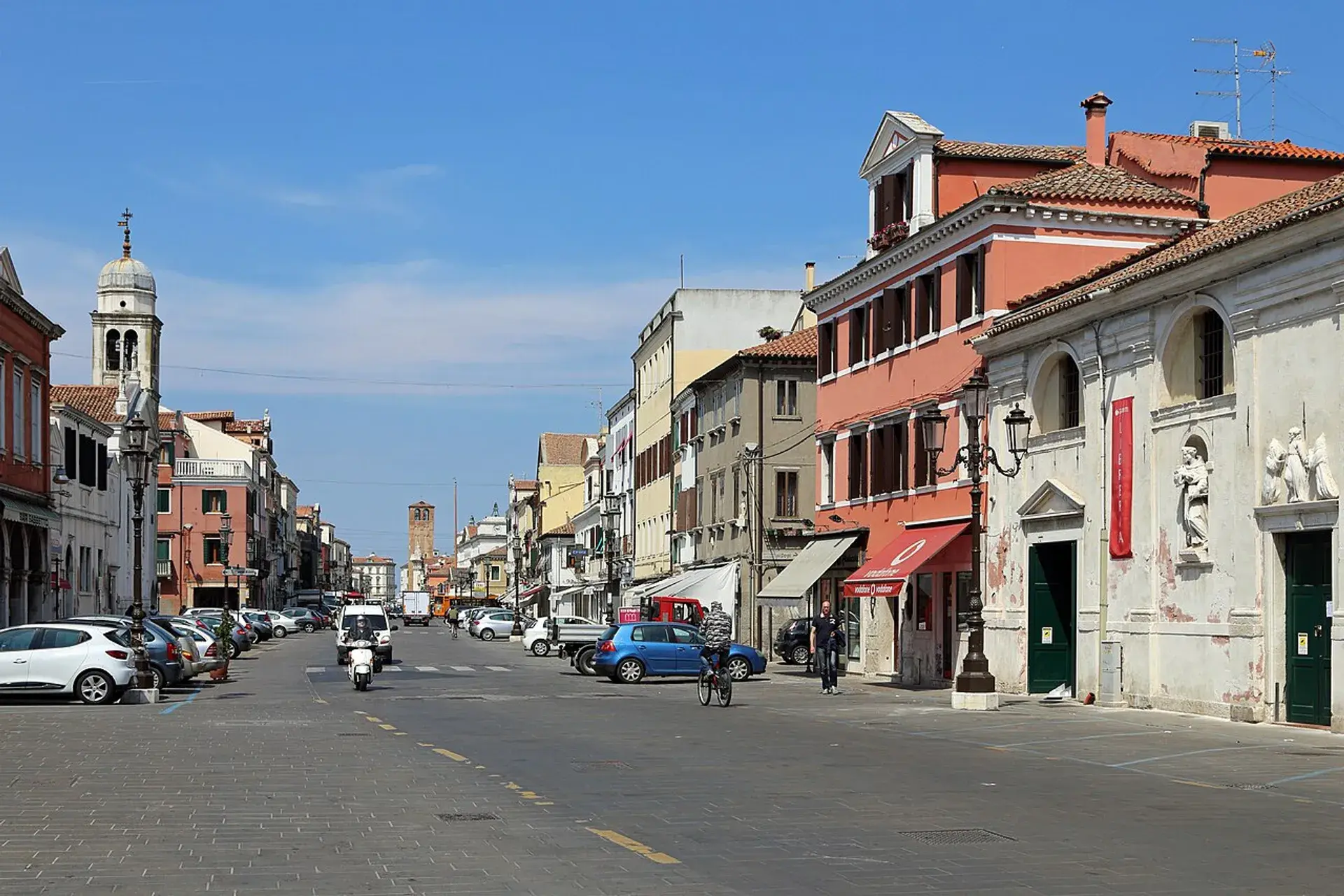
The Palazzo del Granaio stands as one of the oldest and most significant edifices in Chioggia, Italy. Located on the city's main thoroughfare, Corso del Popolo, this formidable 14th-century building offers a glimpse into the city's resilient past and its deep connection to trade and survival.
A Foundation for Survival
Constructed between 1322 and 1332, the Palazzo del Granaio predates the devastating War of Chioggia (1379-80). Its primary function was to serve as a public granary, a vital storehouse for grain to ensure the community's sustenance during sieges or famine. The building's very survival through a war that destroyed much of the city underscores its critical importance. The tenure of Marino Morosini as pretore in 1328 is associated with its construction, as family crests are reportedly found within the edifice.
Ingenious Architecture
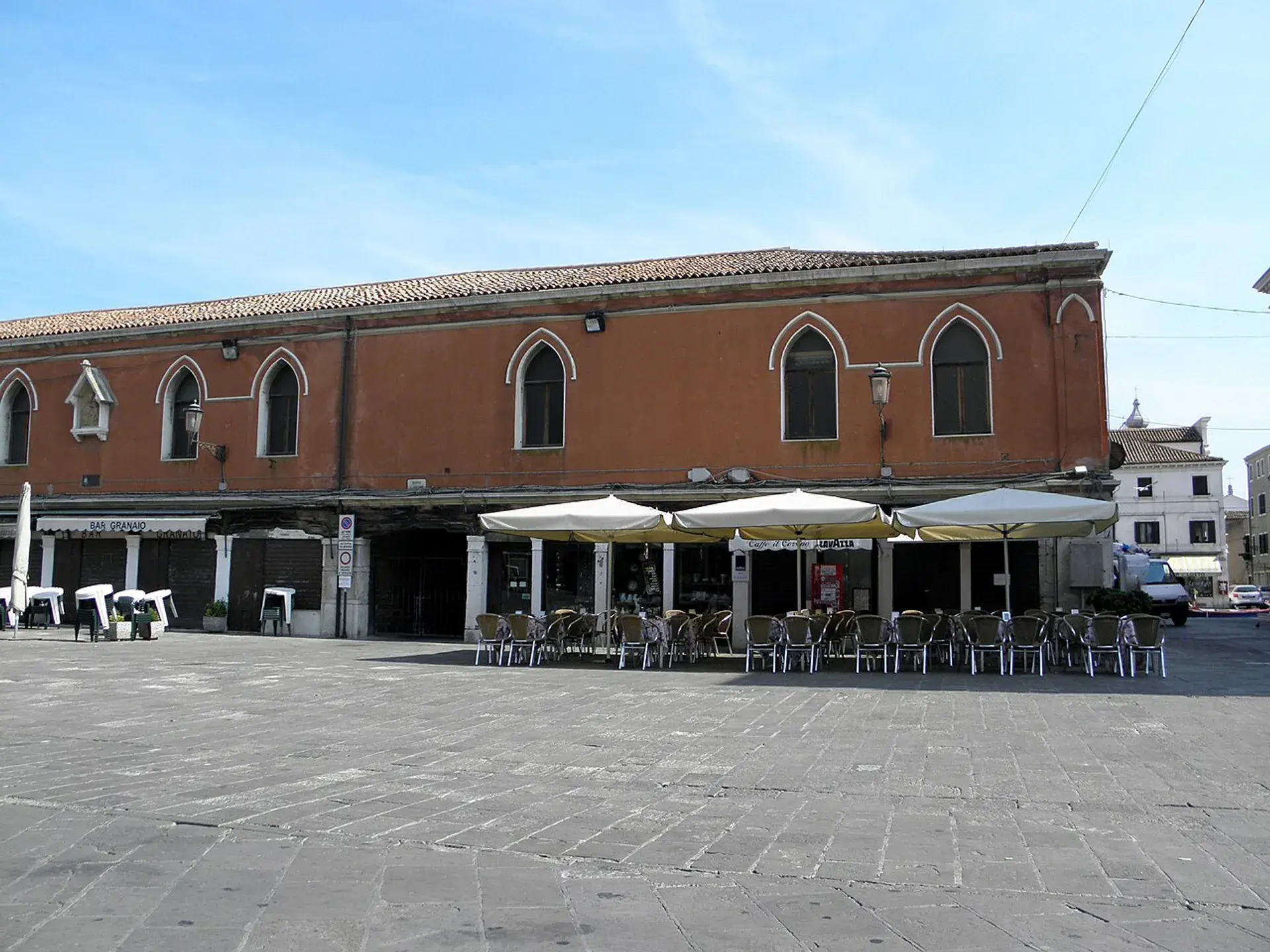
Designed in a sober Venetian Gothic style, the palazzo's most remarkable feature was its original foundation. It was built atop 64 massive Istrian stone columns, effectively functioning as an enormous stilt-house. This clever design protected the precious grain stores from Chioggia's prevalent humidity and the notorious "acqua alta," or high water. On its facade, an aedicule holds an image of the Virgin with Child, a work attributed to the artist Jacopo Sansovino.
From Granary to Gallery
The building's appearance changed significantly in the late 19th or early 20th century when the open ground floor between the columns was enclosed. This alteration was made to create warehouses for the bustling adjacent fish market. Today, the ground floor hosts various commercial activities. The Palazzo del Granaio is currently undergoing a major restoration, with plans to transform it into a pinacoteca (art gallery). The project is slated for completion by the end of 2024.
A Place of Local Legend
The square in front of the Palazzo del Granaio was historically the setting for a unique Carnival event on Mardi Gras known as the 'Caccia al Toro' (bull hunt). This tradition, held to commemorate a Venetian victory, is cited as the origin of the Italian idiom 'tagliare la testa al toro,' which means 'to finish a pending matter.'
FAQ
What was the original purpose of the Palazzo del Granaio?
It was built in the 14th century as a public granary to store grain, ensuring the city of Chioggia had a food supply during potential sieges or periods of famine.
Why was the Palazzo del Granaio built on columns?
The building originally stood on 64 Istrian stone columns to elevate the structure. This protected the stored grain from Chioggia's high humidity and frequent high water levels, known as "acqua alta."
What is the Palazzo del Granaio used for today?
The ground floor houses various commercial businesses. The entire building is undergoing restoration to become a pinacoteca, or art gallery, with an expected completion in 2024.
What is the origin of the phrase 'tagliare la testa al toro'?
The Italian idiom, which means 'to finish a pending matter,' is said to originate from the 'Caccia al Toro' (bull hunt). This event was held in the square in front of the Palazzo, where a bull was ceremonially decapitated.