Ponte di Vigo: Chioggia's Elegant Marble Bridge
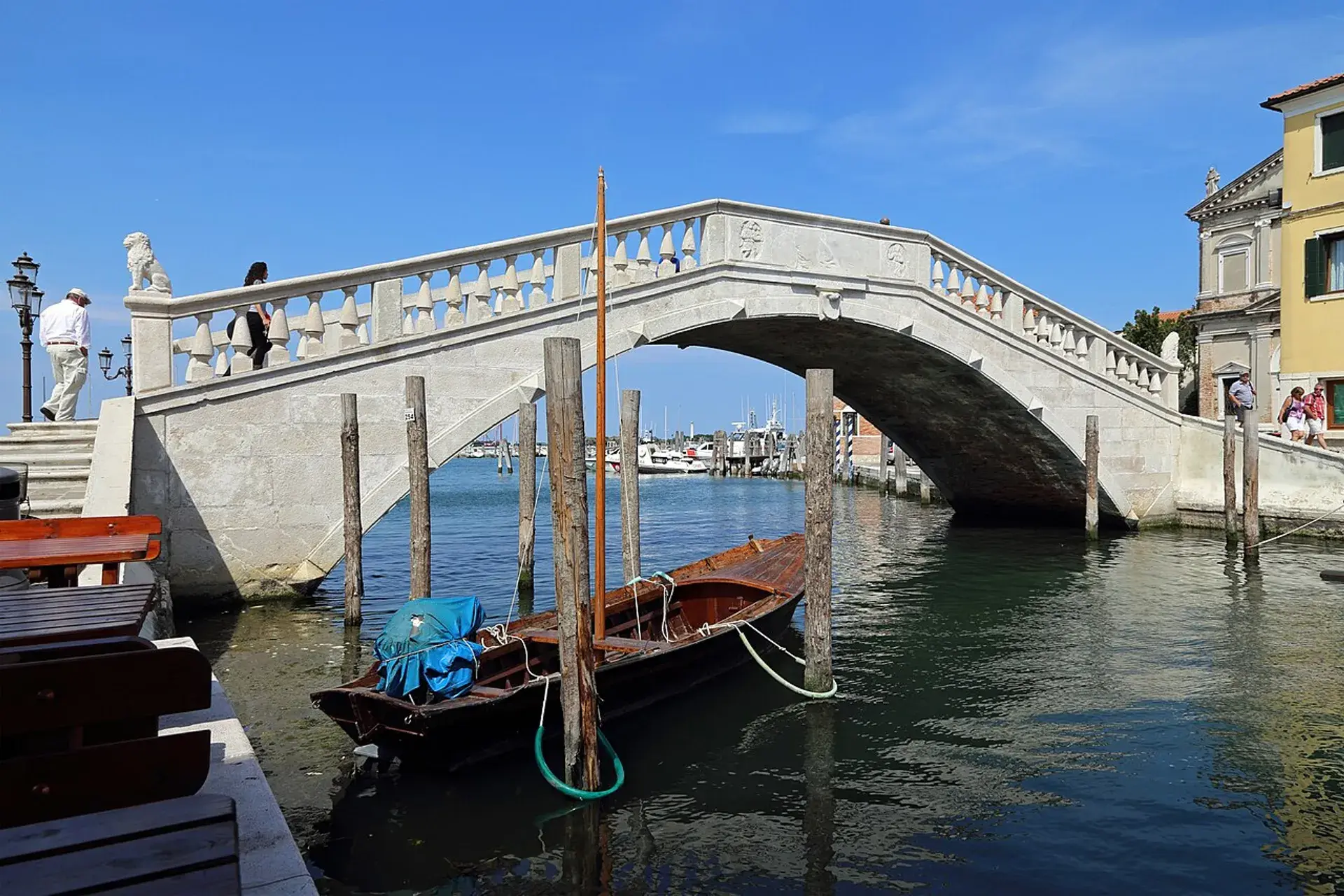
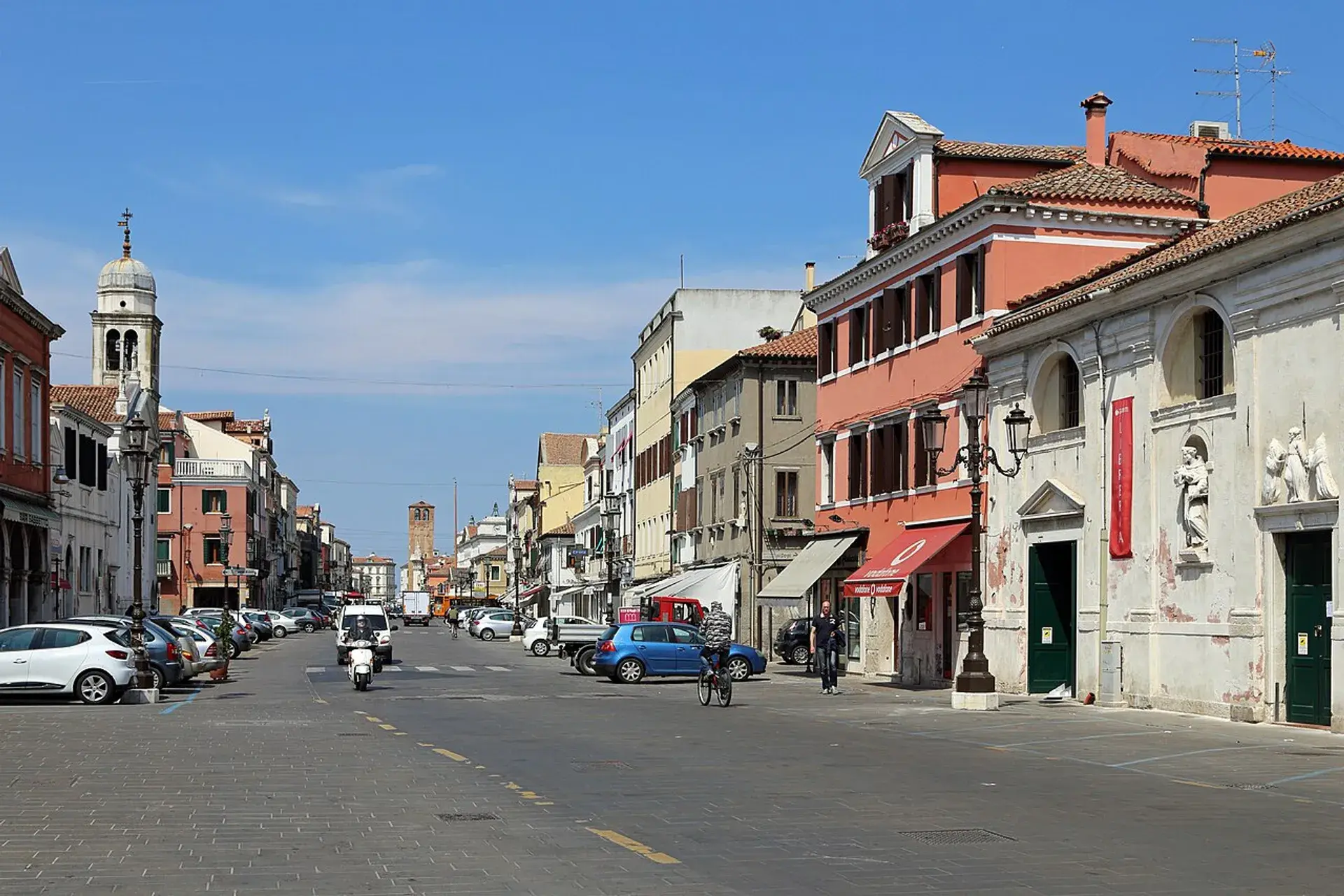
Begin your journey at Chioggia's most elegant bridge, the Ponte di Vigo, a monumental marble gateway to the city from the Venetian lagoon. As one of the most photographed monuments in Chioggia, it serves as the city's symbolic welcome card for those arriving by sea. The bridge connects the main thoroughfare of Corso del Popolo with Riva Vena, spanning the northern end of the Canal Vena, the city's primary waterway.
A History Forged in Stone
The bridge's origins trace back to a wooden structure that existed as early as the late 14th century and was a site of heavy fighting during the War of Chioggia (1370-80). Due to the excessive maintenance costs of the timber original, a decision was made to build a more permanent crossing. The current stone bridge was constructed between 1684 and 1685 under the authority of Podestà Giovanni Francesco Morosini.
In 1762, the bridge was further embellished under Chief Magistrate Girolamo Arnaldi, who commissioned the addition of ornate Istrian marble decorations, balustrades, and four small lions. A significant restoration effort took place in 1823, following a project drafted by Felice Vincenzo Carisi.
A Beacon in the Lagoon
A pivotal moment in the bridge's history occurred in 1796 when Podestà Angelo Memmo commissioned the placement of a lantern on the structure. This made Ponte di Vigo the only bridge in Chioggia to be included in a nighttime street lighting project. More importantly, the lantern served as a crucial navigational aid for seafarers, acting as a beacon for vessels entering the harbor, especially on dark or stormy nights.
Chioggia's Balcony
Today, Ponte di Vigo is a central feature of the city, often referred to as Chioggia's "balcony" for its commanding views of the Venetian Lagoon. Its Venetian architectural style, characterized by Istrian stone and marble, makes it a popular destination for locals and visitors alike. People frequently stroll across the bridge, pausing to enjoy the panoramic views, take photographs, or sit on its steps near the surrounding cafes.
The Lion and the Cat
Adjacent to the bridge, in Piazzetta Vigo, stands a column topped with a small statue of the Lion of St. Mark. Locals have affectionately nicknamed it "el Gato de Ciòsa" (Chioggia's Cat) due to its diminutive size. This nickname and the statue's small scale are widely interpreted as a subtle, deliberate mockery of Venetian authority, reflecting a historical tension between the two powerful maritime cities.
FAQ
When was the Ponte di Vigo built?
The current stone Ponte di Vigo was constructed in 1685, replacing an earlier wooden bridge. It was later embellished with marble balustrades and other decorations in 1762.
Why was the original wooden bridge replaced?
The original wooden bridge was replaced with the current stone structure because the maintenance costs for the timber version had become excessively high.
What is "Chioggia's Cat"?
"Chioggia's Cat" (el Gato de Ciòsa) is the local nickname for the small statue of the Lion of St. Mark located on a column near the bridge. Its small size is seen by locals as a playful mockery of Venetian power.
Did the Ponte di Vigo have a special function at night?
Yes, from 1796, a lantern was placed on the bridge, making it the only bridge in Chioggia with nighttime lighting. It served as an essential navigational beacon for sailors entering the harbor.