Torre dell'Orologio di Sant'Andrea: Chioggia's Ancient Clock
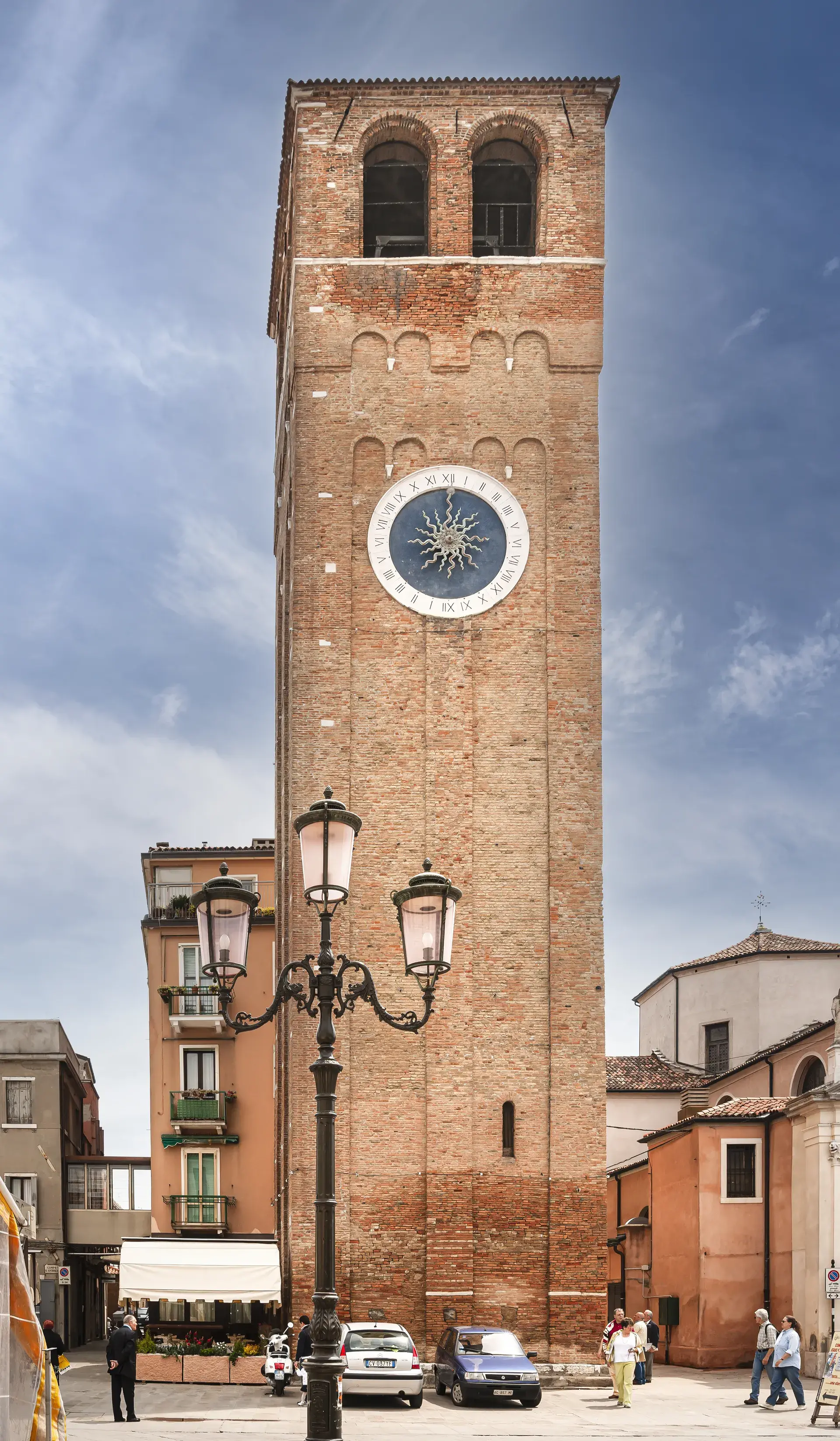
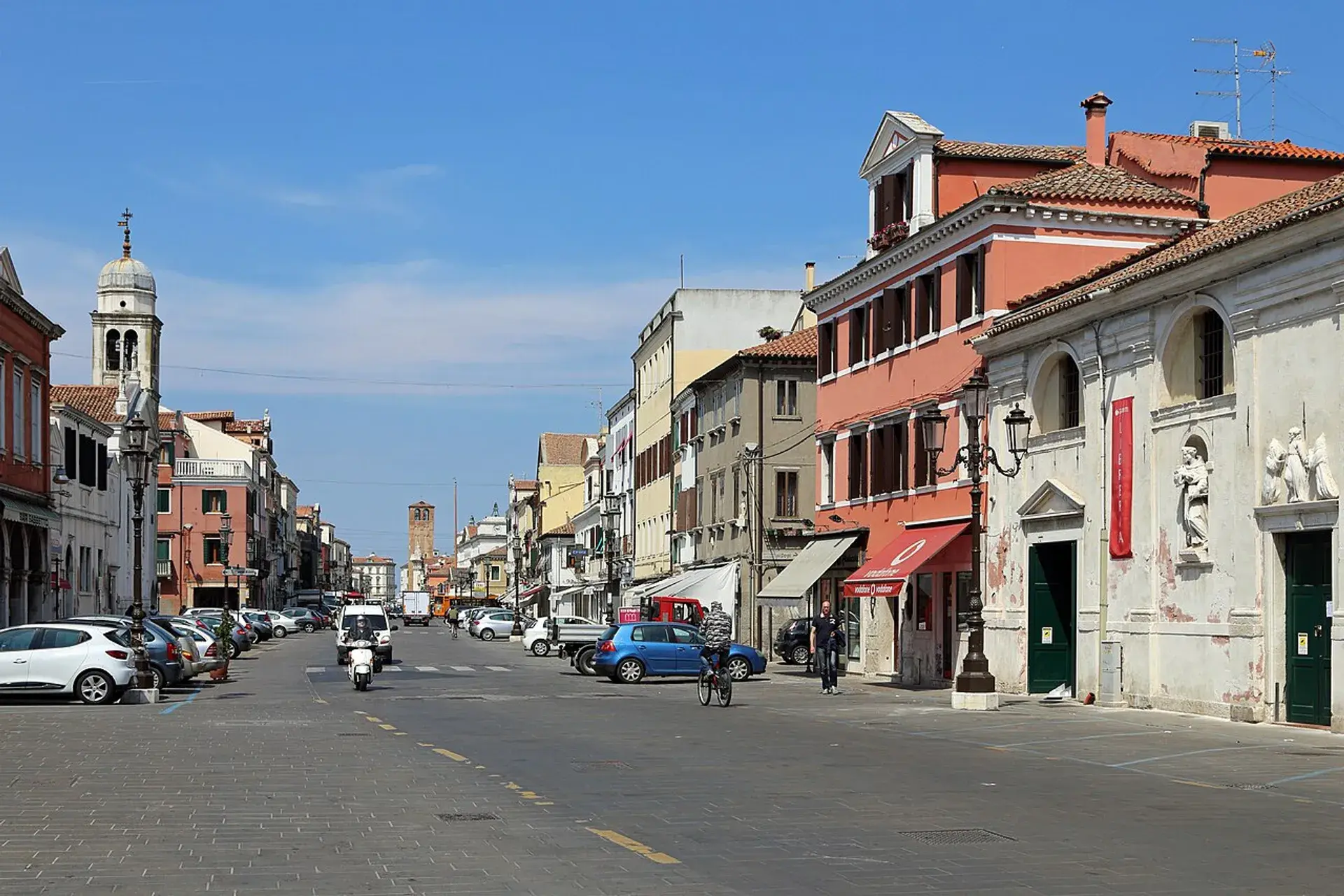
Prominently located on Chioggia's main thoroughfare, Corso del Popolo, the Torre dell'Orologio di Sant'Andrea stands as an undisputed symbol of the city. This Romanesque tower, standing over 30 meters high, houses one of the oldest functioning medieval clocks in the world, a marvel of engineering that has marked time since 1386.
A History Through Time
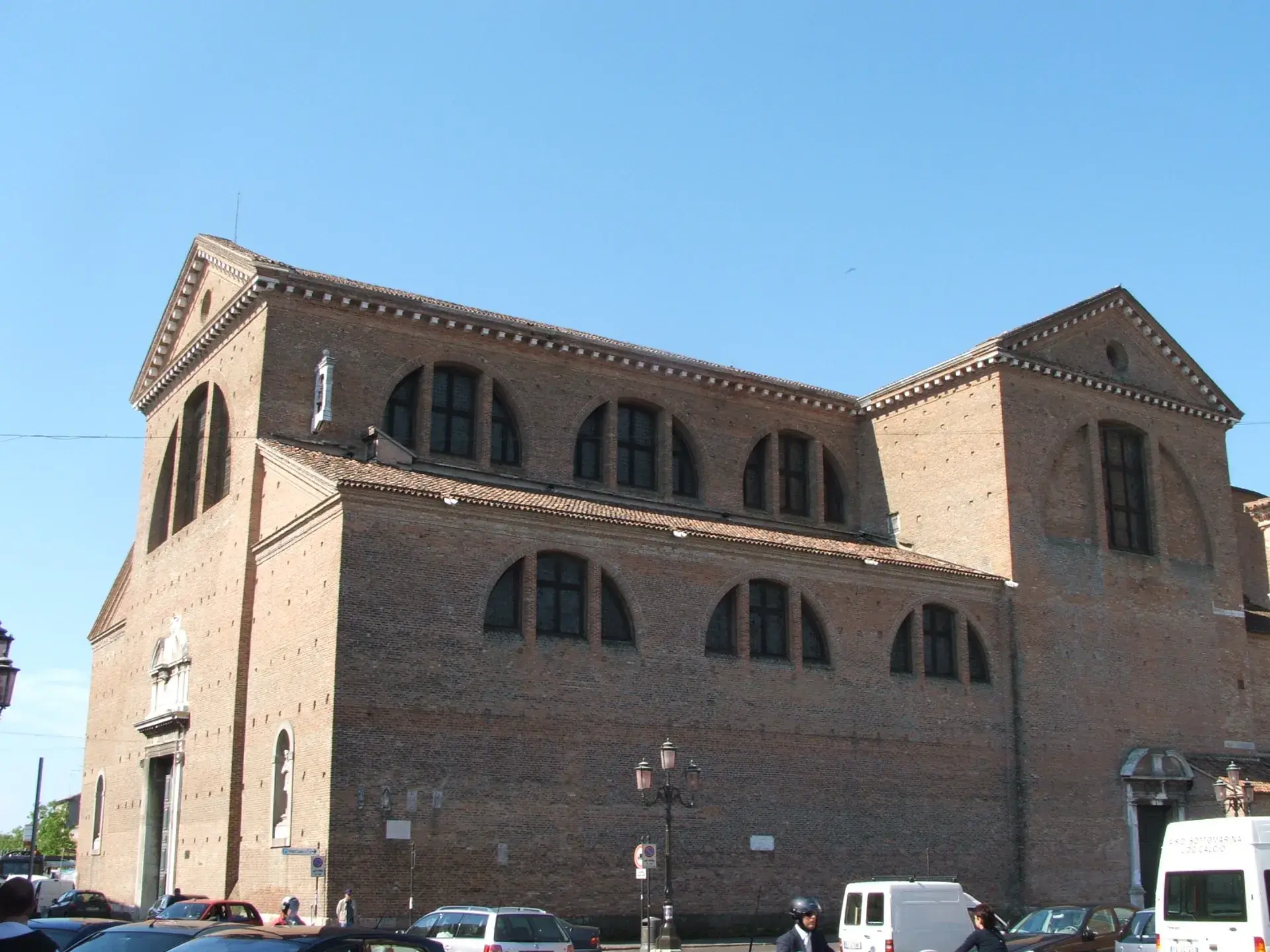
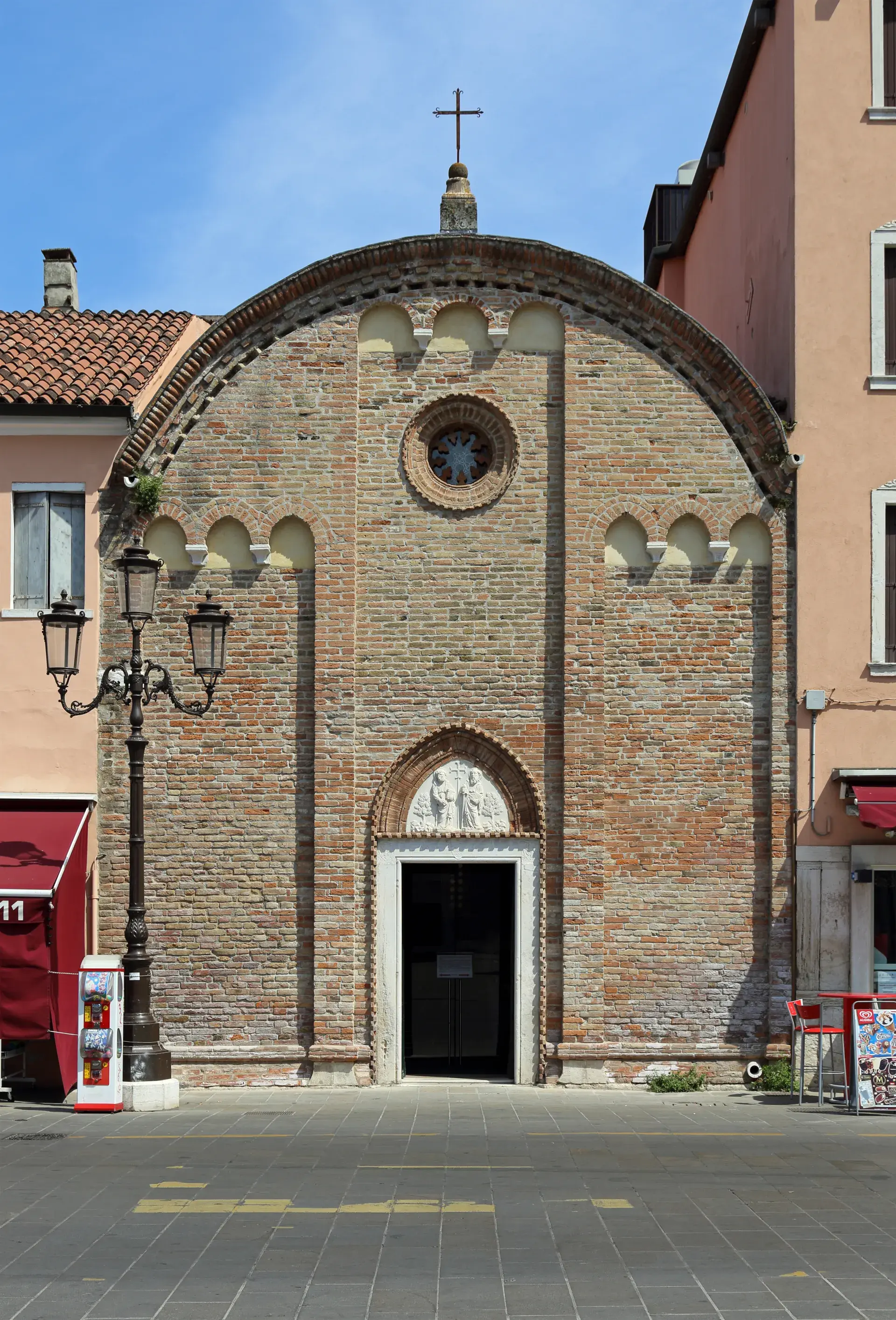
The tower's origins are ancient, with studies suggesting its construction between the 7th and 8th centuries, or possibly around 950 CE. Initially, its robust structure served a critical defensive role as a lighthouse and military watchtower, safeguarding Chioggia during conflicts like the late 14th-century War of Chioggia. It later became the bell tower for the adjacent Church of Sant'Andrea, a function it still holds today.
A significant event in the tower's history occurred in the 19th century. After a fire destroyed the Palazzo Pretorio in 1817, the famous clock mechanism was relocated from the ruined palace to its current home in the Torre di Sant'Andrea. The transfer was officially completed on May 31, 1839.
The Medieval Clock Mechanism
The tower's most celebrated feature is its mechanical clock, created in 1386 and attributed to the Dondi family, specifically the physician and astronomer Jacopo Dondi dell'Orologio. This makes it a contemporary of the clock in England's Salisbury Cathedral, with both sharing the claim of being among the world's oldest working medieval tower clocks.
The original wrought-iron mechanism is a masterpiece of medieval craftsmanship, featuring a distinctive 'dog's paw' design on its mounting that is considered a signature of the Dondi workshop. While this historic clockwork is preserved and demonstrated on the fifth floor, the external clock face is now operated electronically. The dial itself is unique, featuring a single hand with a flaming sun design at its center. A long ray from the sun indicates the hour on a 24-section dial with Roman numerals.
A Vertical Museum
Following a restoration between 1997 and 2001, the tower was inaugurated as a 'vertical museum' in September 2006. Visitors can ascend 125 wooden steps to explore its various levels. Each floor is dedicated to a different aspect of local history, showcasing historical maps, ex-votos from fishermen, and the story of the Church of Sant'Andrea.
The fifth floor offers a close-up view of the intricate medieval clock mechanism in action. From the top floor, the belfry provides panoramic views of Chioggia and the surrounding Venetian Lagoon. Access to the museum is generally available through guided tours, which require booking in advance.
FAQ
How old is the clock in the Torre dell'Orologio?
The mechanical clock mechanism dates back to 1386 and is attributed to the Dondi family. It is considered one of the oldest working medieval tower clocks in the world.
Is the original 1386 clock still working?
The original medieval wrought-iron mechanism is preserved and demonstrated to visitors inside the tower. However, the clock face visible on the exterior now operates electronically to tell the time.
What was the tower's original purpose?
Before housing the clock, the Torre di Sant'Andrea was a defensive structure, serving as a lighthouse and military watchtower. Its origins are ancient, with some studies dating its construction to between the 7th and 8th centuries.
Can you go inside the Torre dell'Orologio?
Yes, the tower operates as a 'vertical museum.' Visitors can climb 125 wooden steps to see exhibits on local history, the clock mechanism, and panoramic views from the top. Access is typically via pre-booked guided tours.