The Celtic Hypogeum: Cividale's Underground Enigma
Carved directly into the rocky cliff overlooking the Natisone River gorge, the Celtic Hypogeum (Ipogeo Celtico) sits approximately seven meters beneath the street level of Cividale del Friuli. Situated along Via Monastero Maggiore, this subterranean landmark occupies a central position within the town's historic core, positioned between the 15th-century Devil's Bridge (Ponte del Diavolo) and the 8th-century Lombard Temple (Tempietto Longobardo).
Despite its enduring association with pre-Roman Celtic culture, the hypogeum remains one of northeastern Italy's most elusive archaeological puzzles. With no inscriptions, undisturbed grave goods, or datable organic strata ever uncovered within its walls, the chamber's true origin and original function continue to generate debate.
Subterranean Layout and Architecture
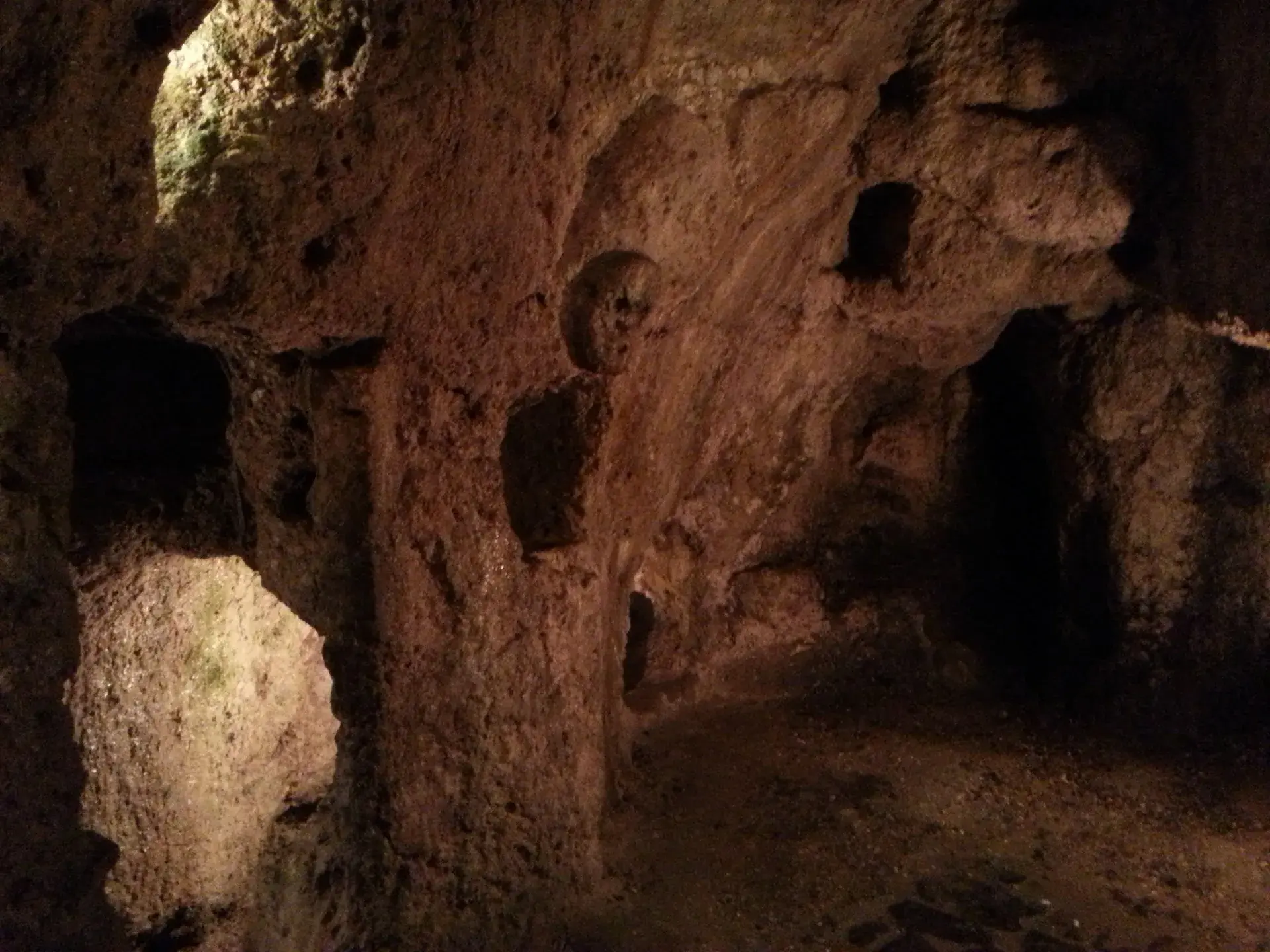
The underground complex is reached via a steep, narrow staircase cut straight into the stone. Below, the hand-hewn chambers branch out into an irregular, roughly K-shaped layout centered on an elevated main chamber. Radiating outward are three lower corridors and smaller side spaces.
Throughout the complex, visible pick and axe marks reveal the manual effort required to excavate the rock. The interior features carved stone benches, ledges, and recesses of varying sizes, ranging from small compartments resembling lamp or ossuary niches to elongated cavities that recall burial recesses. Natural seepage through the river cliff maintains a chilly, damp microclimate where moisture slicks the rock faces and water occasionally gathers on the stone floors.
The Sculpted Masks
The hypogeum’s most recognizable features are three crude stone faces (mascheroni) carved into the subterranean walls and passage entrances. Featuring austere expressions and hollow-eyed gazes, these relief sculptures have driven regional folklore for generations.
Historically, local traditions viewed the site as an esoteric pagan sanctuary, interpreting the stone heads as mystical guardians of secret subterranean rites. Antiquarians drew parallels between these carvings and the ancient Celtic tradition of severed heads (têtes coupées), a comparison that largely cemented the popular name of the monument during the 19th and 20th centuries.
Competing Archaeological Theories
Modern archaeological evaluation emphasizes that there is no firm scientific evidence proving Celtic populations built the complex. Instead, the diverse stone-cutting techniques found across the chambers suggest that the hypogeum was repeatedly reworked, expanded, and adapted across several distinct historical eras.
Over time, scholars have advanced several alternative explanations for the site's original or secondary use:
- Roman Water Cistern: An engineered reservoir designed to capture and hold natural water filtering through the cliff rock.
- Subterranean Prison: A secure dungeon utilized during Roman or early medieval Lombard rule.
- Jewish Ritual Bath (Mikveh): A specialized ceremonial bath adapted during the late medieval period, around the 14th or 15th century.
Preservation and Modern Access
Today, the site is preserved and managed by the Municipality of Cividale del Friuli as an integral part of the town’s underground archaeological heritage. Access is coordinated through scheduled guided visits arranged with the local tourist office (Sportello Informacittà in Piazza Duomo) alongside regional speleological guides.
This structured access contrasts with earlier decades. For many years, curious visitors could access the hypogeum through an informal local custom: collecting a heavy iron skeleton key from a nearby neighborhood bar or museum desk to let themselves into the subterranean labyrinth.
FAQ
Did the Celts build the Celtic Hypogeum?
There is no conclusive archaeological evidence confirming that the Celts built the site. The name originated primarily from 19th- and 20th-century antiquarian speculation prompted by the crude appearance of its carved stone masks.
Where is the Celtic Hypogeum located?
It is located on Via Monastero Maggiore in Cividale del Friuli, Italy, carved into the cliff of the Natisone River gorge between the Devil's Bridge and the Lombard Temple.
What alternative purposes have been proposed for the complex?
Beyond a Celtic burial or ritual site, researchers have suggested it may have served as a Roman water cistern, a Roman or Lombard dungeon, or a 14th-to-15th-century Jewish ritual bath (mikveh).
How was the hypogeum accessed in the past?
Before formal guided tours were organized, travelers traditionally gained access by picking up a heavy iron skeleton key from a local bar or museum desk.
Discover Cividale-del-friuli like never before
Dive into Cividale-del-friuli hidden stories and secret spots with Ciceru interactive tours.
Explore tour
Audioguide
Quizzes
Maps
Solo
Couples
Groups & families

© Photo by Lohana “La Randagia” Sartori via Google Maps · Google Places