Cortona Co-Cathedral: Santa Maria Assunta History
Position on Cortona's Valley Edge
Unlike Cortona's historic civic center at Piazza della Repubblica and Piazza Signorelli, which developed around the ancient Roman cardo and decumanus, Piazza del Duomo occupies a perimeter position on the western rim of the town. Built directly against the line of ancient city walls, the square opens outward into an expansive public terrace offering sweeping sightlines across the valley below, the slopes of Monte Sant'Egidio, and the distant plains toward Lake Trasimeno.
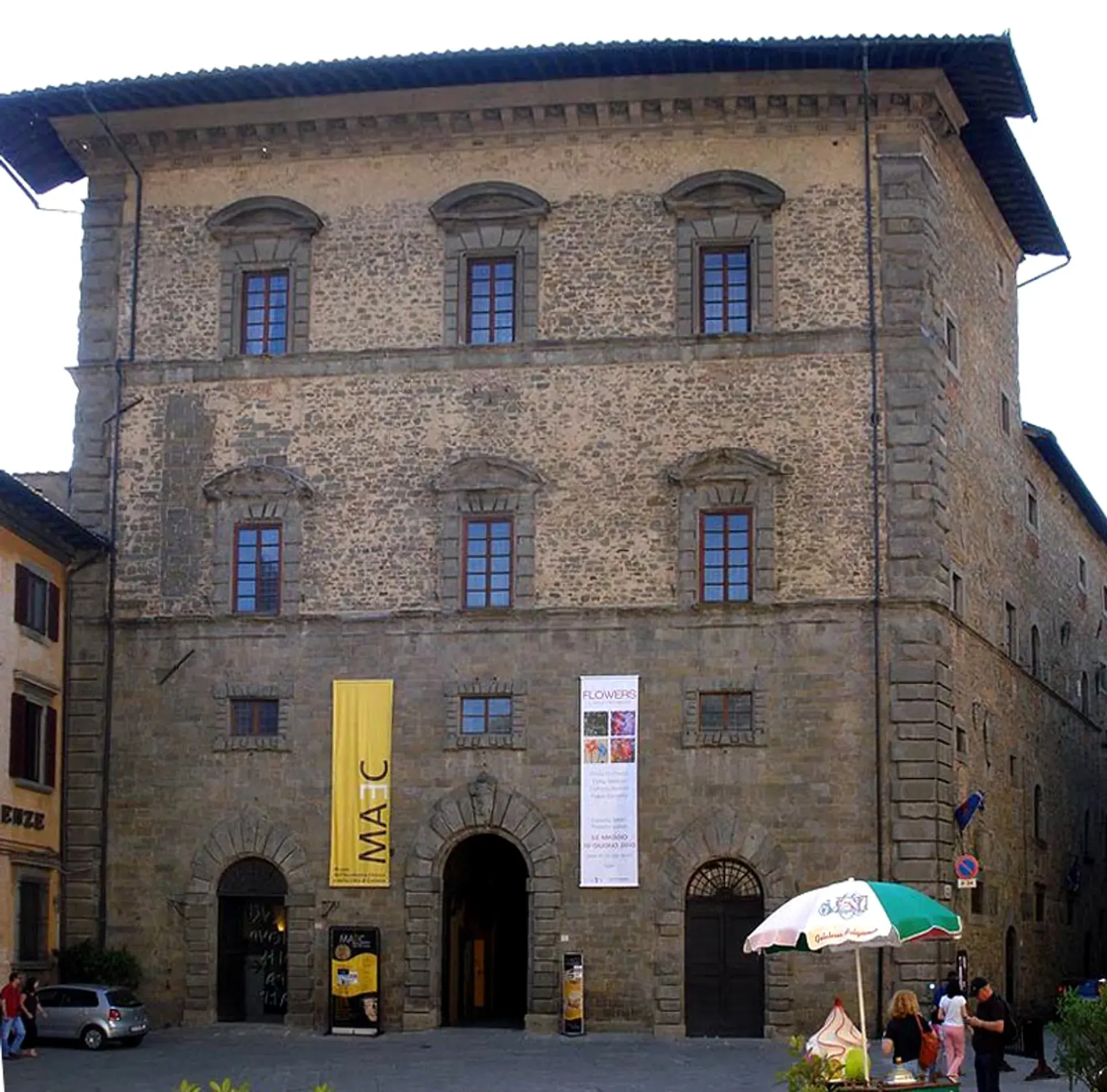
The square forms an episcopal enclave defined by three key historic structures: the Co-Cathedral of Santa Maria Assunta, the Palazzo Vescovile (Bishop's Palace), and the former 16th-century Church of the Gesù, which has served as the Museo Diocesano since 1945. Reached via the descent of Via Casali or Via del Gesù, this quiet terrace provides a transition between the dense medieval street grid and the higher routes ascending toward the Girifalco Fortress.
Medieval Origins and Episcopal Elevation
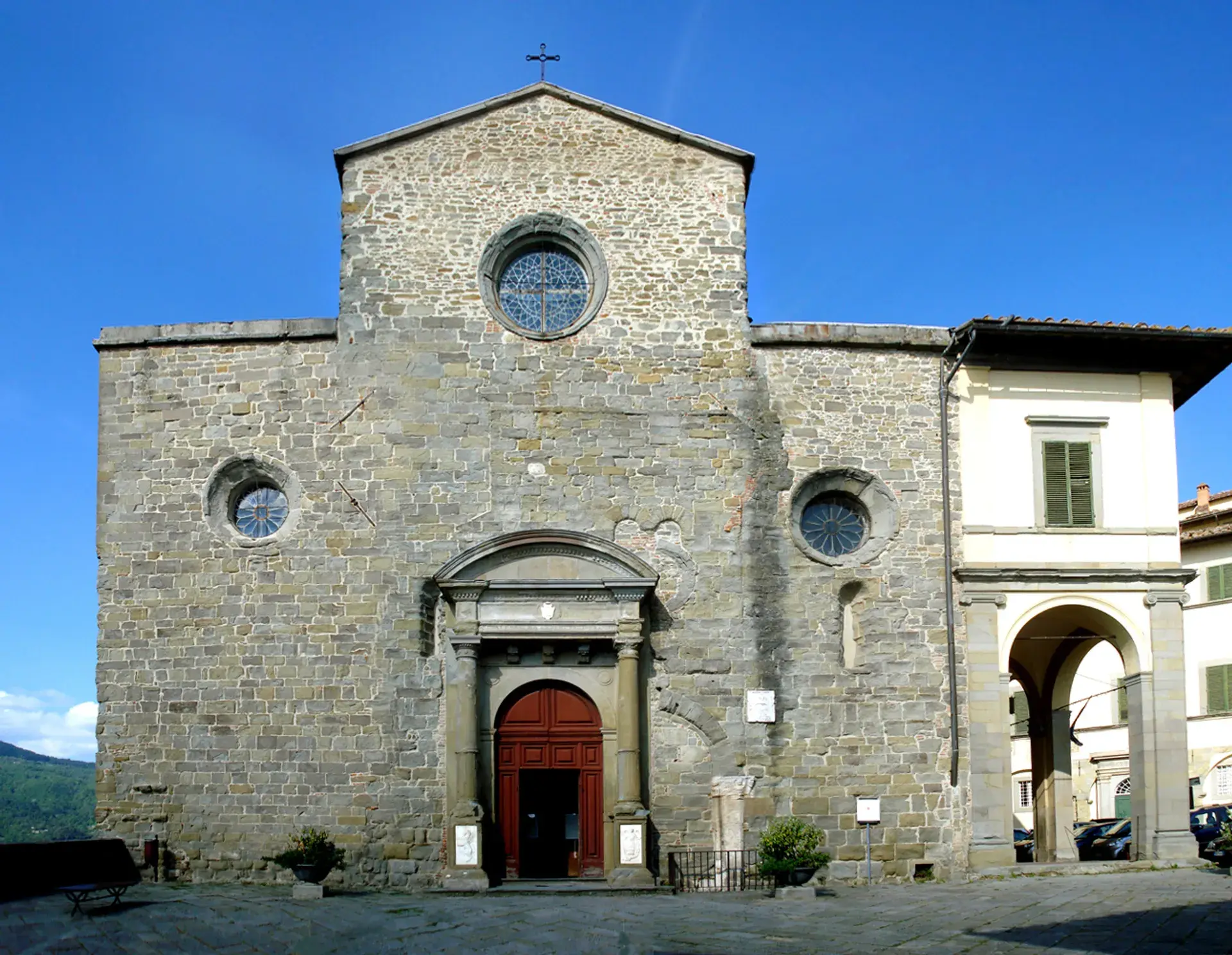
The site of Santa Maria Assunta holds a long continuous history of religious use. Documented as early as 1068 as a medieval parish church (pieve), the structure was erected over earlier Etruscan and Roman remnants. Masonry from these classical and pre-Roman layers remains physically embedded in the cathedral's northern foundation wall and facade.
When the Diocese of Cortona was created in 1325, the bishop’s residence was established adjacent to the church. However, the suburban sanctuary of San Vincenzo initially served as the formal cathedral seat. In anticipation of changing ecclesiastical roles, architectural redesigns began in the late 15th century. Pope Julius II formally transferred the cathedral title to Santa Maria Assunta in 1507. The building served as the seat of the Diocese of Cortona until 1986, after which it was designated a co-cathedral within the Diocese of Arezzo-Cortona-Sansepolcro.
Renaissance Architecture and Structural Evolution
The cathedral's exterior reflects layers of architectural history, retaining remnants of an 11th-century Romanesque facade—including traces of an arcade, column shafts, and a pier—integrated into later stonework. The major Renaissance transformation of the building was directed by pupils of Giuliano da Sangallo, with later refinements contributed by sculptors and architects such as Cristofanello and Francesco Laparelli.
Inside, the church features a classical three-nave basilica plan divided by slender stone columns crowned with Brunelleschian capitals. Later centuries brought further additions to the complex: an exterior southern loggia and the bell tower were erected in the late 16th century, while barrel vaulting was installed above the interior in the 18th century and subsequently painted during the 19th century.
Art, Antiquity, and Modern Works
Santa Maria Assunta has long intersected with significant art historical events. During the 15th century, a 2nd-century Roman marble sarcophagus carved with reliefs of Dionysus fighting the Amazons was unearthed near the cathedral. The carving drew immense admiration from Donatello, whose praise reportedly prompted architect Filippo Brunelleschi to make a dedicated trip from Florence to Cortona to inspect the relief in person. The sarcophagus is preserved across the square inside the Museo Diocesano.
Within the cathedral itself, visitors find a blend of historic sacred appointments and modern Tuscan art. Gino Severini, a Cortona-born painter associated with the Futurist movement, contributed religious artworks to the interior during the mid-20th century. His additions include a 1955 mosaic depicting the Sacred Heart located in the left aisle, as well as a series of mosaic Stations of the Cross that incorporate views of Cortona's distinctive rooftops into their backgrounds.
FAQ
Why is the cathedral located on the edge of Cortona?
Rather than occupying the center of civic life at the crossroads of the ancient Roman streets, the cathedral was established along the defensive city walls on the western perimeter, creating an open terrace facing the valley.
When did Santa Maria Assunta become Cortona's cathedral?
Pope Julius II designated Santa Maria Assunta as Cortona's cathedral in 1507, moving the seat from the suburban church of San Vincenzo. It served as the diocesan cathedral until 1986, when it received co-cathedral status.
What ancient architectural remnants can be seen in the building?
The cathedral's northern foundation wall and facade physically incorporate ancient Etruscan and Roman masonry, alongside visible remnants of an 11th-century Romanesque arcade and pier.
Which artworks by Gino Severini are inside the co-cathedral?
Cortona native Gino Severini designed a 1955 mosaic of the Sacred Heart in the left aisle and mosaic Stations of the Cross that feature Cortona's skyline in the backgrounds.