Piazza Luca Signorelli: History & Highlights in Cortona
The Cultural Heart of Cortona
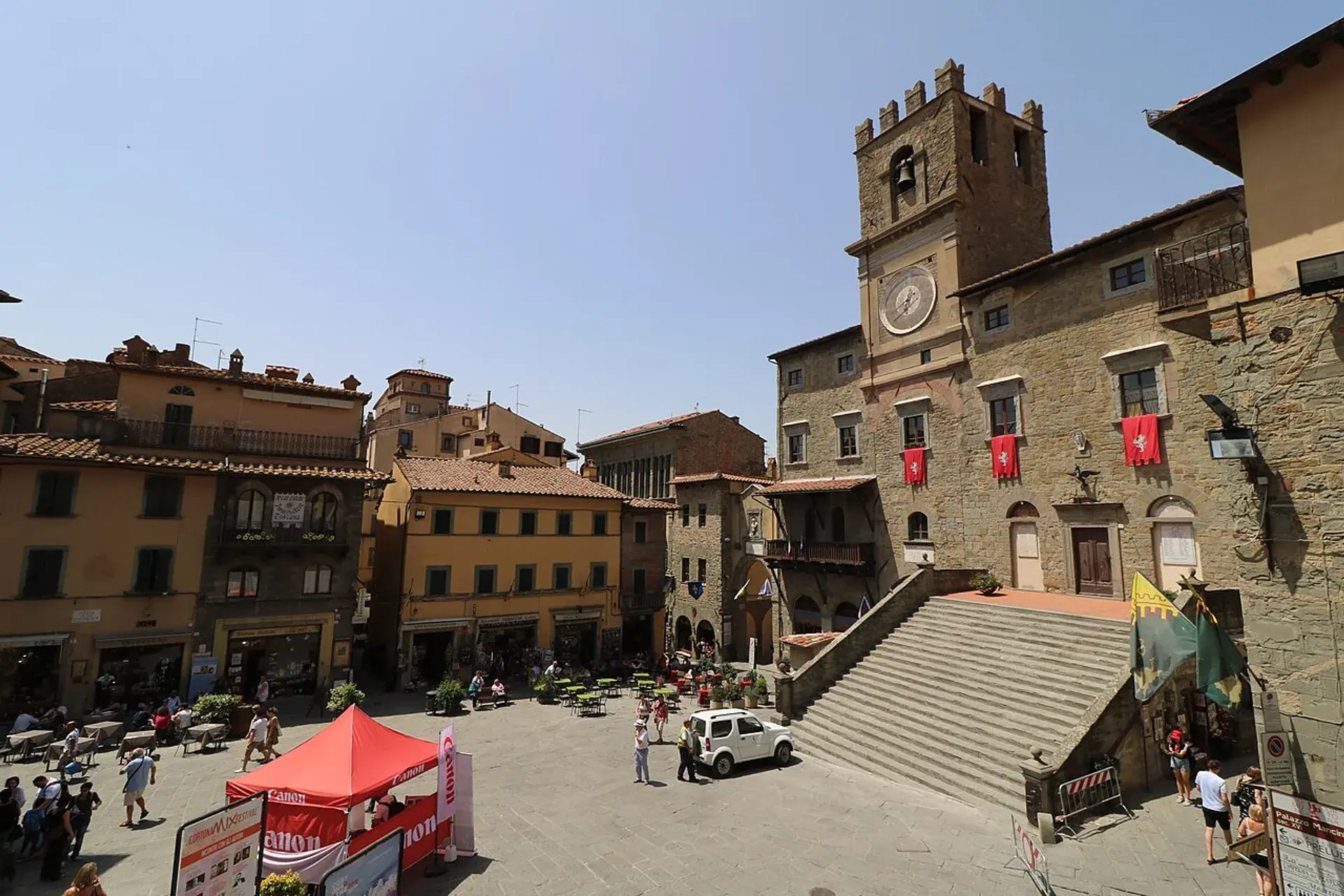
Piazza Luca Signorelli sits directly adjacent to Piazza della Repubblica in Cortona, occupying the footprint of the ancient Roman civic forum at the intersection of the cardo and decumanus. While Piazza della Repubblica developed as the town's political and administrative focus around the Town Hall, Piazza Signorelli evolved into Cortona's center for commerce, archaeology, and the performing arts. The square honors the renowned Cortona-born Renaissance master Luca Signorelli (c. 1445/50–1523). According to a biographical tradition recorded by Giorgio Vasari, the artist died in his late seventies following injuries sustained from falling off painter's scaffolding in the town.
Palazzo Casali and the MAEC
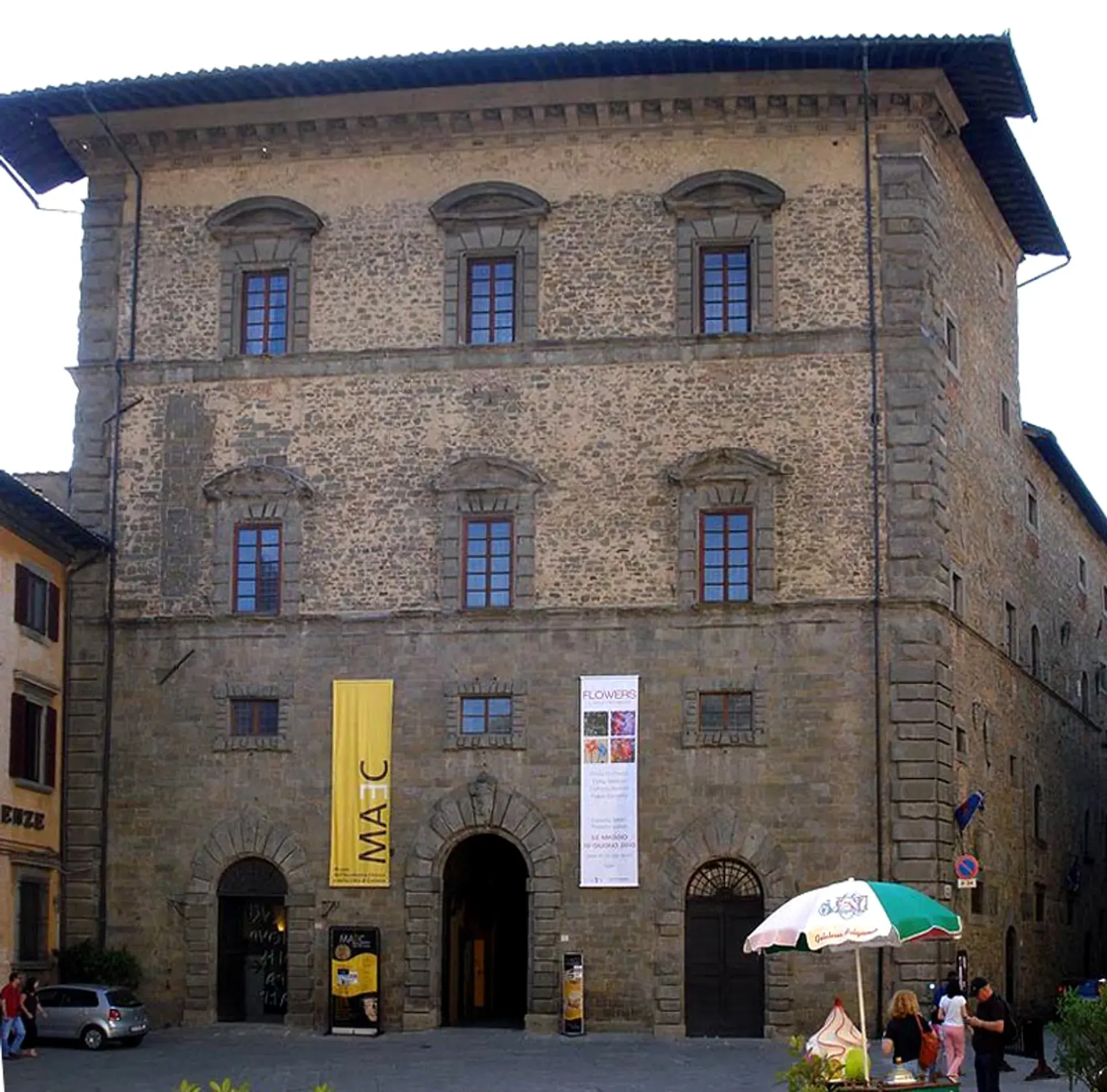
The square's eastern flank is dominated by Palazzo Casali, a 13th-century fortified complex originally constructed for the Casali family, who ruled Cortona from 1325 to 1409. After the Republic of Florence took control of the city between 1409 and 1411, the structure was repurposed as the Palazzo Pretorio to house Florentine magistrates (capitani and vicari). The building's exterior facade and inner courtyard are covered with dozens of carved stone coats of arms left by these Florentine administrators across several centuries. The palace underwent substantial structural alterations in the early 17th century directed by architect Filippo Berrettini.
In 1727, the Venuti brothers founded the Accademia Etrusca. The following year, Grand Duke Gian Gastone de' Medici granted the academy space inside Palazzo Casali to showcase the antiquities collection of Abbot Onofrio Baldelli, creating one of Europe's earliest public museums. Today, the palace houses the Museo dell'Accademia Etrusca e della Città di Cortona (MAEC), alongside the municipal historical archives and library. The museum preserves significant archaeological artifacts, notably an Etruscan bronze chandelier (lampadario) dating to the 4th century BC, the inscribed bronze Tabula Cortonensis, and items excavated from local Etruscan tumuli.
Teatro Signorelli
Directly opposite Palazzo Casali stands Teatro Signorelli, a neoclassical municipal theater commissioned by the Accademia degli Arditi. The site was previously occupied by the parish church of Sant'Andrea until 1780 and subsequently by a 19th-century grain hall (Loggia del Grano), which was torn down in 1855. This project continued a local theatrical tradition that had flourished since 1646, when the Teatro del Biscione was established inside Palazzo Casali.
Designed by architect Carlo Gatteschi, construction on Teatro Signorelli commenced in 1854, with the venue opening between 1857 and 1858. The building features an exterior seven-bay ground-floor loggia with vaulted ceilings and a horseshoe-shaped auditorium containing four tiers of boxes that seat roughly 480 spectators. Because Gatteschi was obligated to align the theater's facade strictly with the irregular perimeter of the piazza, he positioned the interior auditorium transversely to the entrance loggia rather than along a standard symmetrical axis. In contemporary pop culture, the theater's portico and auditorium served as filming locations for the cinema sequence in the 2003 film Under the Tuscan Sun.
Public Life and Atmosphere
Piazza Signorelli maintains an active civic life rooted in historic tradition. The architectural contrast between the dark stone masonry of Palazzo Casali and the pale, classical arches of Teatro Signorelli produces an acoustic space that amplifies the sounds of conversation, footsteps, and local trade on the stone paving. The theater continues to operate as Cortona's cinema, an assembly venue, and a host for winter theatrical and classical concert seasons. Beneath the loggia, outdoor café seating overlooks the open space, which transforms every Saturday morning into the setting for Cortona's weekly open-air market.
FAQ
Who was Piazza Luca Signorelli named after?
The square is named after the Cortona-born Renaissance painter Luca Signorelli (c. 1445/50–1523). According to Giorgio Vasari, Signorelli died in Cortona from injuries sustained after falling from painter's scaffolding in his late seventies.
What is housed inside Palazzo Casali?
Palazzo Casali houses the Museo dell'Accademia Etrusca e della Città di Cortona (MAEC), along with the municipal library and historical archives. The museum features significant antiquities, including the 4th-century BC Etruscan bronze chandelier and the bronze Tabula Cortonensis.
Why is Teatro Signorelli's auditorium built transversely?
Architect Carlo Gatteschi designed the auditorium transversely to the entrance loggia because the exterior facade had to align strictly with the irregular boundaries of the public square.
When does the market take place in Piazza Signorelli?
Cortona's weekly open-air market takes place in Piazza Signorelli every Saturday morning.