Fortress of Girifalco: Cortona's Medici Citadel
The Medici Citadel Above Cortona
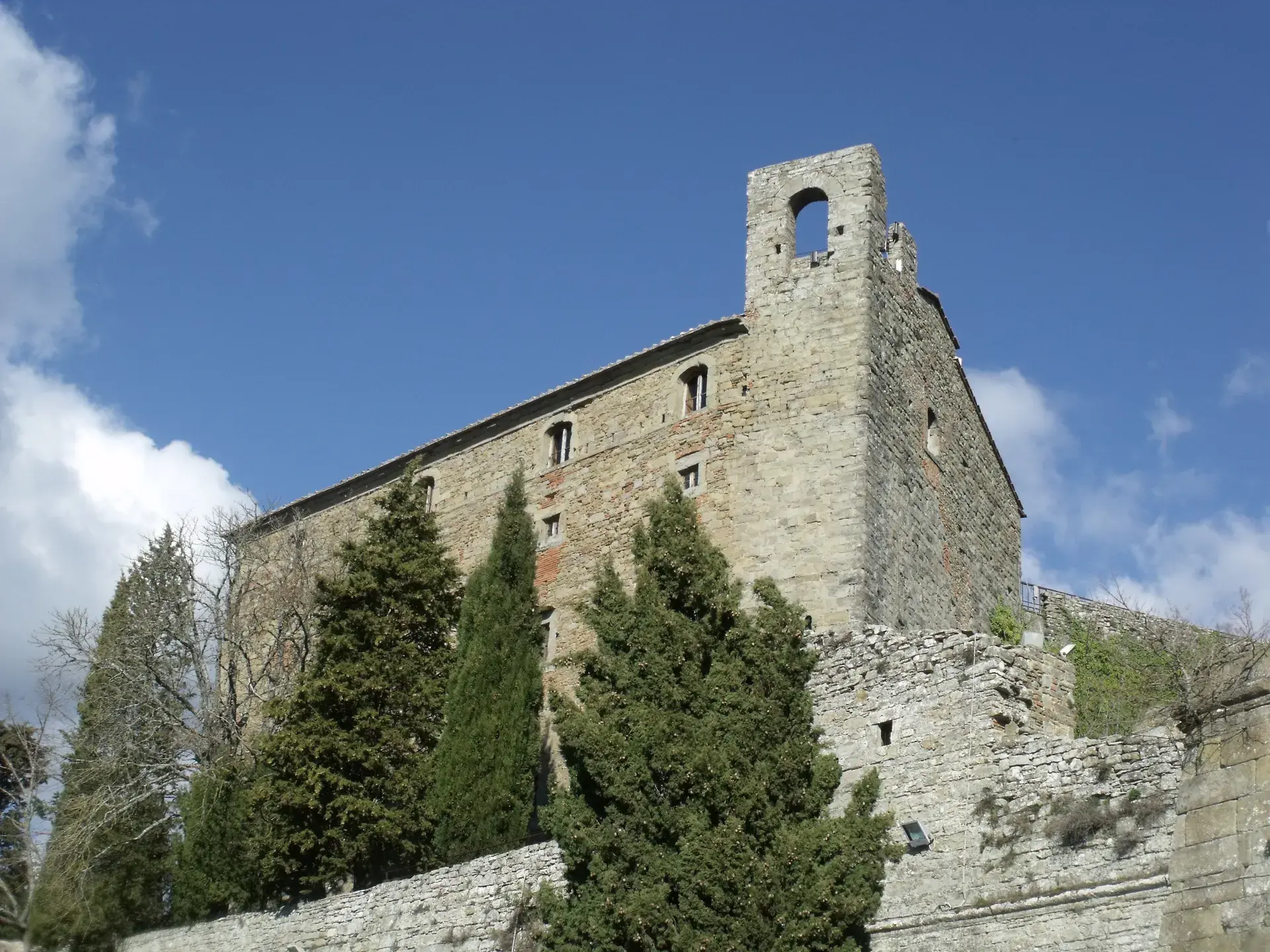
Perched roughly 650 meters above sea level at the summit of the hill above Cortona, the Fortress of Girifalco (Fortezza del Girifalco) anchors the northeastern apex of the historical town walls. Commissioned in 1556 by Grand Duke Cosimo I de' Medici following the War of Siena, the fortification was built to modernize Cortona's defenses against the advent of gunpowder artillery. Largely completed by 1561, the complex replaced outdated medieval walls with massive, angled bastions equipped with casemates designed to provide interlocking artillery fire.
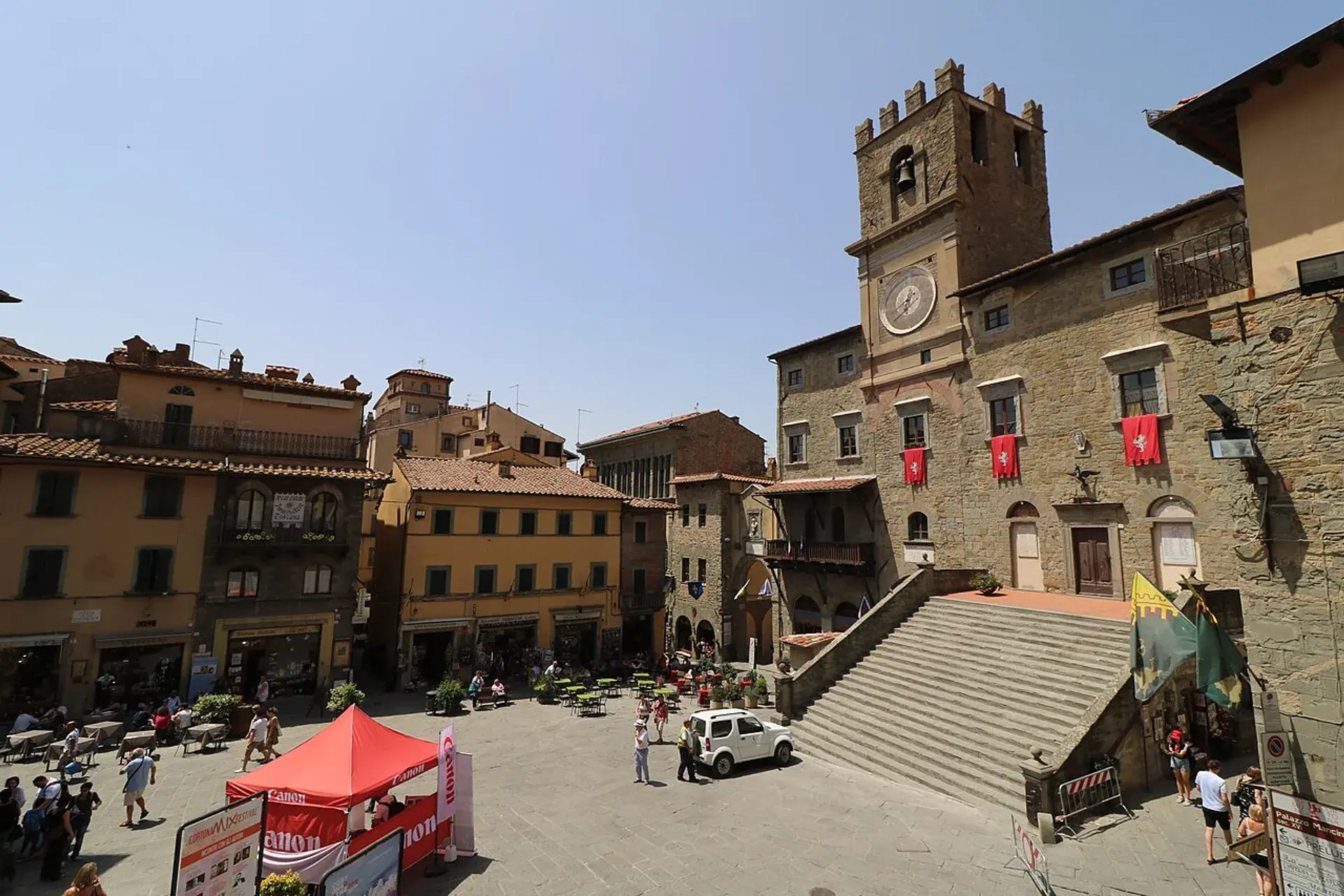
The name Girifalco translates to "gyrfalcon," an arctic bird of prey, referencing the stronghold's commanding height over the Valdichiana plain. Historically, the fortress sits directly above the Basilica of Santa Margherita, representing the culmination of the steep uphill path from the civic center at Piazza della Repubblica and marking Cortona's transition from an autonomous medieval commune to an outpost of centralized Florentine rule.
Renaissance Design and Engineering
Cosimo I entrusted the overhaul of the site to papal military engineer Gabrio Serbelloni and Cortona architect Francesco Laparelli. Laparelli later achieved international prominence when the Knights of St. John hired him to design the master defense plan and street grid for the fortified city of Valletta in Malta. The construction of the Cortona fortress was financed directly by local residents through Florentine taxes placed on household necessities, including salt, grain, and wine must.
The architects adapted the fortress into an irregular trapezoidal plan to fit the uneven topography of the summit. Four asymmetrical corner bastions—Bastione Santa Margherita, Bastione San Giusto, Bastione Sant'Egidio, and Bastione Santa Maria Nuova—encircle a central courtyard and an earlier medieval keep known as the Mastio or Palazzo del Capitano. Among these, Bastione Sant'Egidio in the northeast corner showcases textbook 16th-century military engineering, retaining its original rounded flanks and four distinct cannon embrasures.
Architecturally, the fortification exhibits a tactile contrast of eras. The coarse, irregular stonework of the preserved medieval keep contrasts sharply with the smooth, precisely cut sandstone blocks that form the 16th-century bastions.
Centuries of Peace and Changing Uses
The Fortress of Girifalco was established as a cutting-edge military installation, yet it never experienced a major siege. Following its completion, the Grand Duchy of Tuscany entered an extended era of regional peace that rendered its defensive firepower untested in battle.
In 1766, the ruling House of Lorraine formally disarmed the fortification and transferred ownership to the municipality of Cortona, which converted the complex into a civilian prison. During World War II, the fortress took on new roles: it initially housed approximately 250 refugee children of Italians living abroad before being requisitioned by German forces as a radio transmission station, and later served Allied troops.
Contemporary Cultural Hub
Since 2015, the Fortress of Girifalco has been managed by the cultural association ONTHEMOVE, transforming the military structure into a venue for contemporary photography and visual arts. It serves as the primary exhibition venue for the annual Cortona On The Move festival. Supported by ongoing restorations of the keep roof, internal paths, and walkways, the fortress bastions and grounds host cultural gatherings, an open-air panoramic bistro, and wide vantage points reaching across the Valdichiana plain, Lake Trasimeno, Mount Amiata, and Mount Cetona.
FAQ
Why was the Fortress of Girifalco built?
Grand Duke Cosimo I de' Medici commissioned the fortress in 1556 after the War of Siena to modernize Cortona's defenses against gunpowder artillery, replacing older medieval fortifications.
What does the name Girifalco mean?
The name translates to "gyrfalcon," an arctic bird of prey, reflecting the fortress's high, commanding position overlooking the Valdichiana.
Who designed the Fortress of Girifalco?
It was designed by papal military engineer Gabrio Serbelloni and Cortona-born architect Francesco Laparelli, who later engineered the defenses and street plan of Valletta in Malta.
How is the fortress utilized today?
Managed by the association ONTHEMOVE since 2015, the site serves as an international venue for contemporary art and photography, primarily functioning as the centerpiece of the Cortona On The Move festival alongside public grounds and an open-air bistro.