Cattedrale di Santa Maria Assunta: Duomo di Cremona
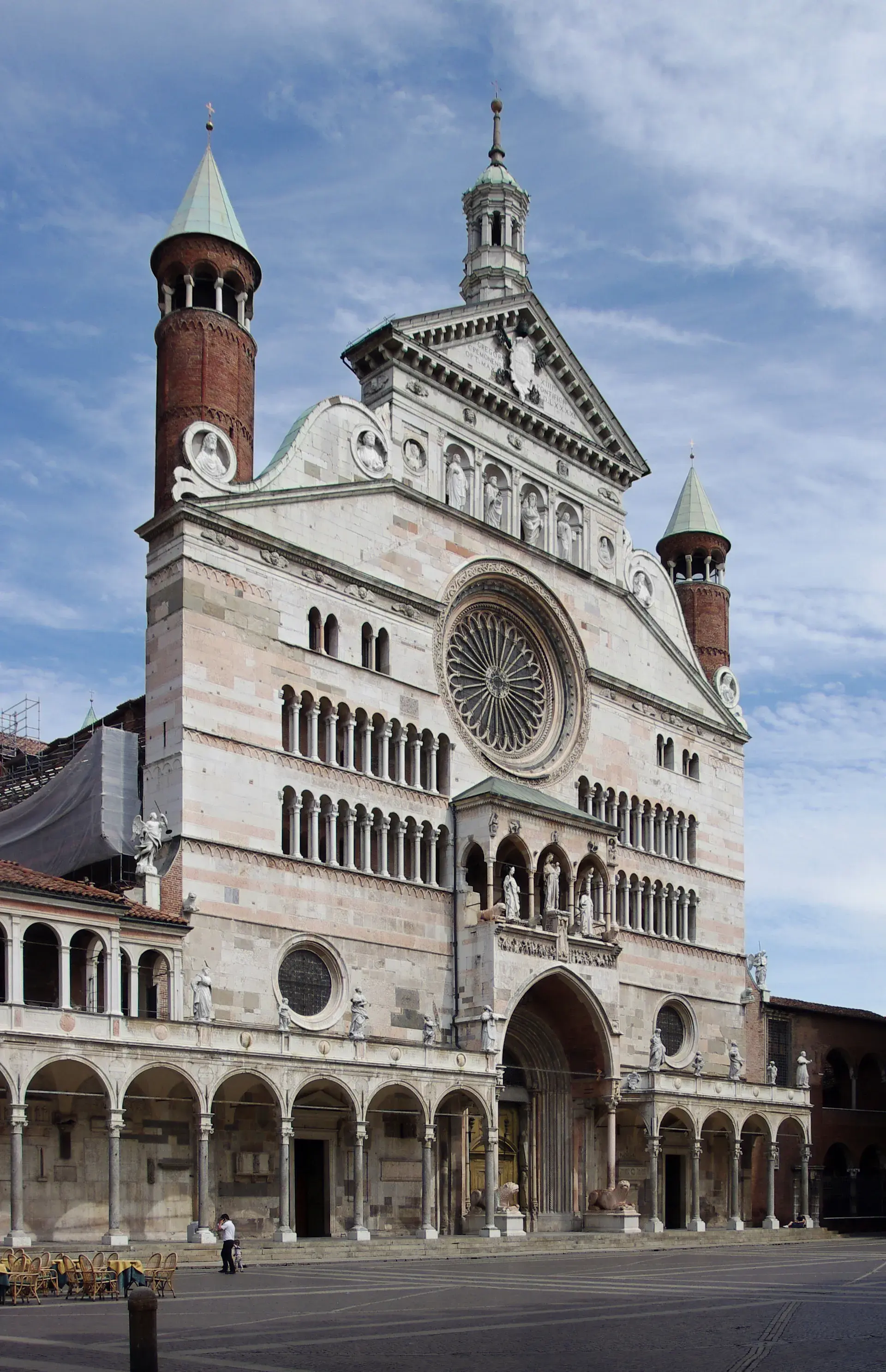
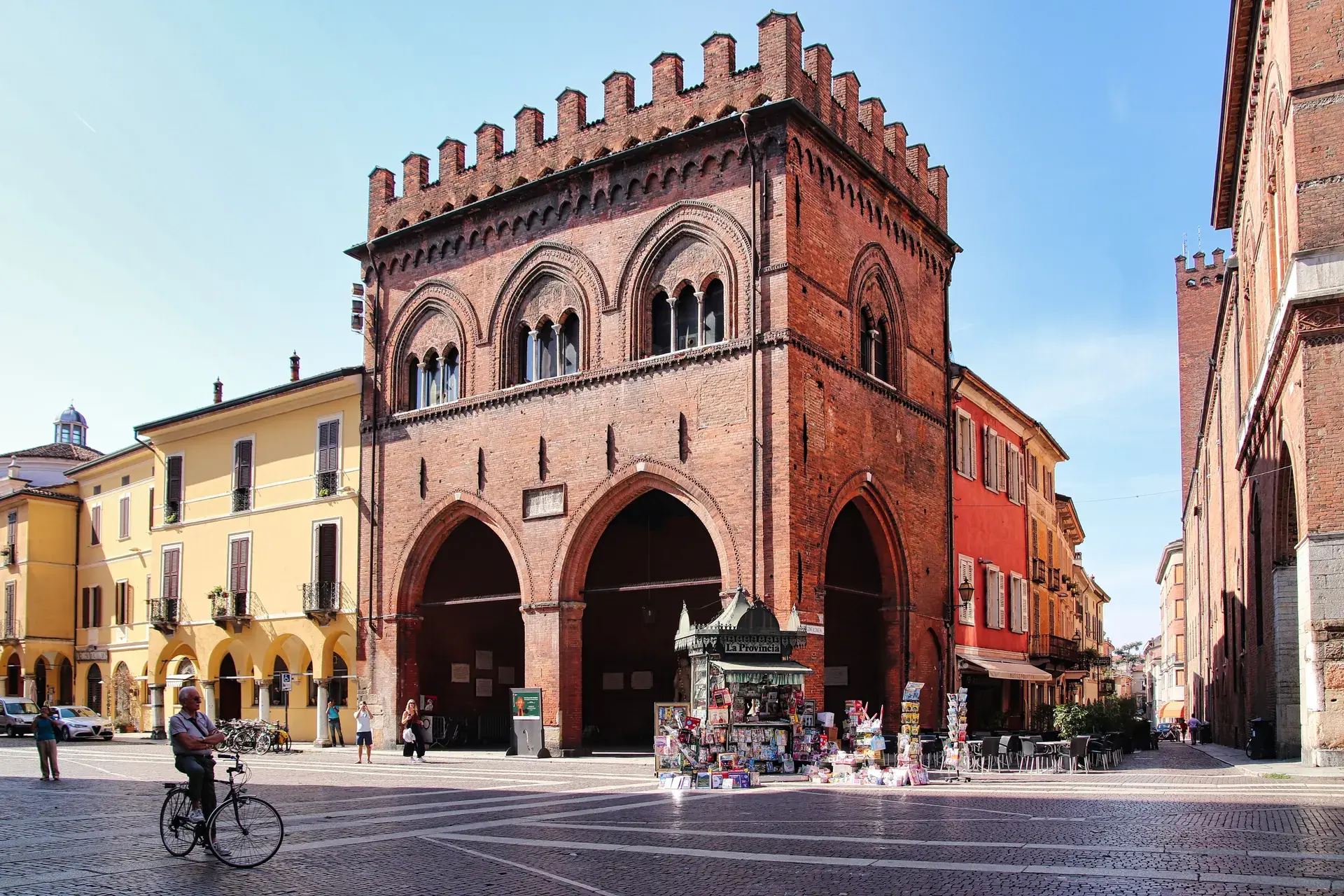
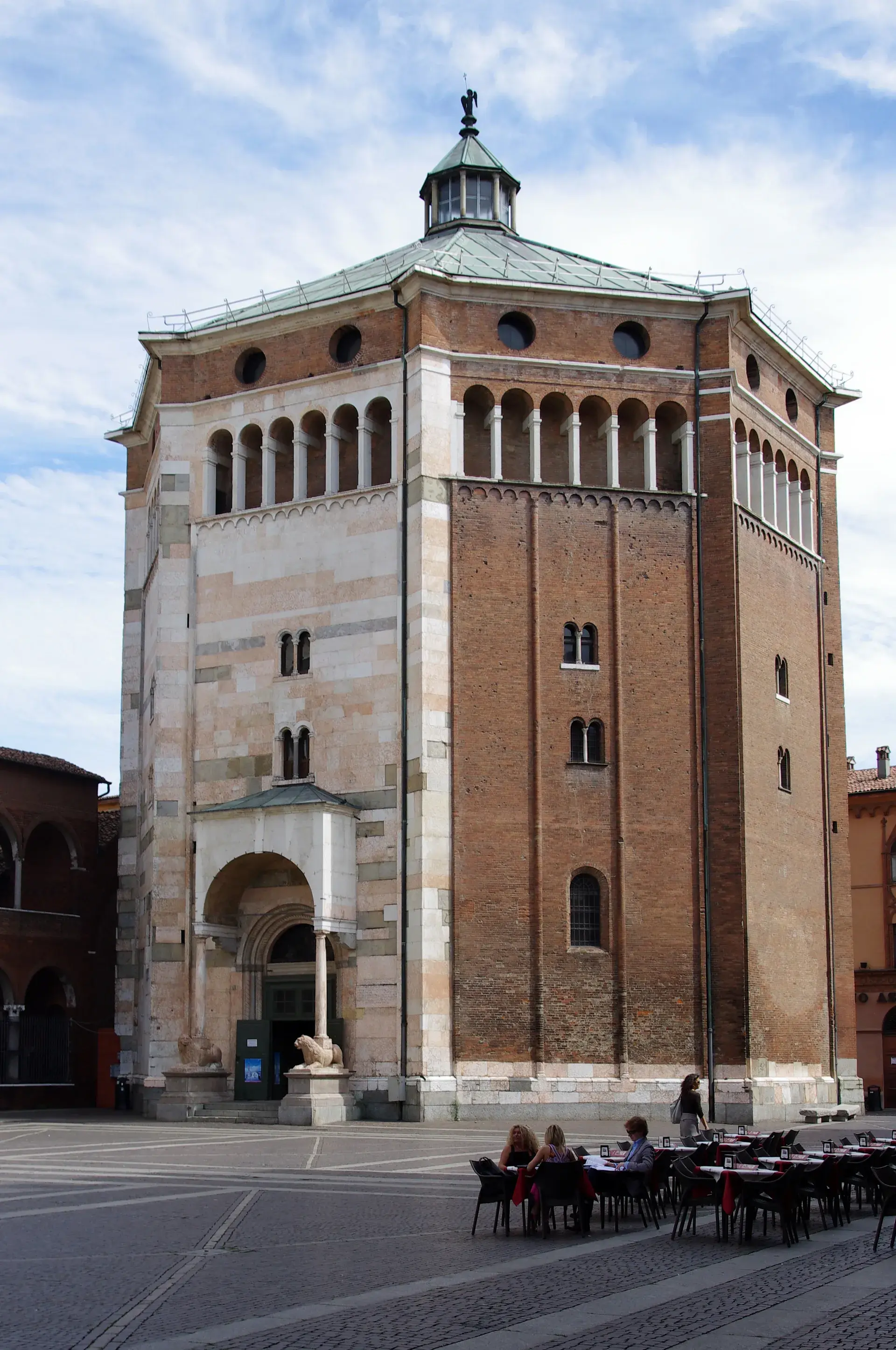
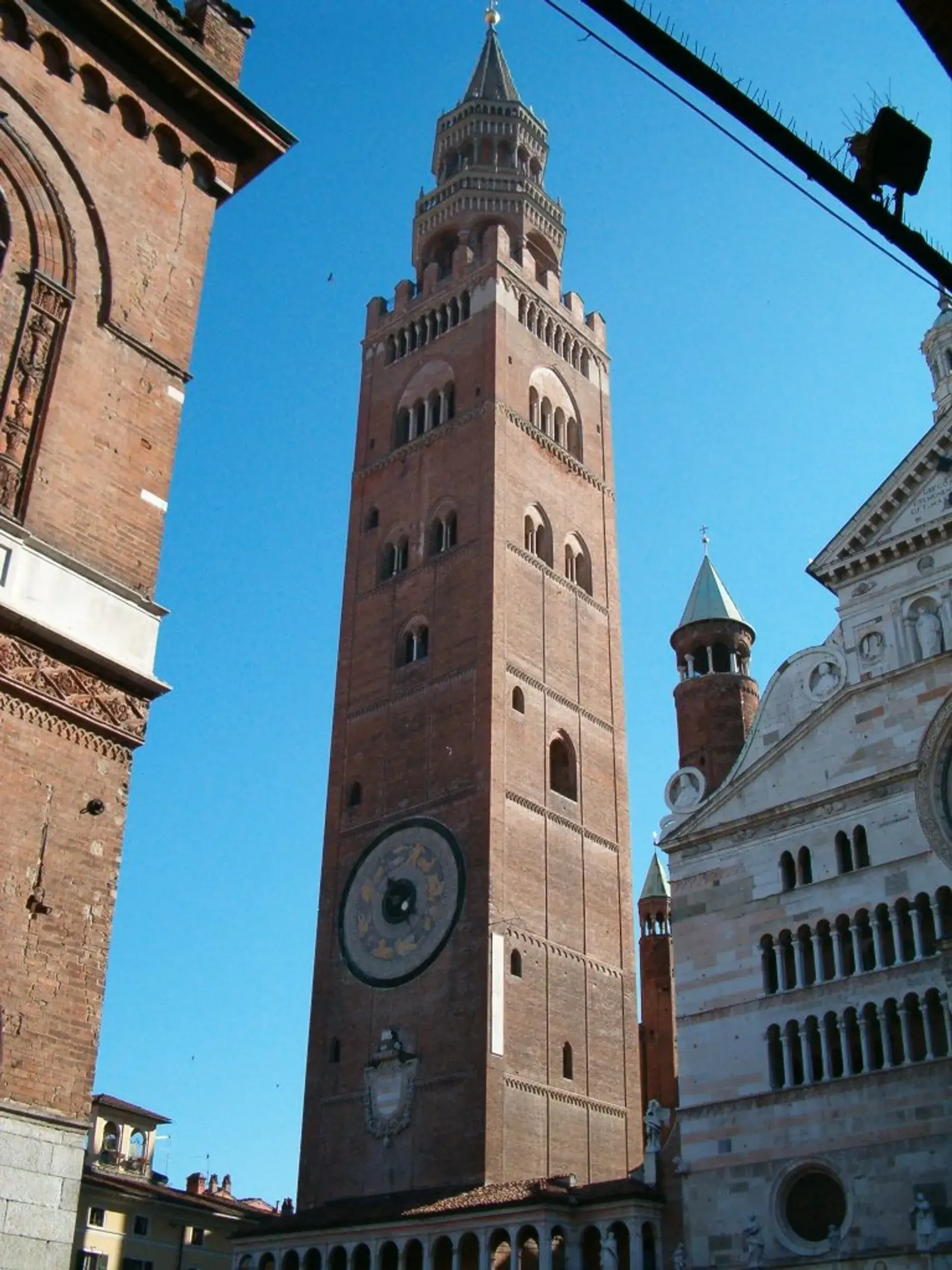
Dedicated to Santa Maria Assunta, the Cathedral of Cremona serves as the bishop's seat and the mother church of the Diocese of Cremona. Positioned along the eastern flank of Piazza del Comune, it forms the center of the city's primary historic ensemble alongside the soaring Torrazzo bell tower and the octagonal Romanesque Baptistery. Facing the Palazzo Comunale and the Loggia dei Militi across the square, the complex illustrates the medieval tension and balance between ecclesiastical and civic authority in Lombard communes.
Destruction and Rebuilding
Cathedral construction originally commenced on August 26, 1107, but the initial structure was devastated before completion by the severe northern Italy earthquake of January 3, 1117. Work resumed in 1129 following the rediscovery of the relics of Saint Himerius within the rubble. The rebuilt church was officially consecrated under Bishop Sicardo in 1190 or 1196 as a lower, gabled basilica.
During the 13th century, Comacine and Campionese masters initiated a major vertical expansion. Workers heightened the front wall into an elevated marble screen designed to rival the height of the Torrazzo, significantly transforming the cathedral's scale and profile.
Architectural Layers of the Facade
The cathedral's exterior represents multiple centuries of shifting architectural movements. The base retains its 12th-century Romanesque core, anchored by the splayed main portal, known as the Porta Regia, which features carved reliefs of the Four Major Prophets and supporting telamons.
A 13th- to 14th-century Gothic expansion introduced cladding in alternating bands of white and red Verona marble, layered dwarf galleries, and an overhanging porch (protiro). Dominating the center of this tier is a massive 26-column rose window designed and signed by Jacopo Porrata in 1274, bordered by radiating trefoil arches, foliate carvings, and animal reliefs.
In 1491, architect Alberto Maffiolo da Carrara topped the facade with a Renaissance classical attic detailed with pediments and sweeping curved volutes, fully masking the medieval gabled roofline. The attic was further embellished in 1507 when sculptor Giovanni Pietro da Rho provided statues of Saints Peter, Paul, Marcellinus, and Peter the Exorcist. Running along the right side of the exterior, an open Renaissance portico called La Bertazzola, built between 1493 and 1550, physically links the cathedral to the adjacent Torrazzo.
Sculptural Details and Civic Curiosities
At ground level, the porch columns rest upon the backs of two life-sized crouching lions carved from red Verona marble. The stone surfaces are worn smooth with age; one beast grips a writhing dragon beneath its paws, while the companion lion pins down a bear.
Carved into the projecting porch is the late 12th- to early 13th-century Ciclo dei Mesi (Labours of the Months) frieze. Unlike standard Western calendars, this sequence reads from right to left starting with the month of March. This orientation corresponds to medieval Cremona's Annunciation calendar (ab Incarnatione), which observed the new year on March 25. The frieze captures daily agrarian life through the seasons, including the butchering of a pig in November.
The upper level of the porch features 14th-century statues of the Virgin and Child flanked by Saint Himerius and Saint Homobonus (Sant'Omobono). Canonized in 1199, Homobonus was a local Cremonese textile merchant who distributed his wealth to the poor. His presence makes Cremona one of the rare European cathedral cities to designate a medieval layman merchant as its chief patron. Further up the facade, 15th-century marble medallions display the profiles of Bianca Maria Visconti and Francesco Sforza, commemorating the dynastic marriage that allied Cremona to Milan.
Visitor Access and Liturgical Life
The cathedral remains an active place of Roman Catholic worship, holding daily liturgies and diocese services. Outside of Mass schedules, the interior is open daily to cultural visitors during morning and afternoon hours. General admission is free, while organized guided groups must register in advance.
FAQ
Why does the Labours of the Months frieze start with March?
The frieze reads from right to left beginning with March because medieval Cremona used the Annunciation calendar, which marked the start of the new year on March 25.
Who is the patron saint honored on the facade of Cremona Cathedral?
The cathedral honors Saint Homobonus, a local 12th-century textile merchant who gave his earnings to the poor and was canonized in 1199, making him an unusual layman patron for a major European cathedral.
What connects Cremona Cathedral to the Torrazzo?
The cathedral is joined to the Torrazzo by La Bertazzola, an open Renaissance portico constructed between 1493 and 1550.