Stradivari Tombstone: Piazza Roma Memorial in Cremona
The Memorial Marker in Piazza Roma
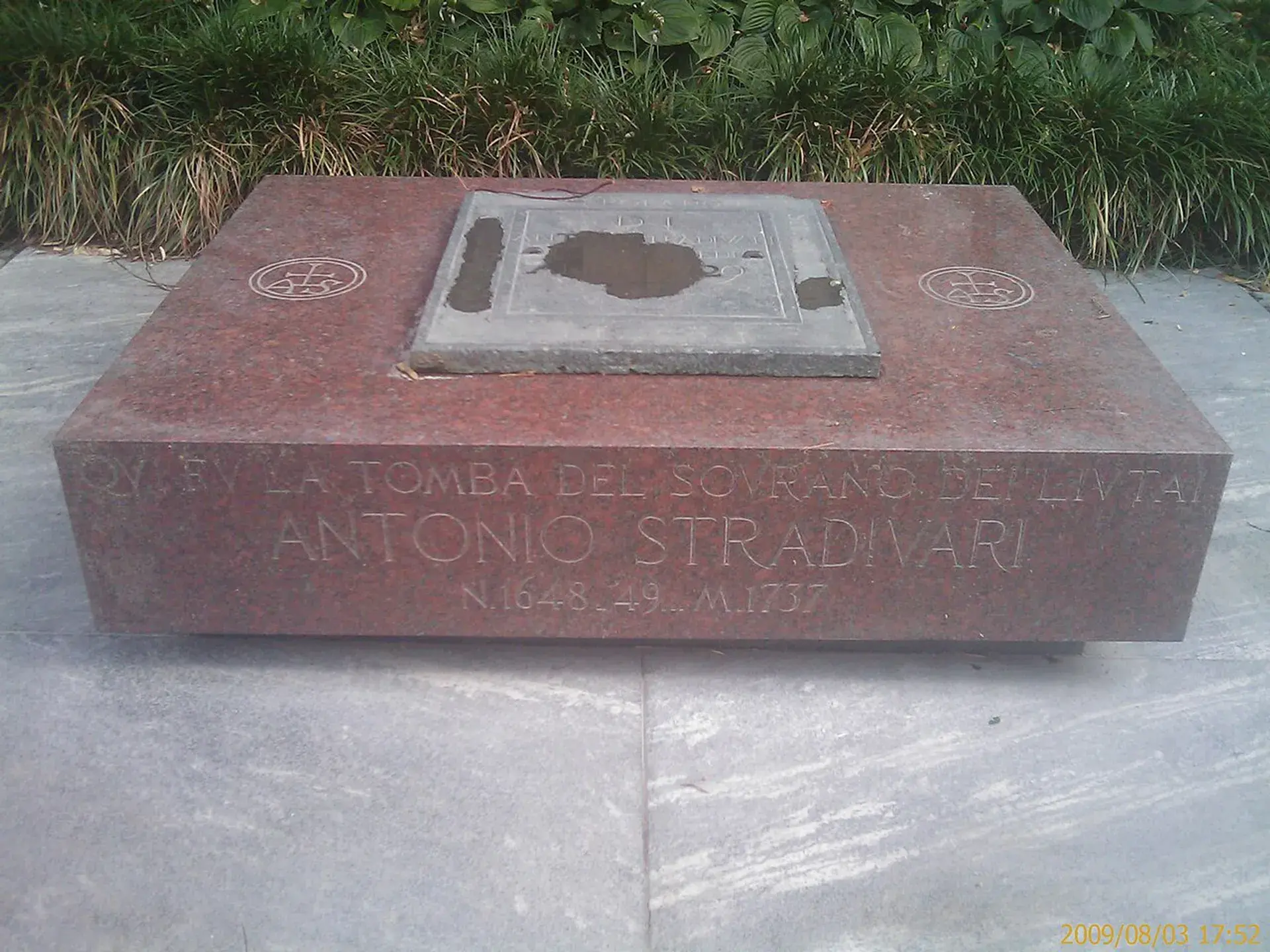
In the public gardens of Cremona’s Piazza Roma stands a sculpted cenotaph honoring the master luthier Antonio Stradivari. Carved by sculptor Dante Ruffini, the monument is a faithful reproduction of Stradivari’s 1729 family gravestone. It is positioned near the former site of the Chapel of the Rosary, which once stood inside the Basilica of San Domenico.
While the monument serves as a central point of remembrance for violin enthusiasts, the original 1729 gravestone is preserved indoors at Cremona’s nearby Museo del Violino. The cenotaph in Piazza Roma marks both the artisan’s historic burial ground and an era of profound municipal transformation.
Stradivari’s Final Decades and Workshop
In 1680, Stradivari relocated to what was then known as No. 2 Piazza San Domenico (later No. 1 Piazza Roma). This move situated his home and workshop in the heart of Cremona’s instrument-making quarter, near the workshops of the Amati and Guarneri families.
Stradivari established his working space in the upper floors and attic of the residence. It was here, over nearly six decades until his death on December 18, 1737, at roughly age 93, that Stradivari crafted the vast majority of his estimated 1,100 stringed instruments. This included his celebrated "Golden Period" spanning roughly 1700 through the 1720s. Stradivari purchased a family burial vault across the square in 1729, securing a plot inside the basilica's Chapel of the Rosary. Archival records reveal that this was a pre-owned vault acquired from a local noble family, requiring Stradivari to chisel away the previous owner's coat of arms and inscription before carving his own.
Demolition and the Lost Remains
Despite Stradivari’s global fame, his physical burial site did not survive modern urban development. Between 1869 and 1871, municipal authorities demolished the Basilica of San Domenico and its adjoining monastery to lay out the public gardens that form modern Piazza Roma.
During the clearance, the church vaults were emptied. Stradivari’s skeletal remains were not preserved beneath the modern memorial marker; instead, they were either lost or commingled into a collective ossuary at the local municipal cemetery. Ruffini's outdoor monument now acts solely as a symbolic marker where the chapel once stood.
Urban Transformation and the Galleria XXV Aprile
The clearances did not stop with the church. In the 1930s, Fascist-era urban redevelopments known as sventramenti demolished the residential block containing Stradivari’s home and workshop. In its place rose the Galleria XXV Aprile, a rationalist covered commercial arcade lined with shops and cafes linking Piazza Roma to Corso Campi.
On the exterior facade of the Galleria, a weathered marble plaque marks the location of the lost workshop with the Italian inscription: "Qui sorgeva la casa dove Antonio Stradivari recando a mirabile perfezione il liuto levava alla sua Cremona nome imperituro di artefice sommo" ("Here stood the house where Antonio Stradivari, bringing the lute craft to marvelous perfection, raised to his Cremona an undying name as supreme maker").
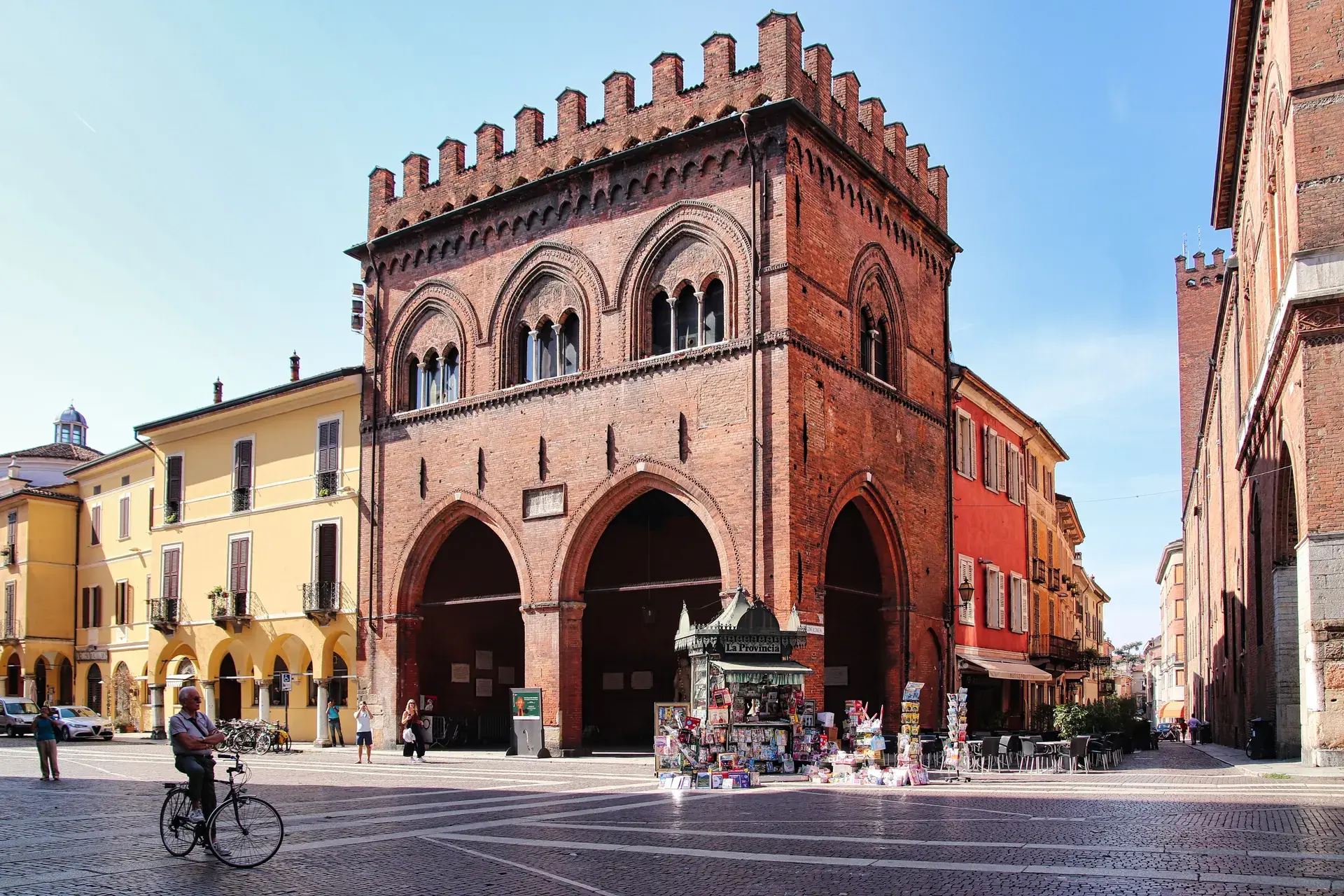
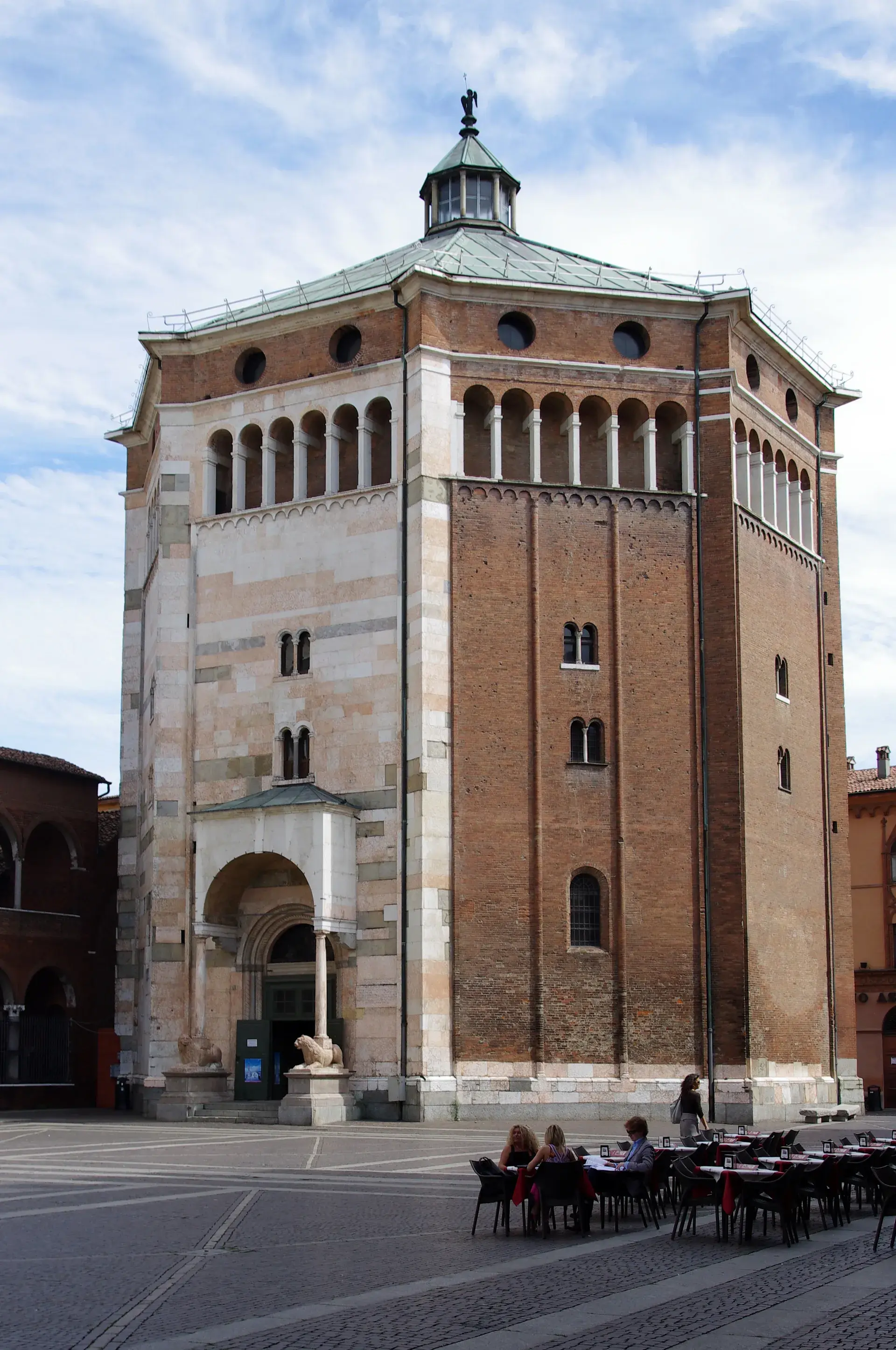
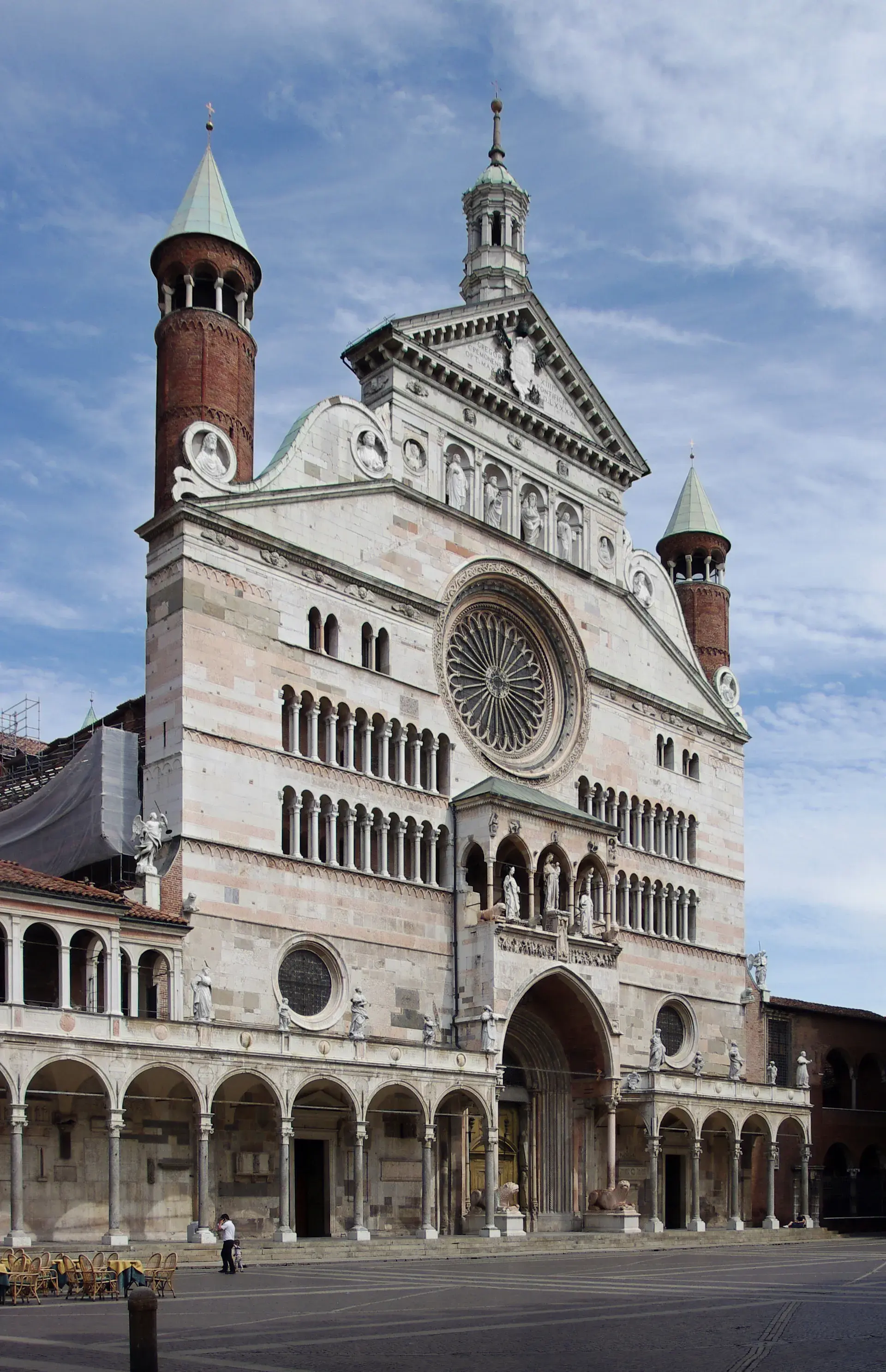
Today, Piazza Roma acts as a bridge between Cremona's historic civic heart—home to the Cathedral and the Torrazzo—and the Museo del Violino in Piazza Marconi. Within the square, the shaded tree canopy, lawns, and monuments to Stradivari and composer Amilcare Ponchielli contrast sharply with the echoey marble corridors of the adjacent interwar arcade.
FAQ
Are Antonio Stradivari’s remains buried under the tombstone in Piazza Roma?
No. When the Basilica of San Domenico was demolished between 1869 and 1871, the underlying burial vaults were cleared. Stradivari's bones were either lost or transferred into a collective ossuary at the local municipal cemetery.
Where is the original Antonio Stradivari gravestone located?
The stone standing in the public gardens of Piazza Roma is a replica sculpted by Dante Ruffini. The original 1729 tombstone is preserved in Cremona's Museo del Violino.
Is Stradivari's Piazza Roma workshop still standing?
No. The house and workshop where Stradivari lived from 1680 to 1737 were demolished in the 1930s to build the Galleria XXV Aprile arcade. Visitors looking for a surviving residence can visit Casa Stradivari on Corso Garibaldi 57, which was his early bridal home from 1667 to 1680.