Cathedral of San Lorenzo: Genoa's Striped Masterpiece
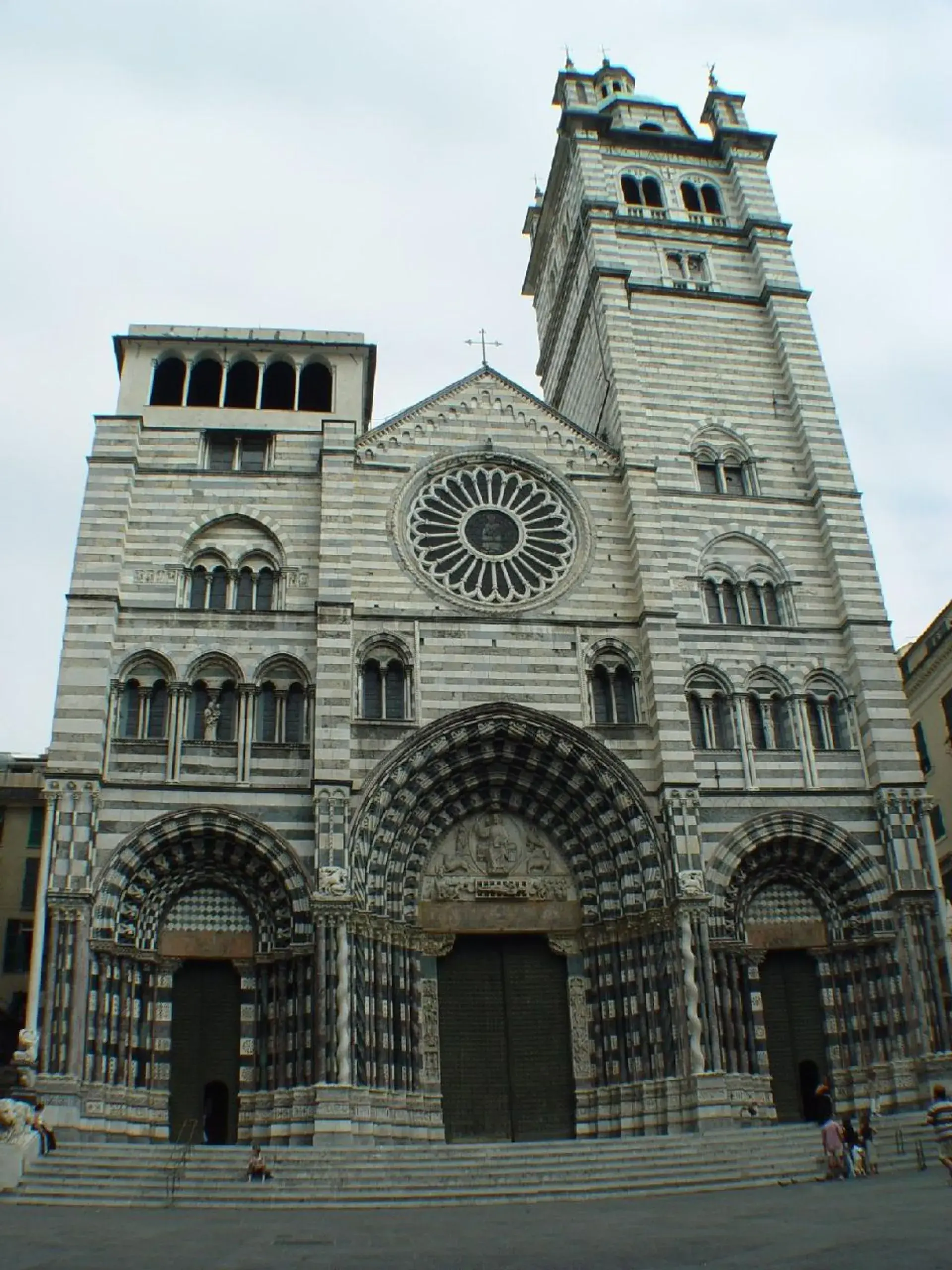
The Cathedral of San Lorenzo, dedicated to Saint Lawrence, stands as the spiritual heart of Genoa and the seat of its Archbishop. Its most defining feature is the striking black-and-white striped marble facade, a powerful symbol of Genoese nobility that has characterized the city's skyline for centuries.
Architectural Evolution Through Centuries
Construction of the cathedral began around 1098 on the site of an earlier 5th or 6th-century basilica. The building showcases a rich blend of architectural styles, reflecting Genoa's evolving history. The initial structure was Romanesque, with its choir and altar consecrated by Pope Gelasius II in 1118. Following a fire in 1296, the cathedral was partially rebuilt, leading to the addition of its magnificent Gothic elements.
The iconic black-and-white facade was largely completed between 1307 and 1312, with French craftsmen contributing the Gothic portals around 1230. In the 16th century, Perugian architect Galeazzo Alessi introduced Renaissance and Mannerist designs, overseeing work on the dome, nave, aisles, and apse. The cathedral's two towers are asymmetrical; the right bell tower was finished in 1522, while the left tower remains unfinished, topped with a loggia from 1455.
A Storied History
The cathedral's construction was financed by city taxes and wealth from Genoese military campaigns, including the Crusades. It became the seat of the Archbishop in 1133, cementing its role as the city's principal church. The building has witnessed significant historical events, including conflicts between the Guelph and Ghibelline factions, which sparked the 1296 fire that necessitated major reconstruction.
One of the most significant moments in its history was the arrival of the ashes of St. John the Baptist, Genoa's patron saint. The relics were brought from Mira around 1098-99 by military leader Guglielmo Embriaco following the First Crusade. These sacred remains are housed in the Chapel of St. John the Baptist, a masterpiece of Renaissance sculpture built between 1450 and 1460 by Domenico Gagini and his nephew Elia.
The Miraculous Survivor of WWII
Inside the right aisle, an extraordinary piece of modern history is on display: a 15-inch armor-piercing shell. On February 9, 1941, during a British naval bombardment of Genoa known as Operation Grog, the shell was fired from HMS Malaya. It pierced the cathedral's roof but miraculously failed to detonate. An inscription commemorates the event, attributing the cathedral's salvation to divine intervention.
The Cathedral Today
The Cathedral of San Lorenzo remains an active Roman Catholic place of worship, hosting daily masses and religious ceremonies. It is also a major cultural center and tourist attraction, drawing visitors to admire its art and architecture. Within the cathedral's medieval underground rooms is the Museo del Tesoro (Treasury Museum), which displays precious sacred objects, including the Sacro Catino, a glass dish once venerated as the Holy Grail. For panoramic views of Genoa, visitors can climb the cathedral's tower during specific opening hours.
FAQ
Why does the Cathedral of San Lorenzo have a black and white striped facade?
The distinctive black-and-white striped marble facade, primarily constructed between 1307 and 1312, was a symbol of Genoese nobility during the Middle Ages.
What important relics are kept in the Genoa Cathedral?
The cathedral houses the ashes of St. John the Baptist, Genoa's patron saint. The relics were brought to the city after the First Crusade and are preserved in the 15th-century Chapel of St. John the Baptist.
Is there really an unexploded bomb inside the cathedral?
Yes, a 15-inch armor-piercing shell fired by the British Royal Navy in 1941 is displayed in the right aisle. It struck the cathedral's roof but miraculously failed to detonate.
What is the Sacro Catino?
The Sacro Catino is a hexagonal green glass dish housed in the Treasury Museum. For centuries, it was venerated as the Holy Grail used at the Last Supper, but modern studies have identified it as a 9th-10th century Islamic or Byzantine artifact.