Palazzo Rosso: Genoa's UNESCO Red Palace Museum
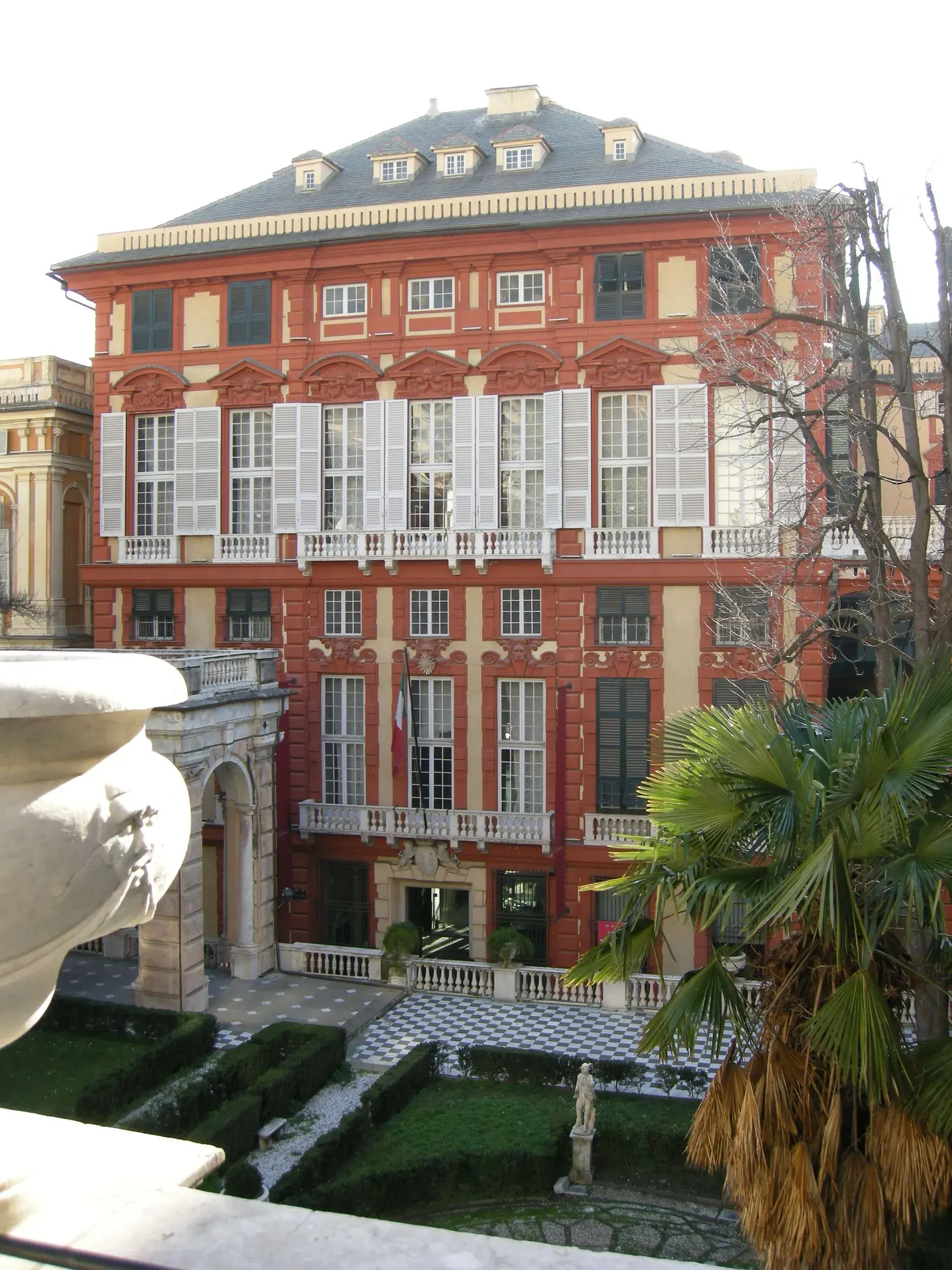
Palazzo Rosso, with its striking red facade, stands on Via Garibaldi as a testament to the opulence of 17th-century Genoa. This historic residence, part of a UNESCO World Heritage site, offers a window into the city's aristocratic past and its rich artistic heritage.
A Noble Family's Residence
The palace was constructed between 1671 and 1677 for the influential Brignole-Sale family. Commissioned by brothers Rodolfo and Gio Francesco I, the Baroque building was designed by architect Pietro Antonio Corradi. Its purpose was to showcase the family's immense wealth and status during Genoa's "Golden Age." An interesting feature of its original design was the inclusion of two separate main floors, or 'piani nobili', allowing the two brothers' families to cohabitate within the grand structure.
From 1679 to 1694, the interiors were lavishly decorated with frescoes by leading Baroque artists like Gregorio De Ferrari and Domenico Piola. In the mid-18th century, a descendant, Gio Francesco II Brignole-Sale, commissioned further enhancements, including Regency-style facade decorations. These included lion heads on the window lintels, a heraldic nod to the Brignole family crest.
From Private Palace to Public Museum
A pivotal moment in the palace's history occurred in 1874. The family's last heir, Maria Brignole-Sale, Duchess of Galliera, bequeathed the entire palace and its vast art collections to the Municipality of Genoa. Her one condition was that it be made accessible to the public, transforming a private family monument into a civic treasure for all.
The palace suffered significant damage during World War II, including the complete destruction of Gregorio De Ferrari's masterpiece fresco, 'The Myth of Phaeton'. A major restoration took place between 1953 and 1961 under the guidance of architect Franco Albini, a pioneer of modern museology who skillfully integrated the historic structure with contemporary exhibition methods.
Art and Collections
Today, Palazzo Rosso operates as a house-museum and is part of the Musei di Strada Nuova complex, along with the neighboring Palazzo Bianco and Palazzo Tursi. It preserves the atmosphere of an aristocratic home across more than 75 rooms, complete with period furnishings and stunning frescoes. One notable illusionistic work is Paolo Gerolamo Piola's 'Loggia of the Ruins,' which depicts crumbling ruins in a trompe-l'œil style.
The museum houses the extensive Brignole-Sale art collection, featuring masterpieces by artists such as Van Dyck, Veronese, Dürer, Guido Reni, and Guercino. It also includes the 'L'appartamento di un amatore d'Arte' (The art lover's apartment), a landmark installation by Franco Albini. Visitors can also access a panoramic terrace offering 360-degree views of Genoa's historic center.
FAQ
When did Palazzo Rosso become a public museum?
Palazzo Rosso became a public museum in 1874 when its last owner, Maria Brignole-Sale, Duchess of Galliera, donated the palace and its art collections to the city of Genoa with the condition that it be opened to the public.
What kind of art is inside Palazzo Rosso?
The museum houses the historic Brignole-Sale family art collection, which includes masterpieces by renowned artists like Dürer, Van Dyck, Veronese, Guido Reni, and Guercino, alongside elaborate Baroque frescoes and period furnishings.
Is Palazzo Rosso a UNESCO World Heritage site?
Yes, Palazzo Rosso was designated a UNESCO World Heritage site in 2006 as part of the 'Genoa: Le Strade Nuove and the system of the Palazzi dei Rolli'.
Who built Palazzo Rosso?
Palazzo Rosso was built for the Brignole-Sale brothers between 1671 and 1677. The design is attributed to architect Pietro Antonio Corradi, and construction was overseen by Matteo Lagomaggiore.