Porta del Molo: Genoa's Historic Siberia Gate
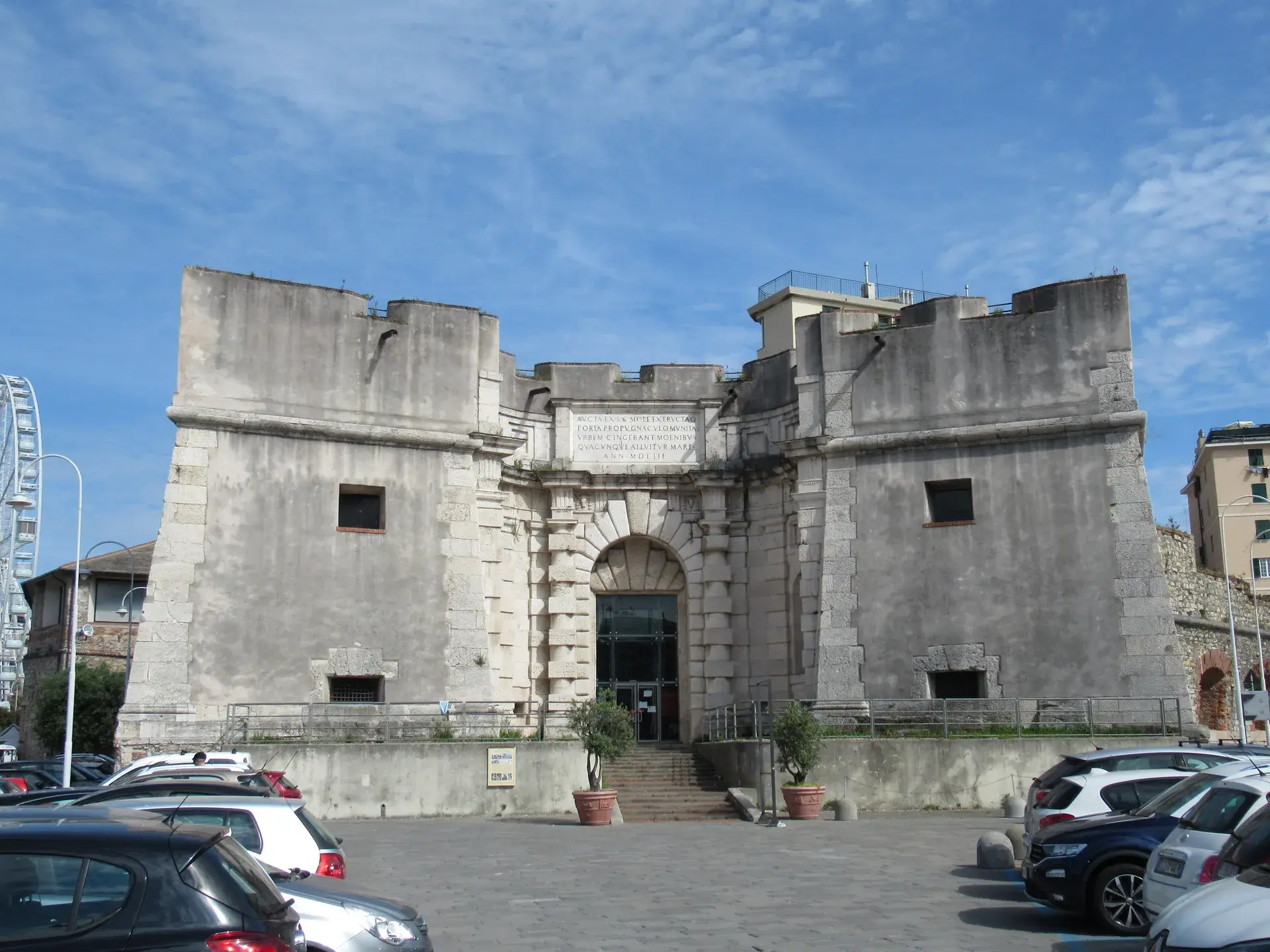
Porta del Molo, commonly known as Porta Siberia, stands as a formidable monument in Genoa's Porto Antico (Old Port). This historic gate is the only one of its kind from the 16th and 17th centuries still standing monumentally in the city. Its popular name, Porta Siberia, is not a reference to the cold Russian region, but rather a linguistic corruption of 'cibaria,' the Italian word for foodstuffs, hinting at its original function as a customs checkpoint for goods entering the city.
Architectural Design and Significance
Constructed between 1551 and 1553, Porta del Molo was designed by the celebrated Perugian architect Galeazzo Alessi, with construction carried out by Antonio Roderio da Carona. The gate is a prime example of Renaissance and Mannerist architecture, blending robust defensive features with aesthetic grandeur. Alessi's design, inspired by Michelangelo's projects, features a striking contrast between its two facades. The seaward side presents an imposing 'pincer' design, while the city-facing side is a more classical portico with three arches. A monumental marble inscription on the seaward architrave, attributed to Jacopo Bonfadio, commemorates the gate's completion in 1553.
A History of Defense and Trade
Porta del Molo was a crucial component of Genoa's 16th-century fortifications, built to protect the city's vital maritime trade. It served as the primary access point to the Molo Vecchio (Old Pier) and functioned as a customs house where cargoes, particularly foodstuffs, were inspected. The gate's internal structure was originally designed to accommodate an entire military garrison, complete with passages to cannon emplacements and a rooftop parade ground for artillery. The gate suffered damage during a bombardment by French troops in 1684 and experienced a period of decline that lasted until the late 18th century.
Modern Revival in the Porto Antico
In the 1990s, Porta del Molo was revitalized as part of a massive urban regeneration project for the Porto Antico, masterminded by Genoese architect Renzo Piano. This project transformed the historic port area into a vibrant public space. Today, the gate serves as a dynamic cultural hub. Its interior, spanning over 500 square meters, hosts temporary exhibitions, business meetings, and events. From 2001 to 2019, it housed a museum dedicated to the celebrated Genoese artist Emanuele Luzzati. Visitors can also access a panoramic terrace on the gate's roof, which offers unique views of the city and the old port.
FAQ
Why is Porta del Molo called Porta Siberia?
The name 'Porta Siberia' is a linguistic corruption of the Italian word 'cibaria,' which means foodstuffs. This reflects the gate's original function as a customs point where food cargoes were inspected before entering Genoa.
Who designed Porta del Molo?
The gate was designed by the renowned architect Galeazzo Alessi and was constructed between 1551 and 1553 by Antonio Roderio da Carona.
Can you visit the inside of Porta del Molo?
Yes, the gate's interior spaces are used as a cultural hub for temporary exhibitions, meetings, and events. It also features a panoramic terrace on its roof that is accessible to visitors.
What is special about Porta del Molo?
Porta del Molo is the only monumental gate from Genoa's 16th and 17th-century fortifications that is still standing today. Its design by Galeazzo Alessi masterfully blends military functionality with Renaissance aesthetics.