Basilica of the Holy Cross: Lecce's Baroque Masterpiece
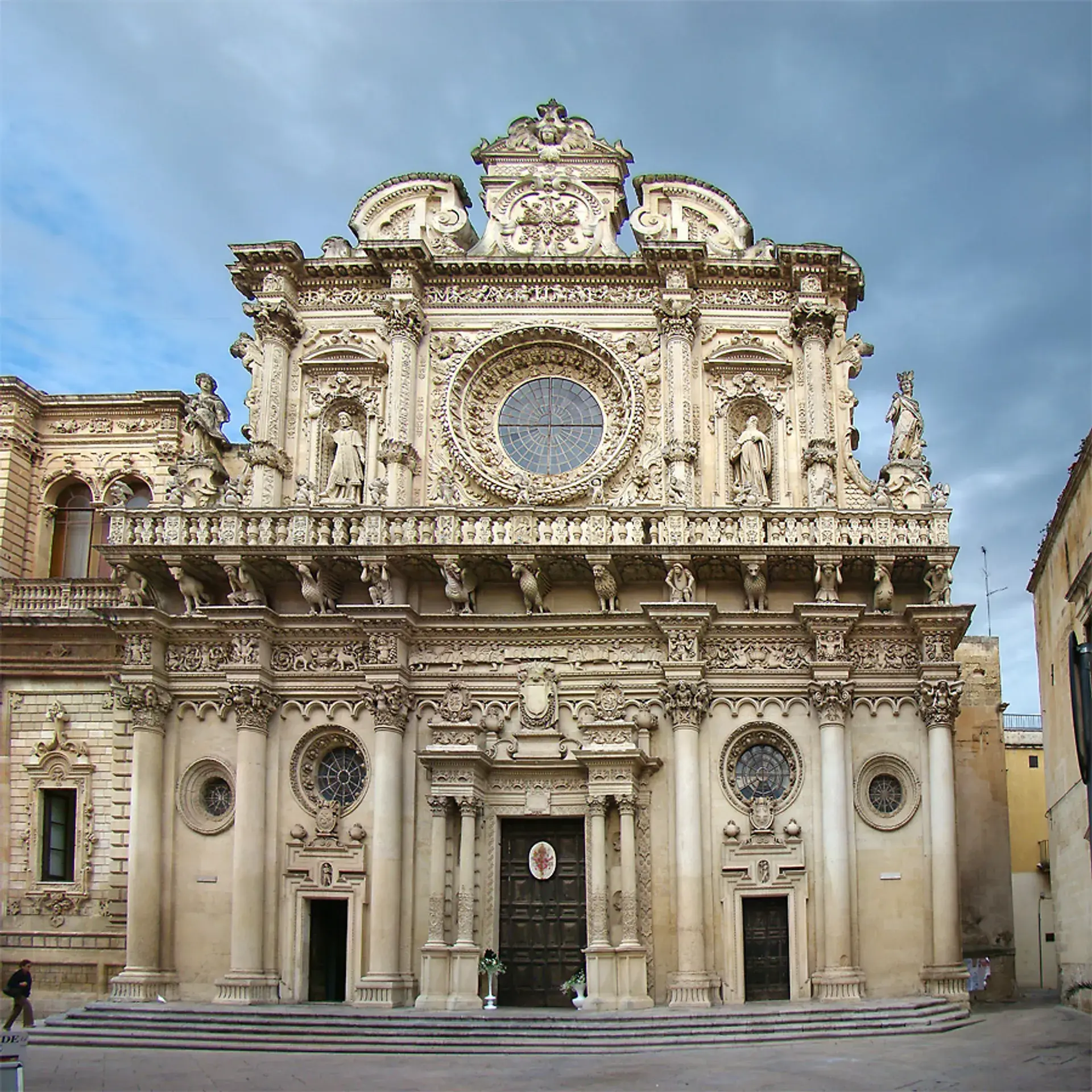
The Basilica of the Holy Cross (Basilica di Santa Croce) in Lecce, Italy, stands as the most celebrated monument of the city's unique architectural style, known as Lecce Baroque. Its magnificent façade, bursting with dozens of intricate figures surrounding a grand rose window, is a testament to the artistry of the 16th and 17th centuries. The church's elaborate beauty contributes to Lecce's reputation as the "Florence of the South."
A Masterpiece of Lecce Baroque
The basilica's extraordinarily detailed ornamentation is made possible by the use of a local limestone called 'pietra leccese'. This stone is exceptionally soft and malleable when quarried, allowing artisans to achieve a level of intricate detail that would be impossible with harder rock. Over time, this porous stone is also vulnerable to weathering, requiring periodic restoration to preserve its beauty.
The construction of the basilica was a lengthy process, spanning from 1549 to 1695. This extended timeline involved successive generations of master builders who shaped its design. Key architects included Gabriele Riccardi, who designed the lower façade; Francesco Antonio Zimbalo, responsible for the main portals; and Cesare Penna, who completed the upper façade and its iconic rose window.
A Façade Rich with Symbolism
The exterior of the Basilica of the Holy Cross is replete with iconography, much of it celebrating the Christian victory at the Battle of Lepanto in 1571. The façade features several atlantes, figures of men used as columns, which are believed to represent Turkish prisoners captured during the battle.
Beneath the balustrade, a variety of animal figures symbolize the Christian powers that participated in the conflict. A dragon represents the family of Pope Gregory XIII, a griffon symbolizes the Republic of Genoa, and a depiction of Hercules represents the Grand Duke of Tuscany.
A Complex and Layered History
The site's religious use dates back to 1353 when Walter VI, Count of Brienne, founded a monastery there. However, the construction of the current basilica in 1549 began with a poignant and often overlooked chapter of Lecce's history. The church was built on land previously occupied by the homes of the city's Jewish community, who had been expelled in 1510 and 1541. Their properties were confiscated to make way for the new structure. In a later historical event, the basilica's façade was covered by a protective brick wall in 1941 to shield it from potential damage during Allied bombings in World War II.
Interior and Current Use
Originally designed with five naves, the church's interior was reconfigured in the 18th century to its current layout of three naves and side chapels. Inside, it contains sixteen richly decorated Baroque altars, including the Altar of San Francesco da Paola, a masterpiece by Francesco Antonio Zimbalo.
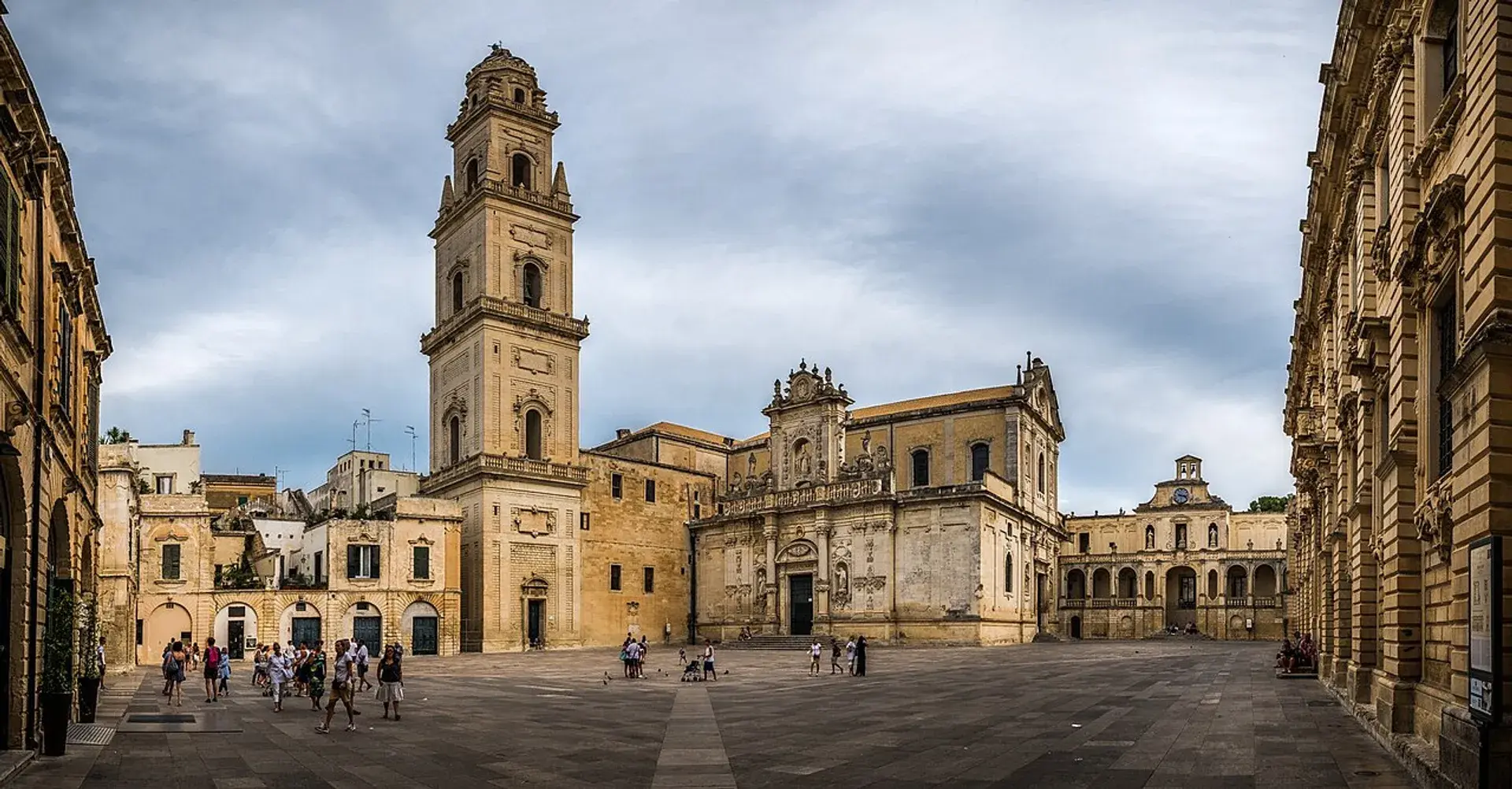
Today, the Basilica of the Holy Cross remains an active place of worship and one of the most photographed monuments in the Apulia region. It is a major tourist attraction and a sought-after venue for weddings. The former Celestine convent adjoining the basilica now houses public offices for the Province and Prefecture of Lecce.
FAQ
Why is the Basilica of the Holy Cross so ornate?
Its intricate carvings are possible due to the use of 'pietra leccese', a local stone that is exceptionally soft and malleable, allowing artisans to create highly detailed forms.
How long did it take to build the Basilica of the Holy Cross?
The construction was a multi-generational project that spanned nearly 150 years. It began in 1549 and was officially completed in 1695.
What is the history of the land the basilica is built on?
The basilica was constructed on land where the homes of Lecce's Jewish community once stood. The properties were confiscated after the community was expelled from the city in 1510 and 1541.
What does the symbolism on the façade represent?
Much of the façade's iconography celebrates the Christian victory at the Battle of Lepanto in 1571. It includes figures representing Turkish prisoners and animals symbolizing the Christian powers involved in the battle.