Piazza Sant'Oronzo: Lecce's Historic Heart
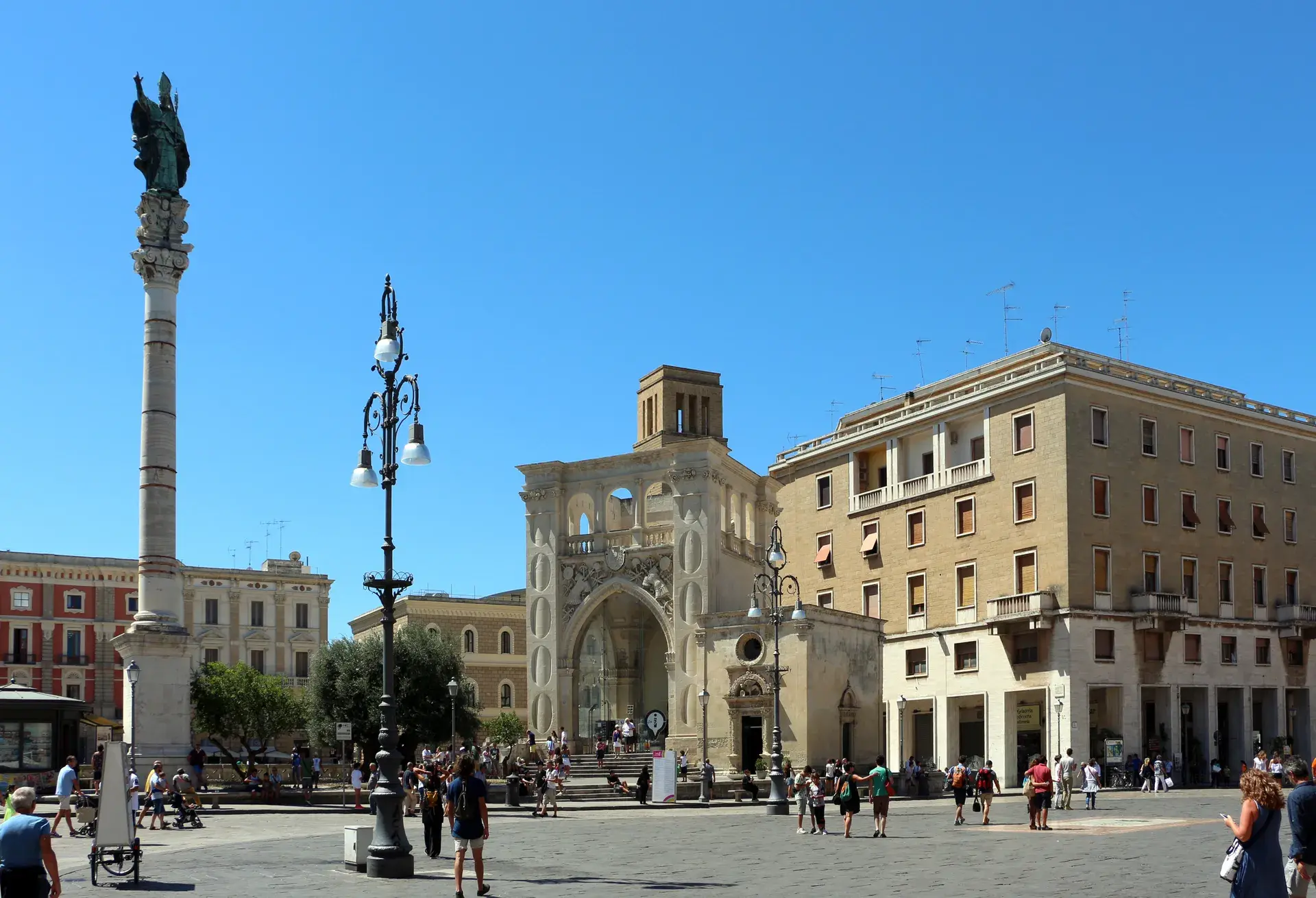
Piazza Sant'Oronzo serves as the vibrant heart of Lecce's historic center, a crossroads where layers of history converge. The square is dedicated to Saint Oronzo, the city's first bishop and patron saint, and is defined by three major landmarks: a partially unearthed Roman Amphitheater, the towering Column of Sant'Oronzo, and the elegant Palazzo del Seggio, also known as the Sedile. Formerly known as 'Piazza dei Mercadanti' (Merchants' Square), its evolution mirrors the complex story of Lecce itself.
The Roman Amphitheater
The most striking feature of the piazza is the Roman Amphitheater, dating to the 1st-2nd century AD. It was accidentally discovered in the early 1900s during construction for the Banca d'Italia building. Excavations led by archaeologist Cosimo De Giorgi revealed a colossal structure, but what is visible today is only about one-third of the original arena. The full amphitheater measured over 102 by 80 meters and could have seated around 20,000 spectators. The majority of this ancient monument remains buried beneath the square and surrounding buildings. Today, the exposed section hosts cultural events and open-air performances.
The Column of Sant'Oronzo
Dominating the square is the Column of Sant'Oronzo, a Baroque monument standing approximately 29 meters tall. It was erected between 1666 and 1686 as a votive offering to the patron saint for Lecce's deliverance from a devastating plague in 1656. The column, designed by architect Giuseppe Zimbalo, incorporates marble sections from an ancient Roman column in Brindisi that once marked the end of the Appian Way. The original copper-covered statue was destroyed in 1737; a new bronze copy was installed atop the column in April 2024.
Palazzo del Seggio (The Sedile)
Constructed between 1588 and 1592, the Sedile showcases a unique blend of Gothic and Renaissance architectural styles. Designed by Alessandro Saponaro, this building originally functioned as the city's administrative headquarters and public forum. Today, the historic Palazzo del Seggio has been repurposed for cultural use, hosting various exhibitions and events.
A Living Piazza
Today, the largely pedestrianized Piazza Sant'Oronzo is considered the 'living room' of Lecce, a central gathering spot for locals and visitors alike. The oval pavement features a 1930 mosaic by Giuseppe Nicolardi depicting Lecce's coat of arms—a wolf beneath a holm oak—which local tradition says brings good luck to those who avoid stepping on it. The square is ringed with cafes, shops, and historic buildings, including the Banco di Napoli building, which features the ornate 'Orologio delle Meraviglie' (Clock of Wonders) from 1955.
FAQ
Why is only part of the Roman Amphitheater visible in Piazza Sant'Oronzo?
Only about one-third of the Roman Amphitheater is visible because the rest remains buried beneath the square and adjacent buildings. The structure was only rediscovered in the early 1900s, and a full excavation was not possible due to the existing urban development.
What is the significance of the Column of Sant'Oronzo?
The column is a votive monument built between 1666 and 1686. The people of Lecce erected it to thank their patron saint, Sant'Oronzo, for what they believed was his miraculous intervention in sparing the city from the 1656 plague.
What was Piazza Sant'Oronzo originally called?
Before being dedicated to the city's patron saint, the square was known as 'Piazza dei Mercadanti' (Merchants' Square), reflecting its historical role as a bustling commercial hub.
What is the Sedile in Piazza Sant'Oronzo?
The Sedile, or Palazzo del Seggio, is a late 16th-century building with a mix of Gothic and Renaissance styles. It originally served as Lecce's administrative headquarters and is now used for cultural events and exhibitions.