Lecce Cathedral: A Baroque Masterpiece in Puglia
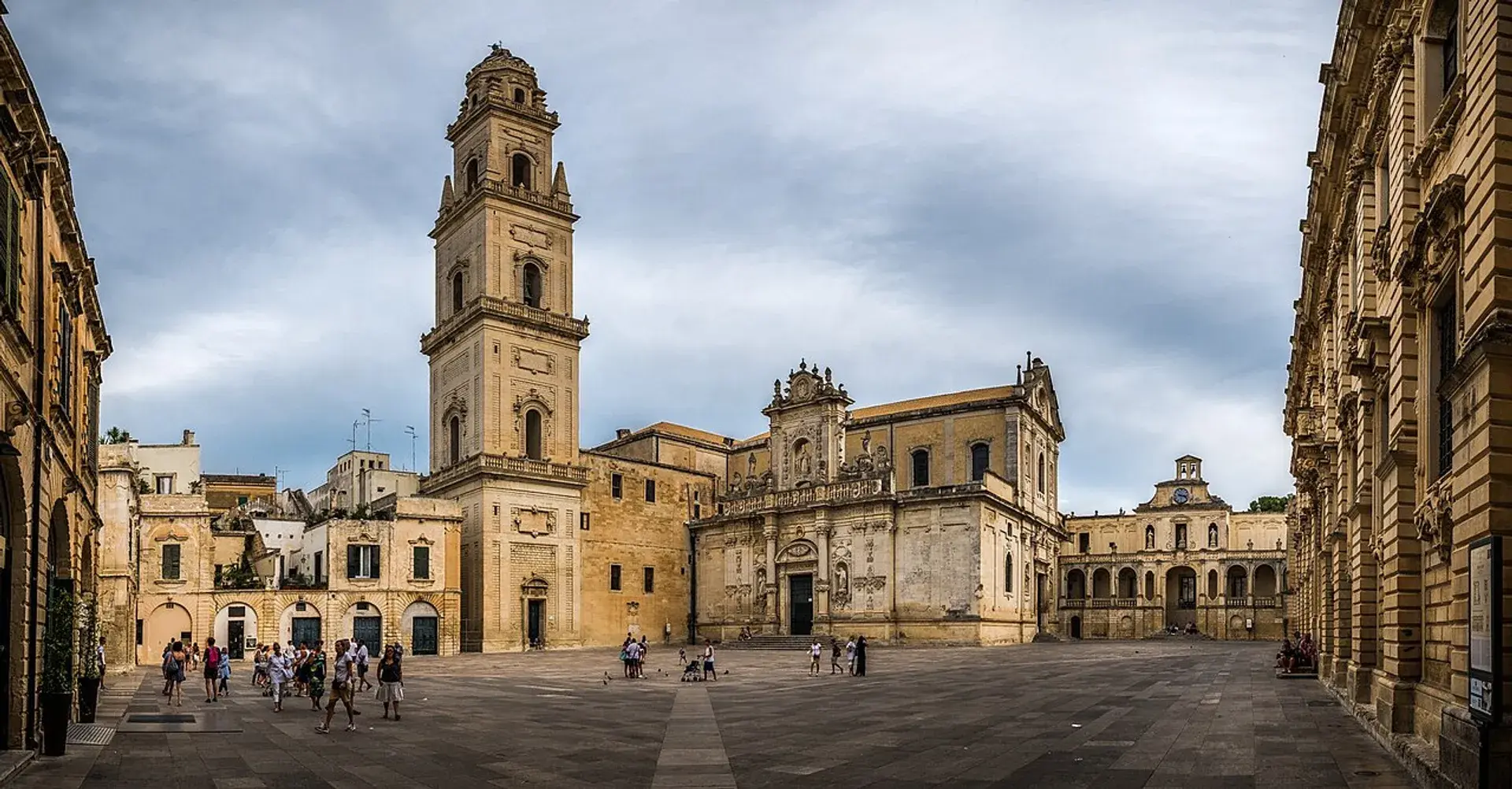
The Cathedral of Saint Mary of the Assumption and Saint Orontius stands as a defining landmark in Lecce, Italy. Located in the harmonious Piazza del Duomo, it is a prime example of the Lecce Baroque style, contributing to the city's nickname, "The Florence of the South." The cathedral functions as the seat of the Archbishop of Lecce and remains an active place of worship and a major destination for visitors.
A History Forged in Stone
The cathedral's origins trace back to 1144, when it was first built under Bishop Formoso Lubelli. It underwent a Romanesque-style reconstruction in 1230. However, its current magnificent appearance is the result of a comprehensive rebuilding project between 1659 and 1670. This transformation was commissioned by Bishop Luigi Pappacoda following the devastating plague of 1656, which led to Saint Orontius becoming the city's patron saint. The bishop's coat of arms, featuring a rampant lion, can be seen on the lateral façade.
The Architectural Genius of Giuseppe Zimbalo
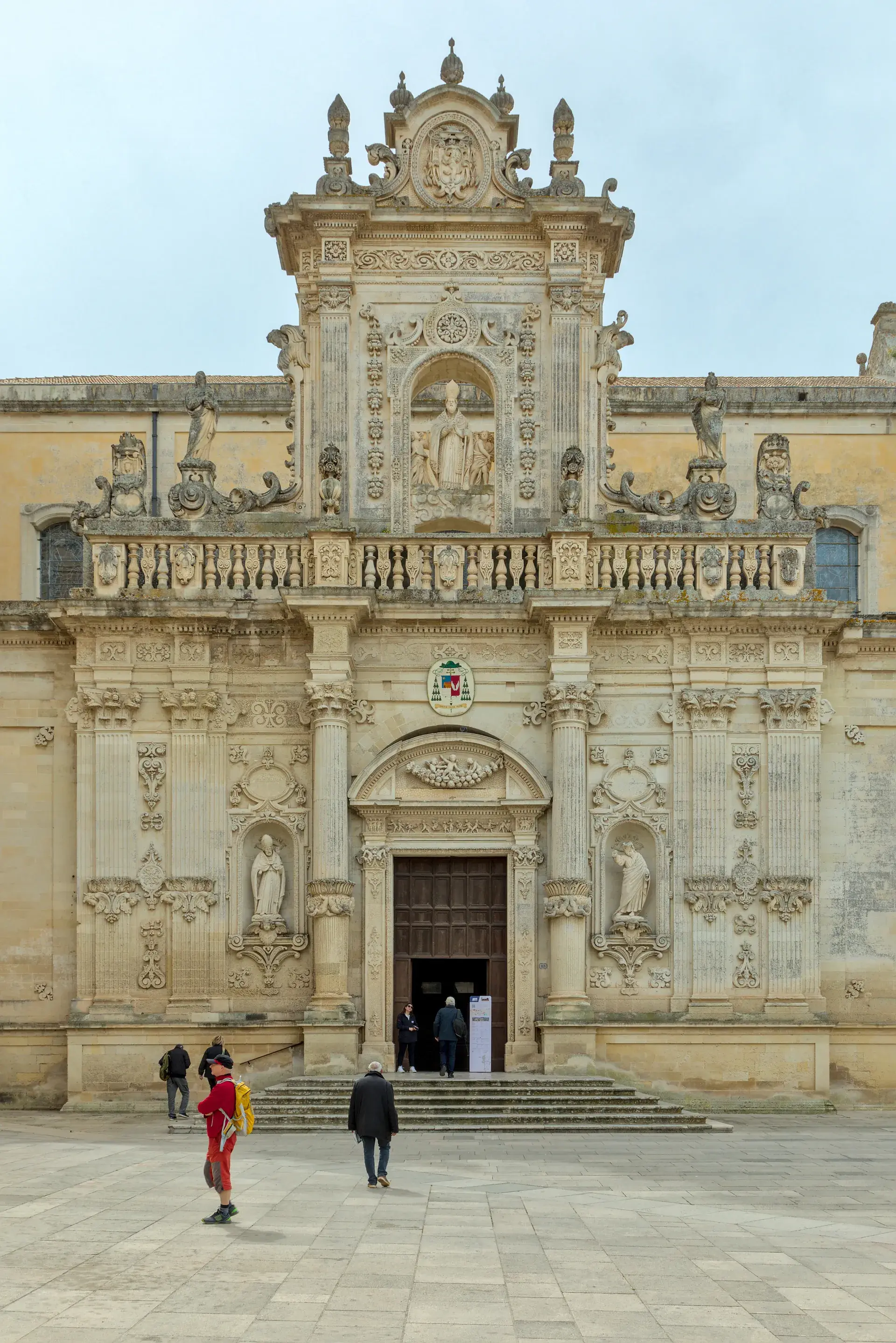
The 17th-century Baroque reconstruction was entrusted to the celebrated local architect Giuseppe Zimbalo, also known as 'lo Zingarello'. Zimbalo masterfully utilized the local 'pietra leccese', a soft and porous limestone that enabled the creation of the elaborate carvings that characterize the structure. A surprising feature of his design is the presence of two facades. A highly ornate and theatrical lateral façade faces the Piazza del Duomo, designed to create a grand first impression. The more austere, classical main façade fronts the Episcopal Palace, making the secondary entrance the primary visual focus.
The Bell Tower and Interior
Complementing the cathedral is the 70-meter-tall bell tower, also designed by Zimbalo and built between 1661 and 1682. It replaced an earlier Norman tower and has a noticeable slight lean from a partially sunken foundation. Historically used as a watchtower, it offers panoramic views of Lecce and the Adriatic Sea. The cathedral's interior features a wooden coffered ceiling from 1685 in the central nave. This ceiling is adorned with paintings by Giuseppe da Brindisi depicting the life of Saint Orontius, including his protection of the city from the plague.
The Ancient Crypt
Beneath the main structure lies a 12th-century crypt, which was reopened in 2017 after extensive restoration. This subterranean space is remarkable for its 92 columns, many of which are topped with intricately carved capitals showing human figures, angels, and mythical creatures. The crypt also contains evidence of ancient burial practices, adding another layer to the cathedral's long history.
FAQ
Who built the Lecce Cathedral?
While the original cathedral was built in 1144, its current Lecce Baroque appearance is the result of a major reconstruction between 1659 and 1670 by the renowned architect Giuseppe Zimbalo.
Why does the Lecce Cathedral have two different facades?
Architect Giuseppe Zimbalo deliberately designed two facades. The highly decorated side facade was intended to create a theatrical and impressive entrance for visitors entering Piazza del Duomo, making it the primary visual focus over the more restrained main facade.
What is the Lecce Cathedral made from?
The cathedral is constructed from 'pietra leccese' (Lecce stone), a soft, porous local limestone. This stone is easy to carve, allowing for the intricate Baroque details, but its porous nature also makes it susceptible to deterioration.
Does the Lecce Cathedral's bell tower lean?
Yes, the 70-meter bell tower, designed by Giuseppe Zimbalo, has a noticeable slight lean which is attributed to a partially sunken foundation.