Celestini Palace: Lecce's Baroque Masterpiece
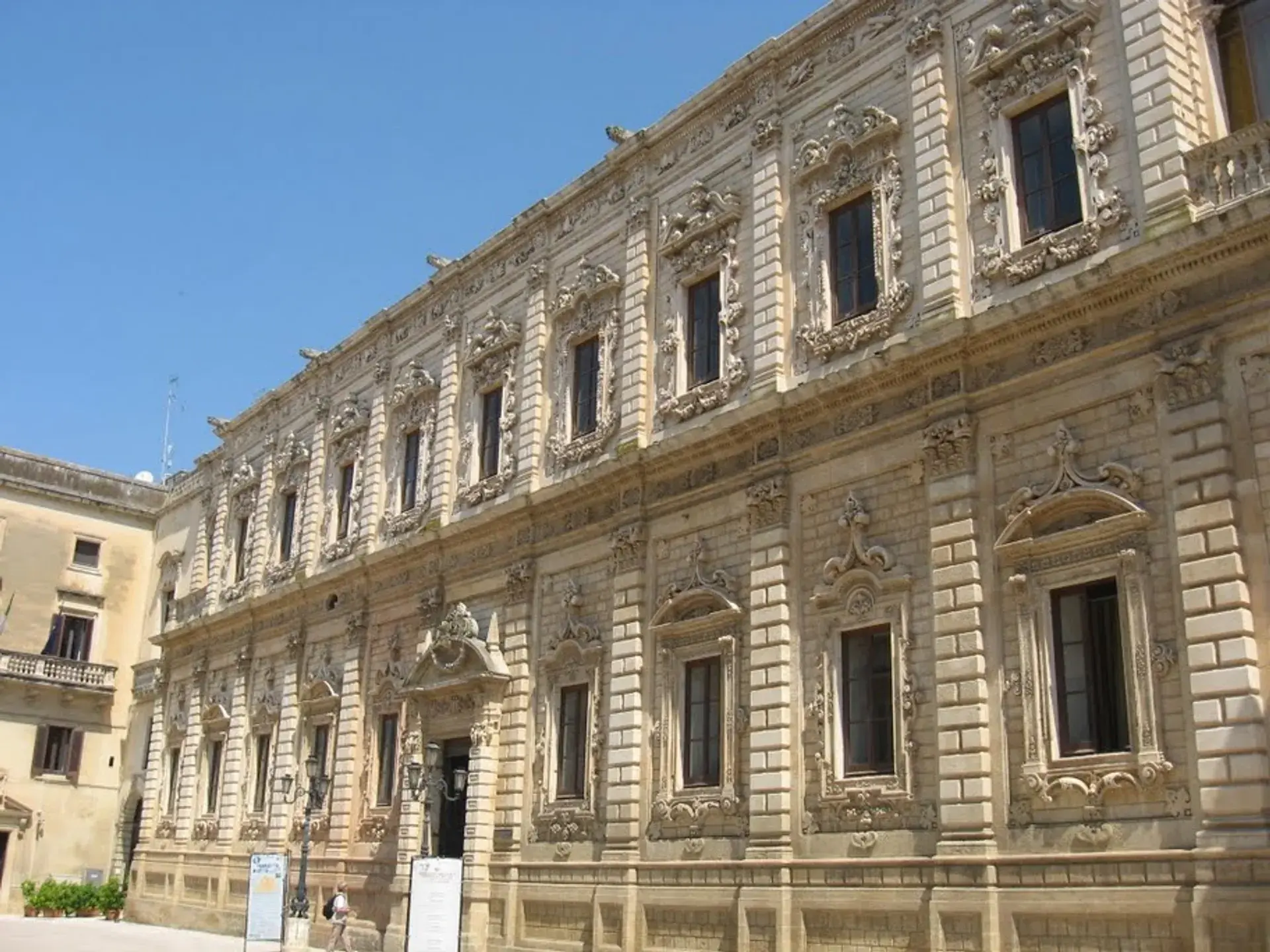
Gaze upon the grand facade of Celestini Palace, a significant historical building that embodies Lecce's baroque architectural splendor. Standing next to the famous Basilica di Santa Croce, this former convent is a quintessential representation of the city's artistic identity, built with the signature 'pietra leccese' (Lecce stone).
A History of Transformation
The story of the palace begins in 1352 with the founding of a monastery by Gualtieri VI di Brienne for the Celestine Fathers. This original structure was demolished in 1549 under the orders of Emperor Charles V to expand the city's fortifications. Construction on the current palace began that same year at a new site, formerly the city's Jewish quarter.
The building evolved over centuries, with major construction taking place in the 17th century. The magnificent Baroque facade was built between 1659 and 1695, a collaborative effort by architects Giuseppe Zimbalo and Giuseppe Cino. For three centuries, the building served as a prominent Celestine convent until 1807, when the suppression of religious orders led to its transformation into a government palace.
Architectural Splendor
While the exterior is a triumph of the Baroque style, the palace holds a variety of architectural secrets. The original cloister, designed by Gabriele Riccardi in 1549, exhibits a Renaissance style. In a surprising twist, the vast internal courtyard was altered in the 19th century with a Neoclassical facade that covers and incorporates elements of the original 17th-century Baroque columns and structure.
An internal side portal, also designed by Riccardi, provides a direct connection from the cloister to the adjacent Basilica of Santa Croce. This passage offers a view of the altar containing a relic of the True Cross, a masterpiece created by Cesare Penna.
Interior Highlights and Current Use
The interior of the Celestini Palace contains numerous points of interest. The cloister's quadriportico is framed by 24 arches and features keystones with undeciphered initials and various family crests. The Provincial Council room is notable for its wooden coffered ceiling, which is adorned with the symbol of the Province of Lecce: a dolphin clutching a half-moon.
Today, the Celestini Palace serves as the administrative headquarters for the Prefecture and the Province of Lecce. It houses government offices, the Prefect's apartment, and the provincial council hall. Guided tours are available to the public but require advance booking.
FAQ
What is the Celestini Palace used for today?
The Celestini Palace currently serves as the administrative headquarters for the Prefecture (Prefettura) and the Province of Lecce (Provincia di Lecce), housing various governmental offices.
Who were the main architects of the Celestini Palace?
Key architects include Gabriele Riccardi, who designed the original Renaissance cloister, and Giuseppe Zimbalo and Giuseppe Cino, who were responsible for the grand Baroque facade in the 17th century.
What is the connection between Celestini Palace and the Basilica di Santa Croce?
The palace is adjacent to the basilica. An internal portal designed by Gabriele Riccardi directly connects the palace's cloister to the basilica, offering a view of the altar.
Can I visit the Celestini Palace?
Yes, guided tours of the Celestini Palace are available, but they require advance booking.