Colonna di Sant'Oronzo: Lecce's Historic Column
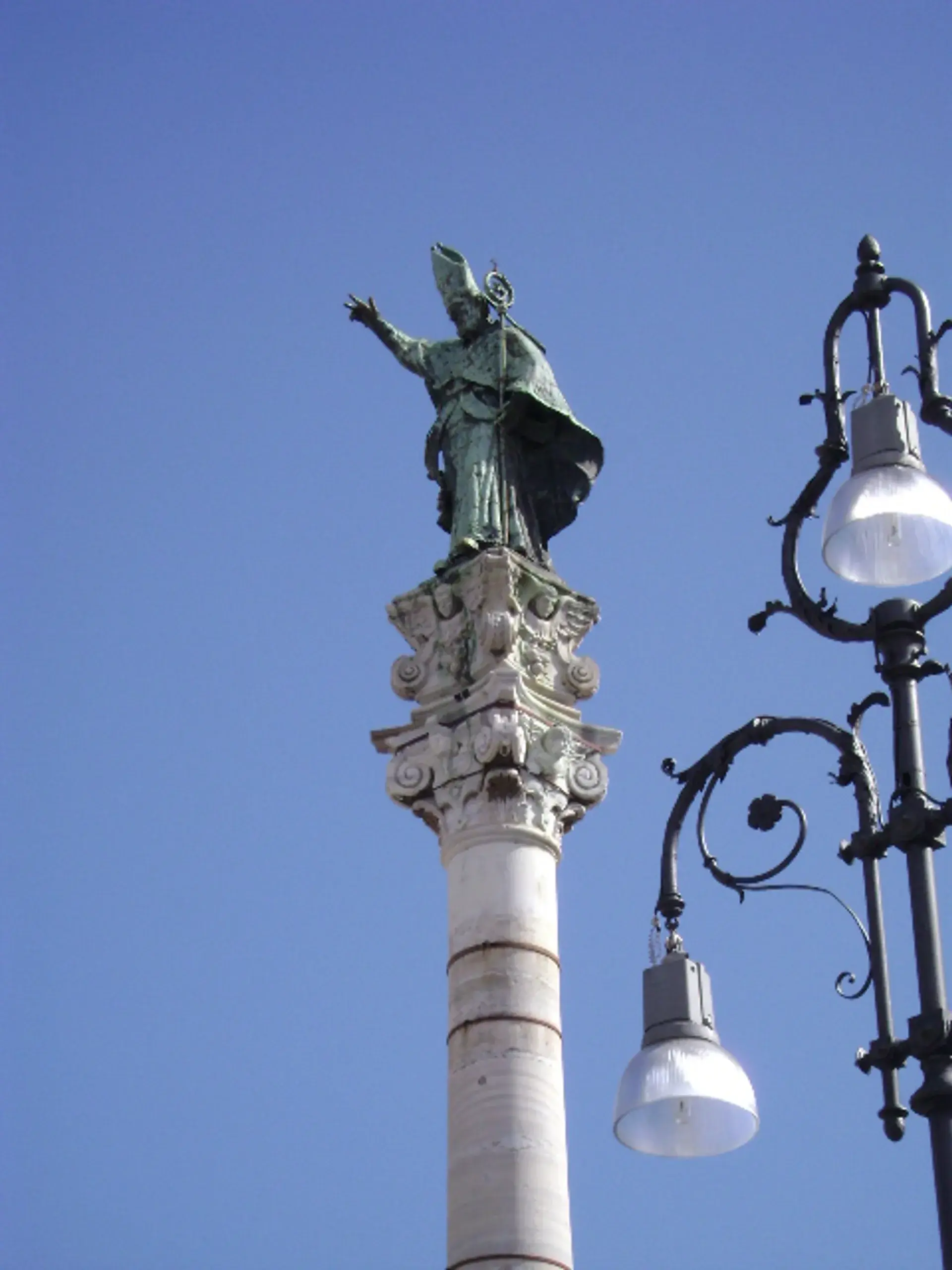
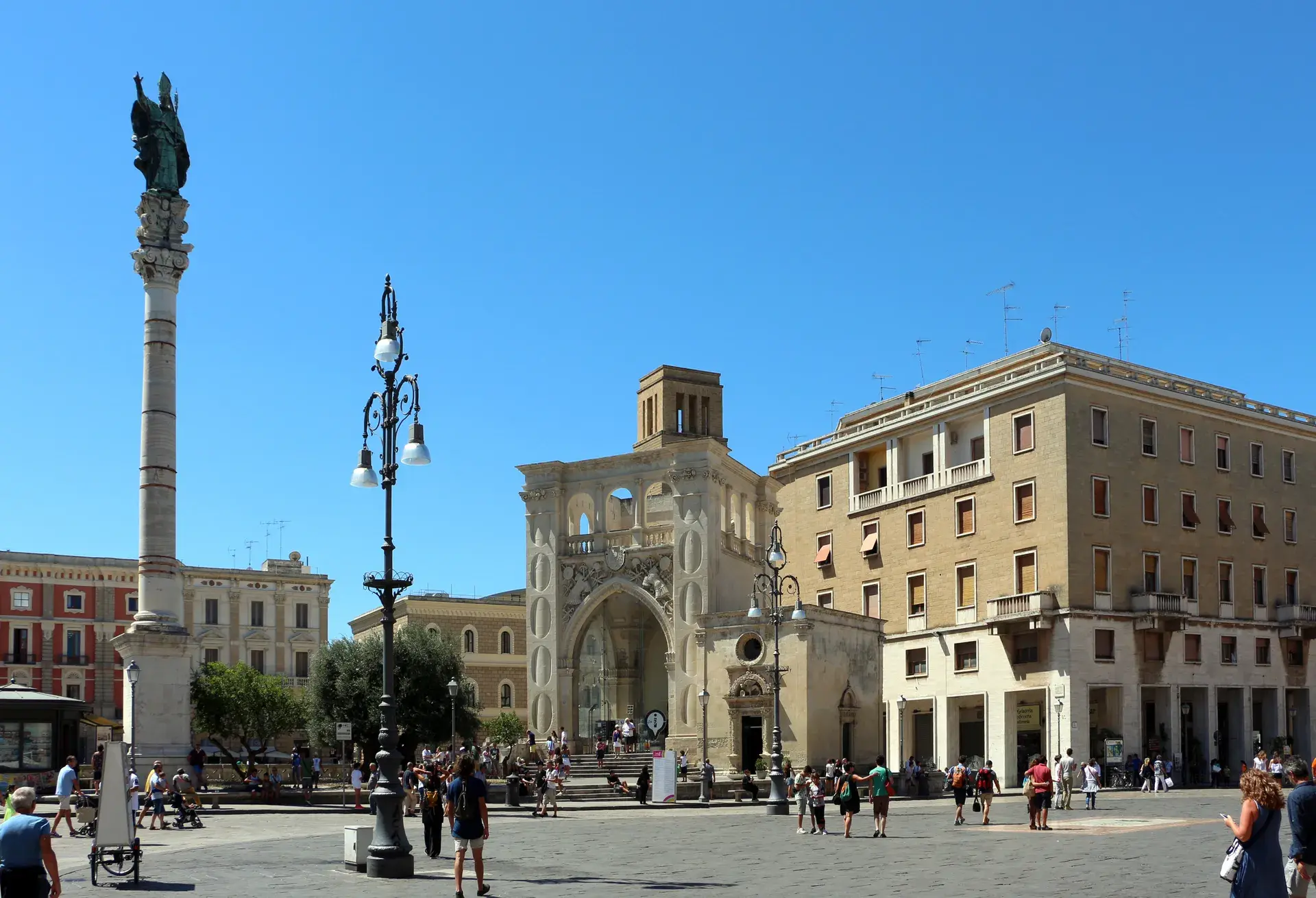
In the heart of Lecce's vibrant Piazza Sant'Oronzo stands the Colonna di Sant'Oronzo, a towering historical landmark that has watched over the city for centuries. This majestic column, crowned with a statue of the city's patron saint, is a testament to faith, gratitude, and a complex history that blends Roman antiquity with Baroque artistry.
A Vow of Gratitude
The column's origin is rooted in the devastating plague of 1656 that swept through the Kingdom of Naples. The city of Lecce was largely spared from the epidemic, a deliverance the citizens attributed to the miraculous intervention of Saint Orontius (Sant'Oronzo). In a profound act of gratitude, the city decided to erect a votive column in his honor. This event also led to Sant'Oronzo replacing Saint Irene as Lecce's official patron saint, a project championed by Bishop Luigi Pappacoda.
From Roman Ruins to Baroque Splendor
Construction on the approximately 29-meter-tall column began in 1666 under the direction of acclaimed Lecce architect Giuseppe Zimbalo, a master of the Salento Baroque style. The project, which concluded in 1686 after a suspension due to lack of funds, has a surprising and controversial foundation. The main body of the column is composed of marble sections, or 'rocchi', from one of two ancient Roman columns in Brindisi that once marked the end of the Appian Way. This column had collapsed in 1528, and Lecce acquired the fragments under circumstances that some historical accounts suggest were contentious, possibly involving a clandestine night operation to move them from the rival city.
Zimbalo skillfully adapted these damaged Roman segments, tapering them to create the structural stability and visual harmony that define the 17th-century monument. The column rests on a stone base adorned with balustrades and statues.
A History of Statues
The statue of Saint Orontius atop the column has its own dramatic history. The first statue, placed in 1684, was made of Venetian wood covered in copper. During festivities in 1737, this statue was accidentally struck by a firework and burned. A new, more durable effigy was crafted in Venice and placed on the column in 1739. This statue was prudently removed and stored in Lecce Cathedral for safety during World War II, being re-erected between 1945 and 1950.
Following extensive restoration work that began in 2019, the historic 1739 statue was permanently removed for preservation. In April 2024, a durable bronze replica was installed in its place, ensuring the monument's profile remains intact for future generations.
The Column Today
The Colonna di Sant'Oronzo remains an iconic focal point in Piazza Sant'Oronzo, a bustling city square filled with cafes and cultural events. While the bronze replica now gazes over the city from above, the original, restored 1739 statue is preserved and displayed in the nearby Palazzo comunale (also known as Il Sedile), allowing visitors to appreciate its historical craftsmanship up close.
FAQ
Why was the Colonna di Sant'Oronzo built?
The column was built as a votive offering to thank Saint Orontius (Sant'Oronzo) for what the city of Lecce believed was his miraculous protection, sparing them from the 1656 plague.
What is the Lecce column made of?
The main shaft of the column is made from marble fragments of an ancient Roman column that collapsed in Brindisi in 1528. These fragments originally marked the end of the Appian Way.
Is the statue on top of the Colonna di Sant'Oronzo the original?
No, the statue currently on the column is a bronze replica installed in April 2024. The original statue from 1739 was removed for preservation and is now displayed in the nearby Palazzo comunale.