Roman Amphitheater of Lecce: A Buried Treasure
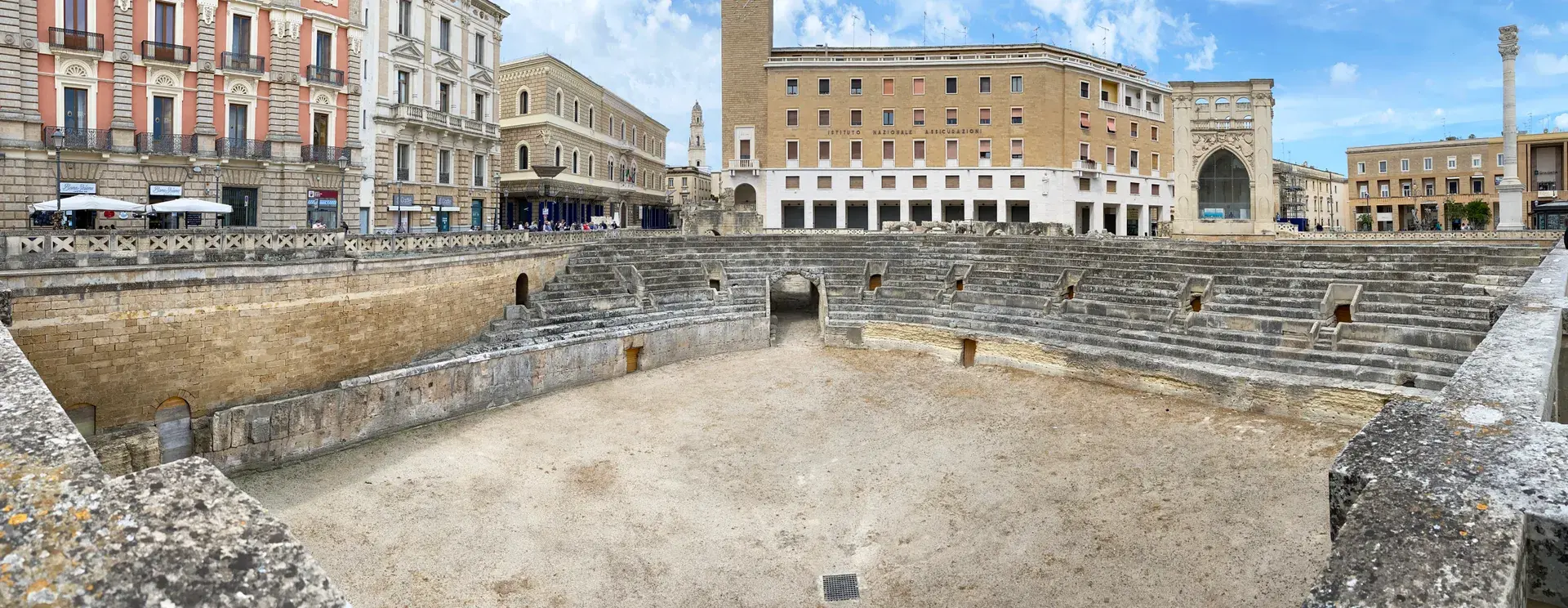
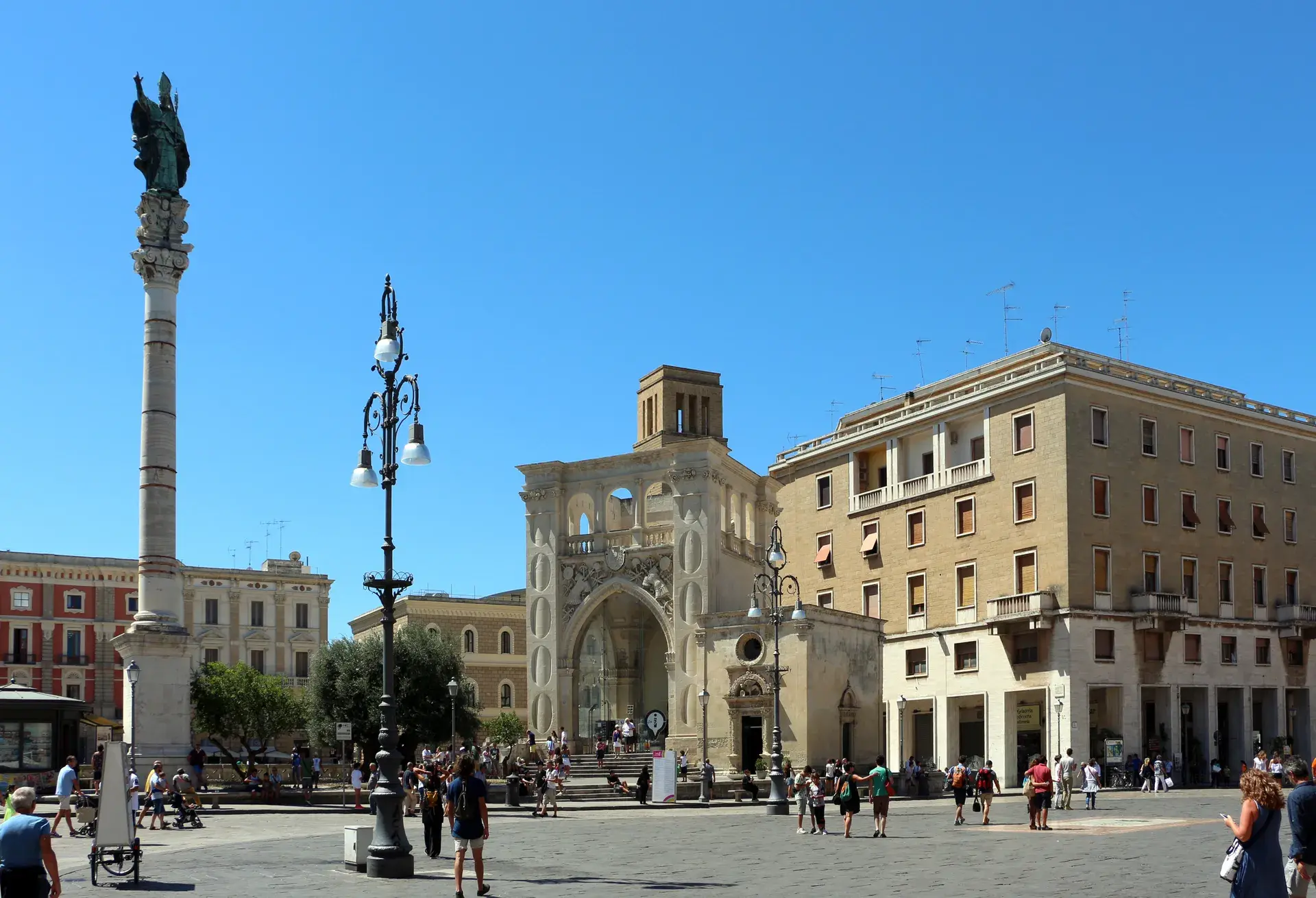
In the heart of Lecce’s main square, Piazza Sant'Oronzo, lies the remarkable Roman Amphitheater, a testament to the city's ancient past as the Roman municipality of Lupiae. Constructed from local Lecce stone, this elliptical structure offers a stunning glimpse into the Roman Imperial era, with its partially excavated arena and seating tiers standing in contrast to the surrounding Baroque architecture.
An Accidental Discovery
The amphitheater's existence was unknown for centuries, completely buried beneath the city. Its rediscovery was an accident, occurring between 1900 and 1901 when workers were digging the foundations for the Bank of Italy building. This monumental find prompted excavations, led by archaeologist Cosimo De Giorgi, which continued until 1940. In 1906, the site was declared a National Monument, securing its place as a key historical landmark.
Imperial Construction and Spectacles
Built between the 1st and 2nd centuries AD, the amphitheater's origins are linked to the Augustan era, with later restorations and additions, including a colonnaded portico, attributed to Emperor Hadrian. The structure was immense, with external dimensions of approximately 102 by 82 meters and an arena measuring 53 by 34 meters. It could hold an estimated 12,000 to 14,000 spectators, though some sources suggest a capacity as high as 25,000.
This was a vibrant center for public entertainment, primarily hosting gladiator fights (munera gladiatoria) and animal hunts (venationes). Reliefs carved from white Greek marble on the parapet depicted scenes of combat with animals like bulls, lions, and bears. The daily schedule of events typically featured animal fights in the morning, public executions at midday, and gladiatorial contests in the afternoon.
Decline and Spoliation
After the fall of the Roman Empire, the amphitheater fell into disuse and was gradually buried by time and subsequent construction. Its robust materials were repurposed over the centuries. During the Middle Ages, its remnants were likely incorporated into town fortifications. Starting in the 11th century, decorative elements such as capitals were systematically removed and reused in the construction of the crypt of Otranto Cathedral.
The Amphitheater Today
Today, only about one-third of the amphitheater is visible, with the majority remaining unexcavated beneath Piazza Sant'Oronzo and adjacent buildings, including the Church of Santa Maria della Grazia. The exposed ruins are a public monument, free to view from the perimeter at any time.
The site continues to be a part of Lecce's cultural life, occasionally hosting concerts, theatrical performances, and civic celebrations. It stands as a powerful symbol of the city's deep historical layers, revealing the importance of ancient Lupiae long before Lecce became famous for its Baroque splendor.
FAQ
When was the Roman Amphitheater of Lecce built?
The Roman Amphitheater of Lecce was constructed between the 1st and 2nd centuries AD. The original layout is believed to be from the Augustan era, with significant restorations and additions made during the Hadrianic period.
How was the Lecce Amphitheater discovered?
It was discovered accidentally between 1900 and 1901. Construction workers digging foundations for the Bank of Italy building uncovered the ancient structure, which had been completely buried for centuries.
How much of the Roman Amphitheater in Lecce is visible?
Only about one-third of the original amphitheater is visible today. The rest of the structure remains buried under Piazza Sant'Oronzo and the modern buildings that surround it.
What was the Lecce Amphitheater used for?
In ancient times, it was used for public spectacles, most notably gladiator fights (munera gladiatoria) and animal hunts (venationes) featuring animals like bulls, lions, and bears.