Teatro Romano: Lecce's Hidden Roman Theater
In the heart of Lecce's historic center, nestled amidst celebrated Baroque architecture, lies a remarkable testament to the city's ancient origins: the Teatro Romano. For centuries, this significant Roman structure was completely buried and forgotten, its existence unknown until it was accidentally unearthed in the 20th century. Today, it stands as a tangible link to the Roman city of Lupiae and its rich cultural life.
A Serendipitous Discovery
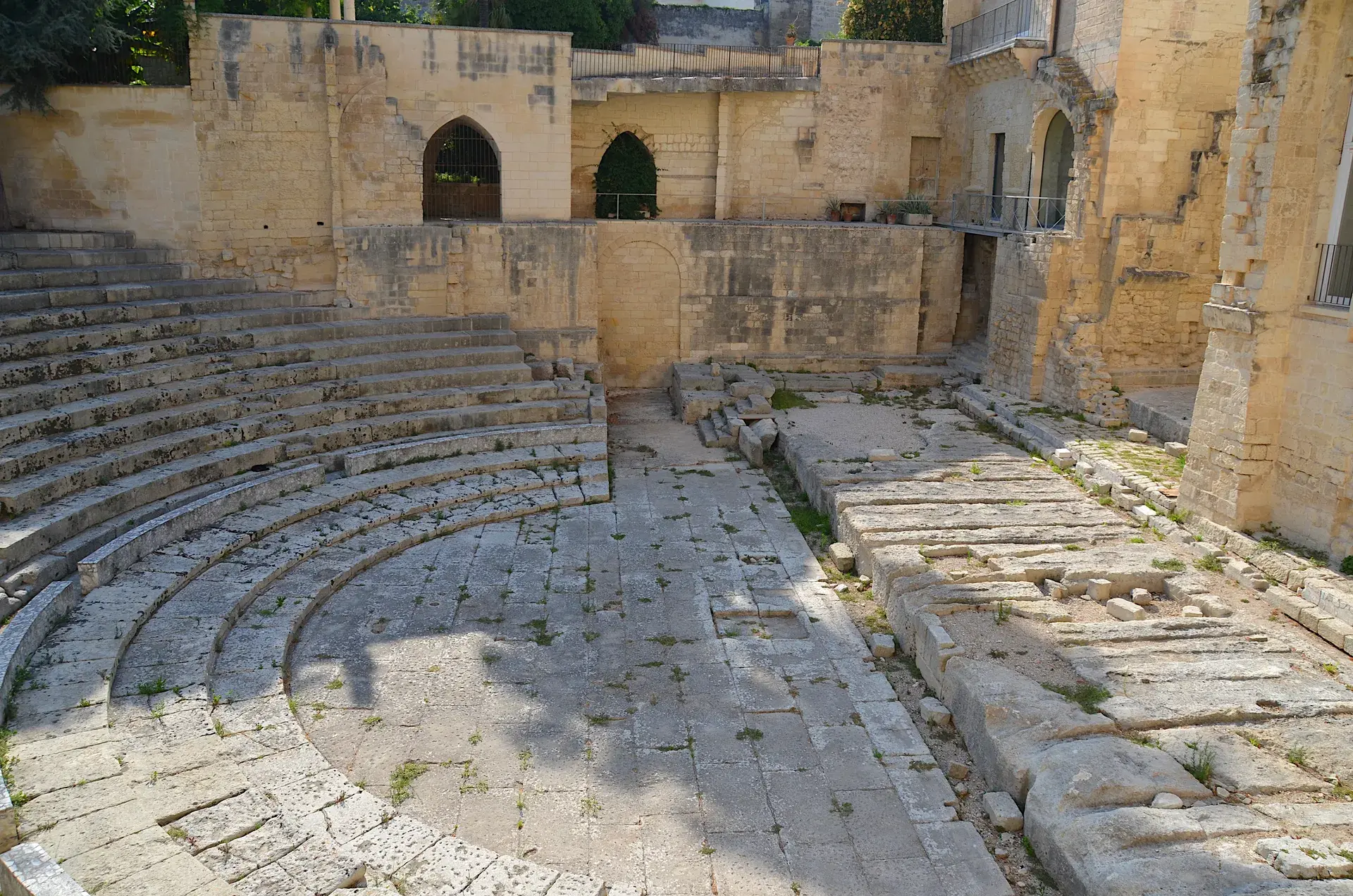
The existence of the Roman Theater remained a secret until May 1929. During excavation work in the gardens of two private buildings, the Palazzo D'Arpe and Palazzo Romano, workers stumbled upon the ancient structure. This chance discovery led to systematic excavations between 1937 and 1938, revealing the theater that had been lost to time under layers of urban development. Even today, its secluded location makes it a hidden gem within the bustling city.
Imperial Origins and Architecture
Dating to the Augustan age of the 1st century AD, the theater's construction is traditionally linked to Octavian, the future Emperor Augustus. It is believed he commissioned the theater and the amphitheater as a gesture of gratitude to the city of Lupiae. The structure underwent renovations during the reign of Emperor Hadrian in the 2nd century AD.
Built in a classical Roman style, the theater's semi-circular seating area, or cavea, was carved directly into a rock bank. With a diameter of approximately 40 meters, the cavea is divided into six wedges, each containing twelve steps. In its prime, the theater could accommodate over 5,000 spectators.
A Center for Ancient Culture
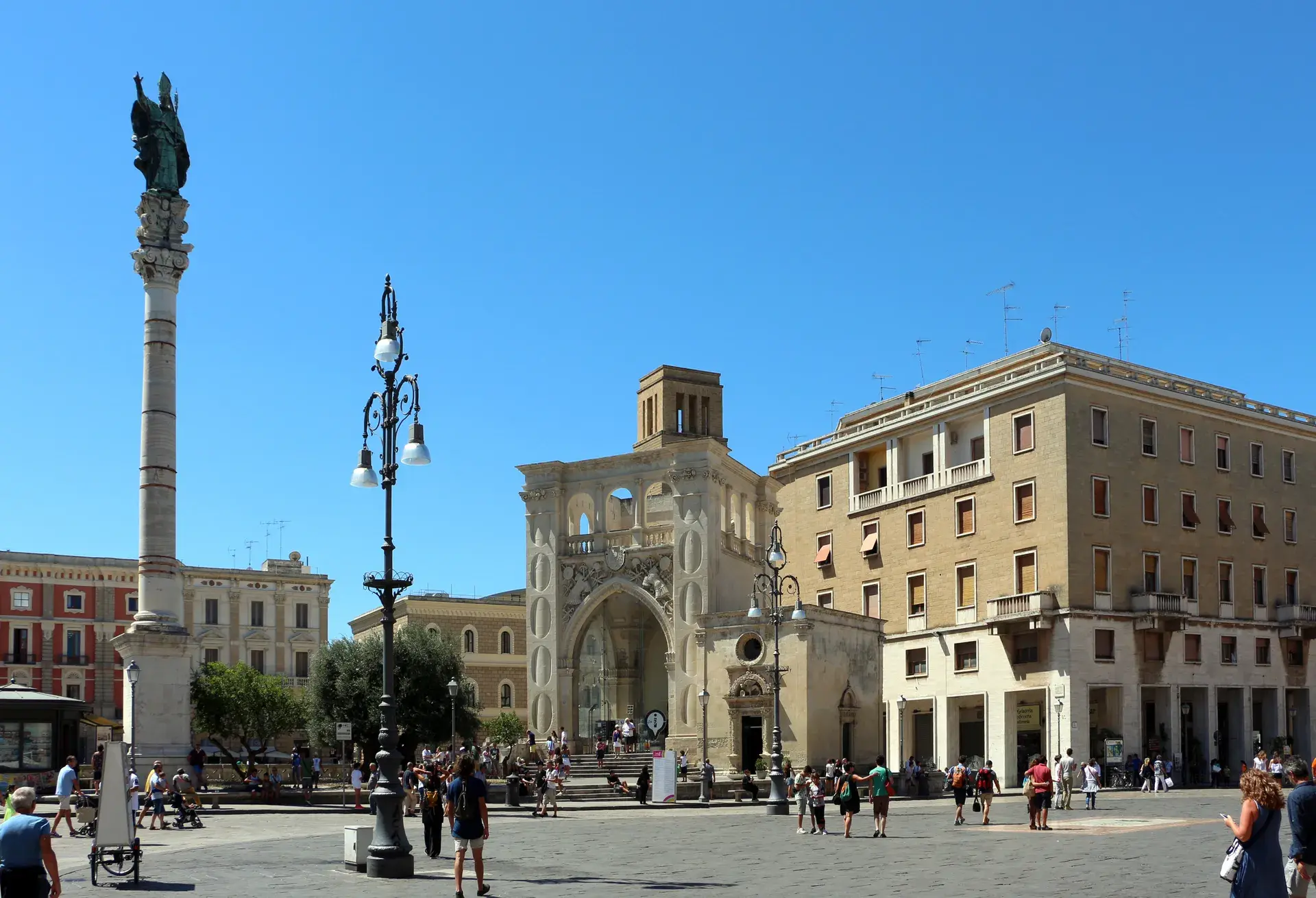
Unlike the larger Roman Amphitheater in Piazza Sant'Oronzo, which hosted violent spectacles, the Teatro Romano was a venue for more refined entertainment. It was a significant civic and cultural hub where ancient audiences enjoyed comedies, tragedies, poetry readings, and choral recitals. The theater showcases a different side of Roman life in Lupiae, one focused on art and performance.
The Theater Today
The Teatro Romano is now open to visitors, offering a glimpse into Lecce's deep Roman roots. The site continues its legacy as a cultural venue, frequently hosting summer performances, concerts, and shows that allow contemporary audiences to experience entertainment in this ancient setting. In a notable blend of old and new, the theater was even used as a location for a Dior fashion show commercial in 2020.
Adjacent to the ruins, the Museo del Teatro Romano displays archaeological findings from the site. Visitors can see statues, decorative fragments, and reconstructions that illustrate the theater's history. The museum also houses a series of nine theatrical masks from Hadrian's Villa in Tivoli, connecting Lecce's heritage to the broader Roman Empire.
FAQ
When was the Roman Theater in Lecce discovered?
The Teatro Romano was accidentally rediscovered in May 1929. It had been completely buried and forgotten for centuries until workers found it during garden excavations.
How old is Lecce's Roman Theater?
The theater dates to the Augustan age in the 1st century AD. It is believed to have been commissioned by Octavian (later Emperor Augustus) and underwent renovations during Hadrian's reign (117-138 AD).
What was the Teatro Romano used for?
In ancient times, the theater hosted cultural performances like comedies, tragedies, and poetry readings. Today, it continues to be a cultural venue, hosting modern concerts and shows during the summer.
Is the Teatro Romano the same as the Amphitheater in Lecce?
No, they are two different structures. The Teatro Romano is smaller and was used for cultural performances. The larger Roman Amphitheater, located in Piazza Sant'Oronzo, hosted different spectacles.