Basilica di San Frediano: Lucca's Romanesque Gem
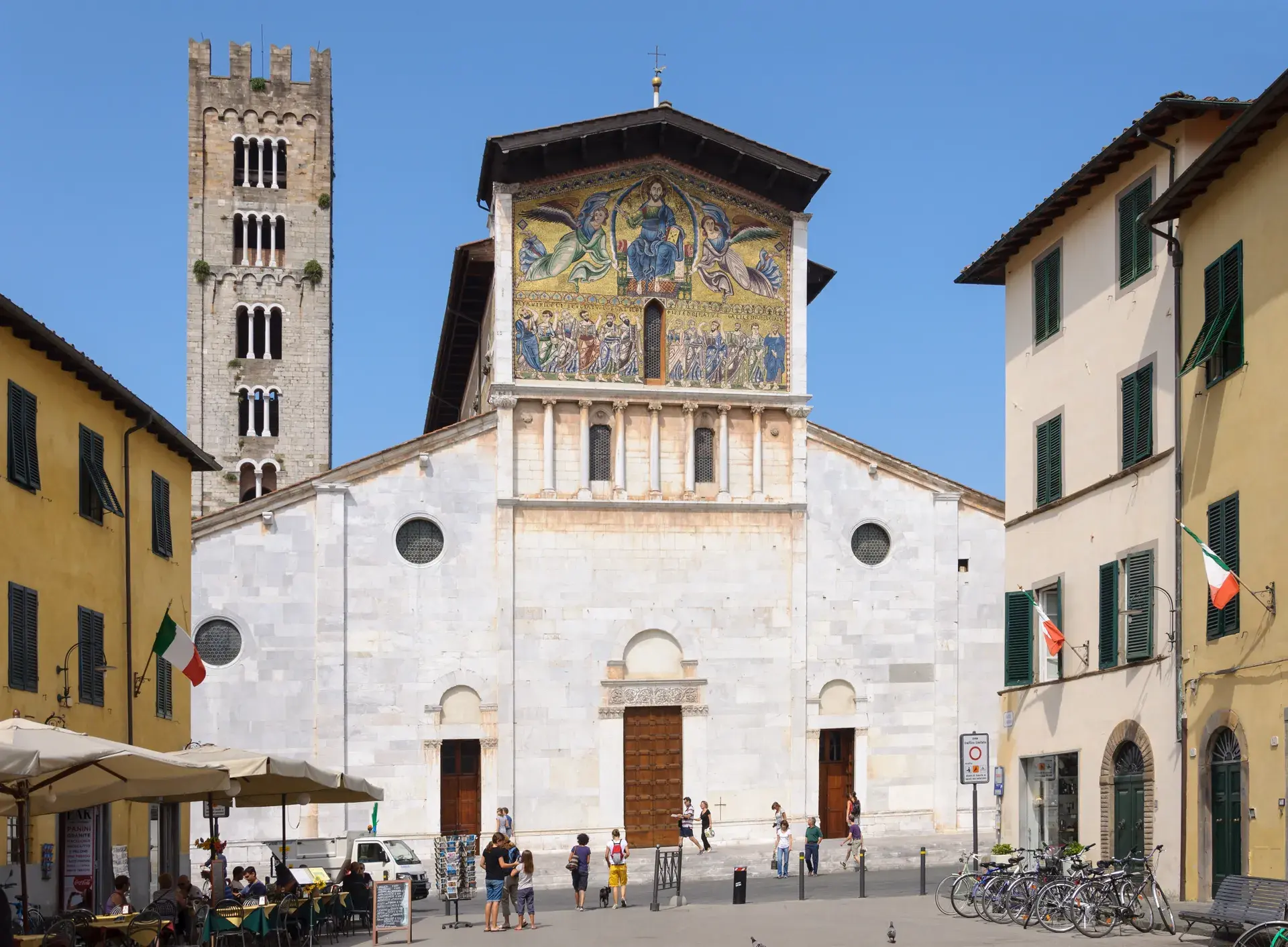
The Basilica di San Frediano is a prominent example of Lucchese Romanesque architecture, distinguished by the magnificent golden mosaic on its facade. As an active parish church and a repository of centuries-old art and relics, it stands as a cornerstone of Lucca's cultural and spiritual identity.
A History Spanning Centuries
The basilica's origins trace to the 6th century, when Saint Frediano, an Irish bishop of Lucca, founded a church dedicated to Saint Vincent just outside the city's Roman walls. After Frediano's burial in the church, it was eventually rededicated to him. The structure seen today is largely the result of a major rebuilding effort between 1112 and 1147, which established its Romanesque form. Pope Eugene III consecrated the new building in 1147.
Further significant developments occurred in the 13th century when the central nave was raised to allow more light, and the iconic facade mosaic was added. Unusually for a church of its era, the basilica's facade faces east, a decision reportedly influenced by the structure's proximity to the city fortifications during its construction.
The Saints of San Frediano
The basilica is closely associated with two important saints. Its founder, Saint Frediano, is a celebrated figure in Lucca. Legend holds that he miraculously diverted the Serchio River to protect the city from flooding. The city honors him annually on November 18th with celebrations that begin at the basilica.
Inside the church, visitors can see the incorrupt body of Saint Zita, a domestic servant who died in 1278. Venerated as the patron saint of domestic workers and lost keys, her remarkably preserved body is displayed in a glass urn, attracting both pilgrims and curious visitors.
Artistic and Architectural Highlights
The most striking feature of the basilica is the large, golden 13th-century mosaic on its upper facade. Attributed to the Berlinghieri workshop, it depicts the Ascension of Christ with the apostles below. Inside, the 12th-century Romanesque baptismal font, known as the Fonte Lustrale, is a masterpiece of collaborative sculpture. It features reliefs depicting the Story of Moses, carved by Master Roberto and two anonymous artists.
The church also houses works by renowned sculptor Jacopo della Quercia, including funerary monuments for the Trenta family and a polyptych. Other artistic treasures include frescoes by Amico Aspertini. Visitors can also climb the 55.20-meter-tall bell tower for panoramic views of Lucca.
Legends and Curiosities
Local traditions add to the basilica's mystique. A large stone monolith near the main altar, likely spolia from Lucca's ancient amphitheater, is said to have been miraculously transported by Saint Frediano himself to serve as an altar predella.
Another legend surrounds a bell cast in 1223, which is believed to have rung spontaneously to announce the birth and death of Saint Zita. In 2020, a new, identical bell was cast after scanning the historic original and was blessed to ring for Saint Zita's annual feast starting in 2021.
FAQ
Why is the Basilica di San Frediano famous?
The Basilica di San Frediano is famous for its stunning 13th-century facade mosaic, its distinct Lucchese Romanesque architecture, and for housing the incorrupt body of Saint Zita, which is displayed in a glass urn.
Who is Saint Zita?
Saint Zita was a 13th-century domestic servant who became the patron saint of domestic workers and lost keys in Lucca. She died in 1278, and her remarkably preserved body is venerated within the basilica.
Can you climb the bell tower at the Basilica di San Frediano?
Yes, visitors can purchase a ticket that may include a climb of the 55.20-meter-tall bell tower, which offers panoramic views of Lucca's historic center and the surrounding landscape.
What is unusual about the Basilica di San Frediano's facade?
The basilica's facade faces east, which is an unusual orientation for churches from its period. This is thought to be because of its proximity to the city walls during its construction.