Kurhaus Merano: History and Architecture
The Kurhaus Setting on the Passer Promenade
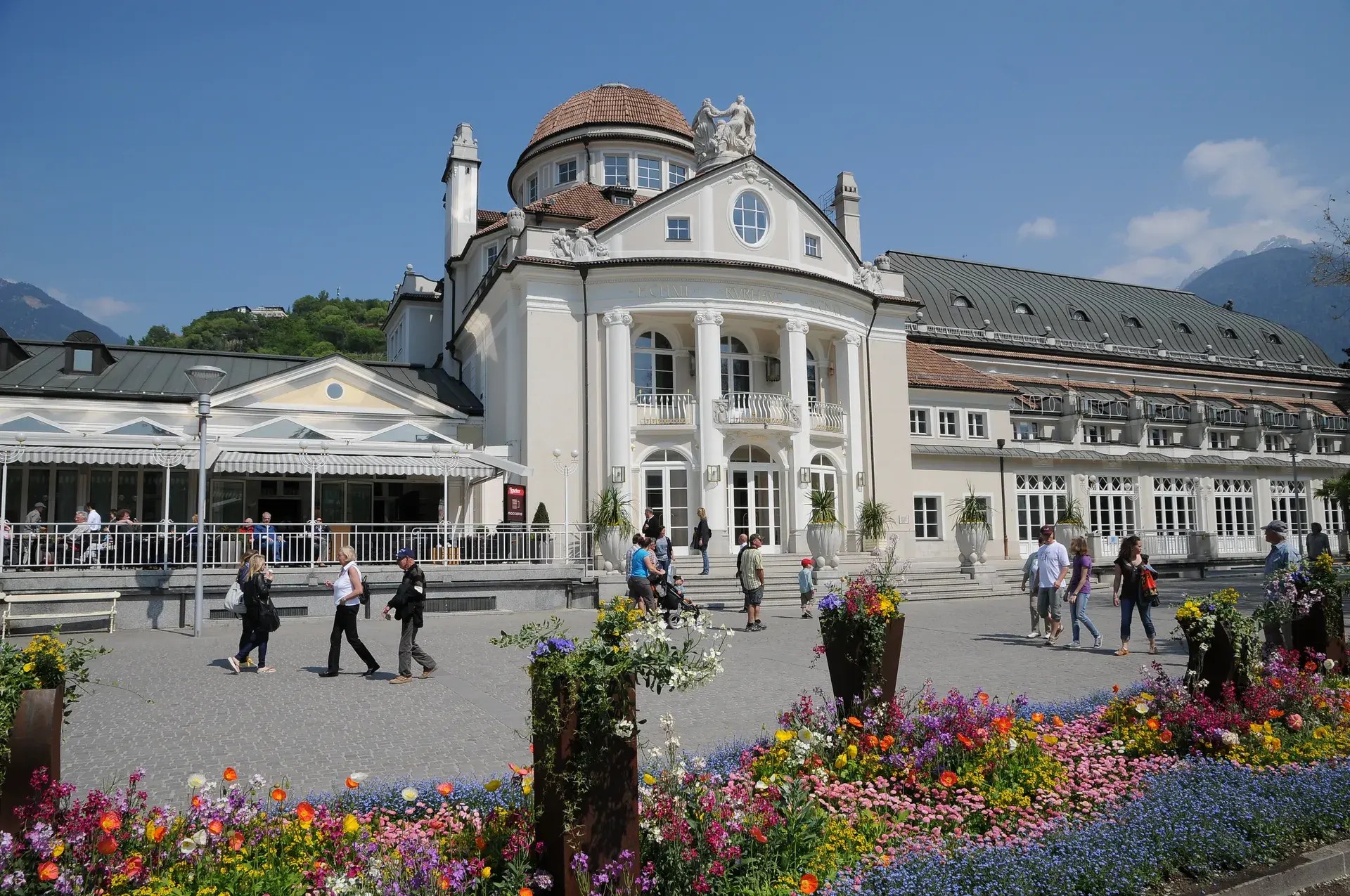
Positioned along the Passer Promenade (Kurpromenade) with an entrance at Corso della Libertà 33, the Kurhaus stands as Merano’s premier architectural monument from the spa era. The structure forms a key urban link, connecting the medieval city center and its porticoes to the landscaped riverside promenades laid out during the Belle Époque. Set directly beside the rushing Passirio river and opposite the modern glass-and-steel Merano Thermal Baths, the site encapsulates the city's long-standing identity as a destination for health and leisure.
Two Eras of Architecture: Historicism Meets Jugendstil
The Kurhaus represents a unique architectural timeline resulting from early 20th-century events. The original western section was designed by architect Josef Czerny and opened on November 14, 1874, during the peak of Merano’s popularity as an Alpine health resort for European nobility seeking whey treatments, grape cures, and climate therapy. This historicist wing originally relied on roughly 120 gas lamps before converting to electric lighting in 1897, and it still preserves the mirrored Pavillon des Fleurs salon.
Between 1912 and 1914, Viennese Secession architect Friedrich Ohmann was commissioned to undertake a major expansion. Ohmann conceived the addition as a Gesamtkunstwerk (total work of art), designing not only the structural elements but also fine interior details down to the banquet cutlery and silverware. The expansion added a three-story domed rotunda and the grand Kursaal concert hall, which held its opening gala on December 31, 1914. Because the outbreak of World War I abruptly halted further construction, Czerny’s 1874 historicist building and Ohmann’s 1914 Art Nouveau (Jugendstil) structure permanently stand side by side.
Exterior and Interior Highlights
The exterior of the Kurhaus facing the promenade is characterized by cream-and-pastel tones, wrought-iron balconies, a curved facade lined with classical columns, and a crown-like cupola atop the central rotunda. Along the roofline, statues of dancing maidens—the Graces—overlook the river embankment.
Inside, the nearly 1,000-seat Kursaal features gilded ornamentation, crystal lighting fixtures, and large allegorical ceiling frescoes painted by Rudolf Jettmar, Orazio Gaigher, and Alexander Rothaug. Together with the mirrored salon of the Pavillon des Fleurs, the interior preserves the grandeur of Central European spa hall design.
Cultural Heritage and Current Use
Beyond its architectural importance, the Kurhaus has played a defining role in regional history. On November 23, 1969, the South Tyrolean People's Party convened inside the Kursaal and voted to approve the Südtirol-Paket, a landmark decision that established South Tyrol's autonomous legislative status within Italy.
Today, the Kurhaus operates as an active venue for cultural festivals, conferences, symposia, and formal balls. It serves as a central stage for prominent events such as the Südtirol Festival Merano (Merano Music Weeks) in late summer, the annual Merano WineFestival in November, and activities tied to the winter Christmas Market. The building also houses the central administrative offices of the Merano Tourist Authority (Kurverwaltung). Interior access is typically reserved for attendees of ticketed events or participants in designated guided tours.
FAQ
Can the general public enter the Kurhaus?
Access to the Kurhaus interior is generally limited to ticketed attendees of scheduled performances, conferences, and festivals, or to visitors participating in dedicated guided tours offered on select dates.
Why does the Kurhaus feature two different architectural styles?
The western wing was completed in 1874 in a Historicist style by Josef Czerny, while the adjoining Jugendstil rotunda and Kursaal were added by Friedrich Ohmann between 1912 and 1914. The outbreak of World War I froze subsequent construction, leaving both eras permanently joined.
What political event took place in the Kursaal?
On November 23, 1969, the South Tyrolean People's Party met in the Kursaal and voted to accept the Südtirol-Paket, establishing the autonomous legislative framework for South Tyrol within Italy.