Sissi Monument Merano: Empress Elisabeth Statue
The Sissi Monument on the Summer Promenade
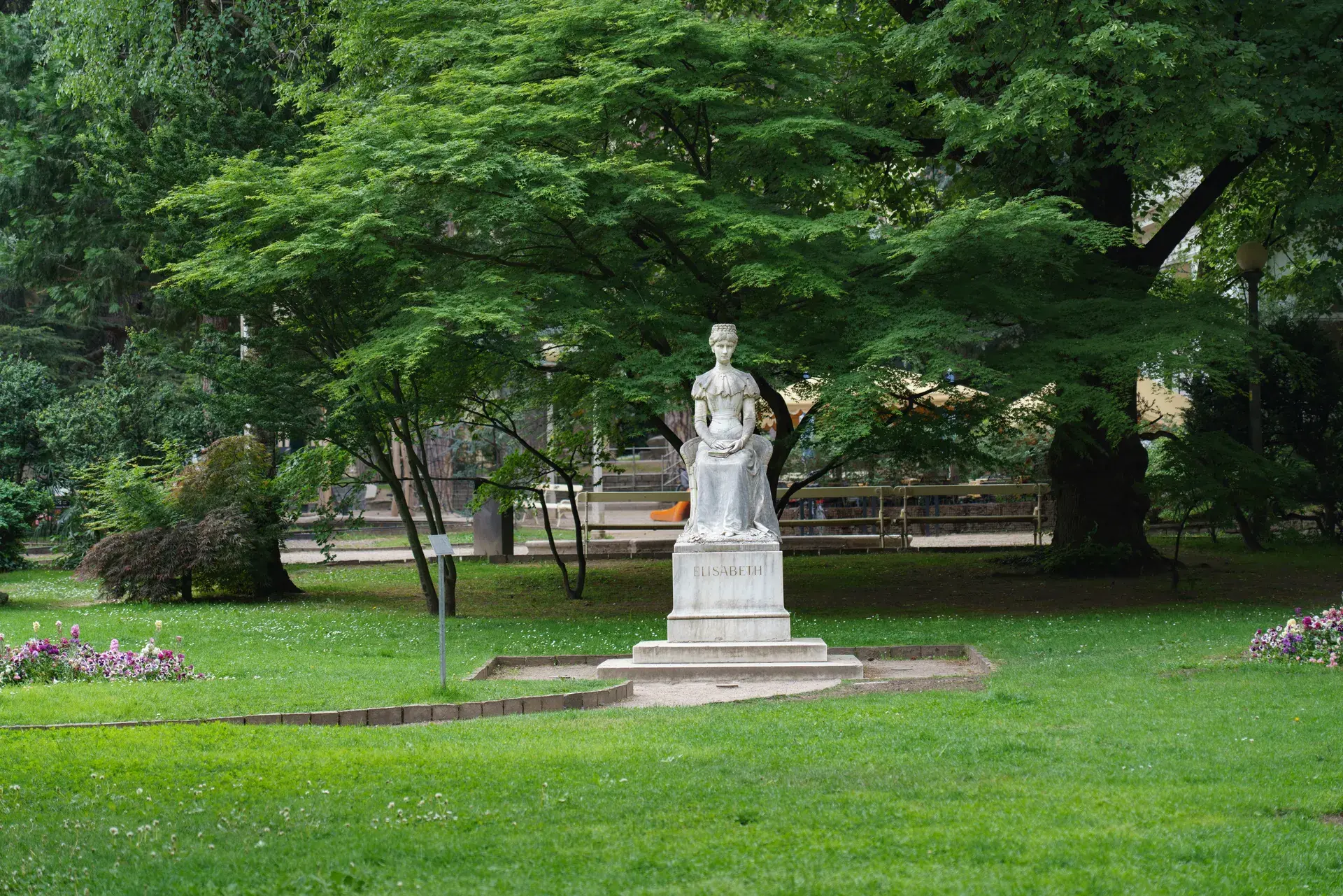
The Empress Elizabeth (Sissi) Monument in Merano commemorates Empress Elisabeth of Austria, who played a central role in transforming the Alpine settlement into an internationally renowned health retreat. Inaugurated in 1903, the memorial sits in Elisabeth Park at the western end of the Summer Promenade (Sommerpromenade), on the left bank of the Passer River adjacent to the Post Bridge.
Commissioned through the funding and patronage of Austro-Hungarian court official Emil Dalmata von Hideghét, the seated statue was carved from white Lasa marble by Tyrolean sculptor Hermann Klotz. The monument quickly became an essential landmark of Merano's Belle Époque era and underwent a comprehensive restoration in 1977.
An Introspective Imperial Portrait
Unlike traditional imperial monuments that depict monarchs in formal regalia or idealized youth, Klotz chose an intimate, understated representation. The statue portrays Elisabeth seated calmly on a garden bench in a simple walking gown, wearing a delicate veil.
Her posture is reflective, with her head deliberately angled away from the town center and toward the surrounding Alpine peaks. This artistic choice pays homage to the Empress's well-documented fondness for solitary mountain excursions and her desire to escape the rigid protocols of the Viennese court.
Historical Ties: Sisi's Impact on Merano
Empress Elisabeth stayed in Merano on repeated health retreats between 1870 and 1897, predominantly residing at Trauttmansdorff Castle and the Hotel Kaiserhof. Her initial arrival in October 1870 was prompted by the poor health of her two-year-old daughter, Archduchess Marie Valerie. When the young archduchess experienced a swift recovery in the valley's mild climate, news quickly reached aristocratic circles across the continent.
The imperial association sparked an economic and architectural boom. Merano transformed into a premier winter health resort (Kurort) for European nobility, leading to the construction of grand hotels, sanatoriums, curated walking trails, and the Kurhaus. Following Elisabeth’s assassination in Geneva in 1898, the town memorialized her enduring legacy by dedicating the surrounding parkland and unveiling Klotz's marble statue five years later.
Elisabeth Park and the Passer Riverfront
Elisabeth Park covers 7,100 square meters of municipal green space, open to the public year-round free of charge. The grounds feature a dense canopy of mature pines, giant sequoias, and Lebanon cedars, creating a shaded microclimate accompanied by the sound of the Passer River rushing over nearby stone weirs. Before its rededication in 1903, the parkland was originally established around 1870 as the "Garden of Marie Valerie" to honor Sisi's daughter.
Today, the statue marks a central gathering and resting area along the riverfront. It also serves as the town-center starting point for the 11-station Sissi Path (Sissi-Weg), a themed walking route that connects the central promenade network to the Gardens of Trauttmansdorff Castle.
FAQ
Who created the Empress Elizabeth Monument in Merano?
The monument was carved from white Lasa marble by Tyrolean sculptor Hermann Klotz and inaugurated in 1903.
Why was the statue dedicated to Empress Elisabeth?
It honors her repeated stays in Merano between 1870 and 1897. The swift recovery of her ailing daughter Marie Valerie during their 1870 visit popularized Merano as a premier European health resort.
What is unique about the statue's design?
Rather than displaying imperial regalia, the statue portrays Elisabeth resting on a bench in a simple walking dress, gazing toward the Alpine peaks to reflect her love for solitary mountain hikes.
What was the park called before the monument was unveiled?
Prior to 1903, the park grounds were known as the Garden of Marie Valerie, originally created around 1870 in honor of Empress Elisabeth's daughter.