Wandelhalle Merano: History & Promenade Colonnade
Historic Origins and the Spa Era
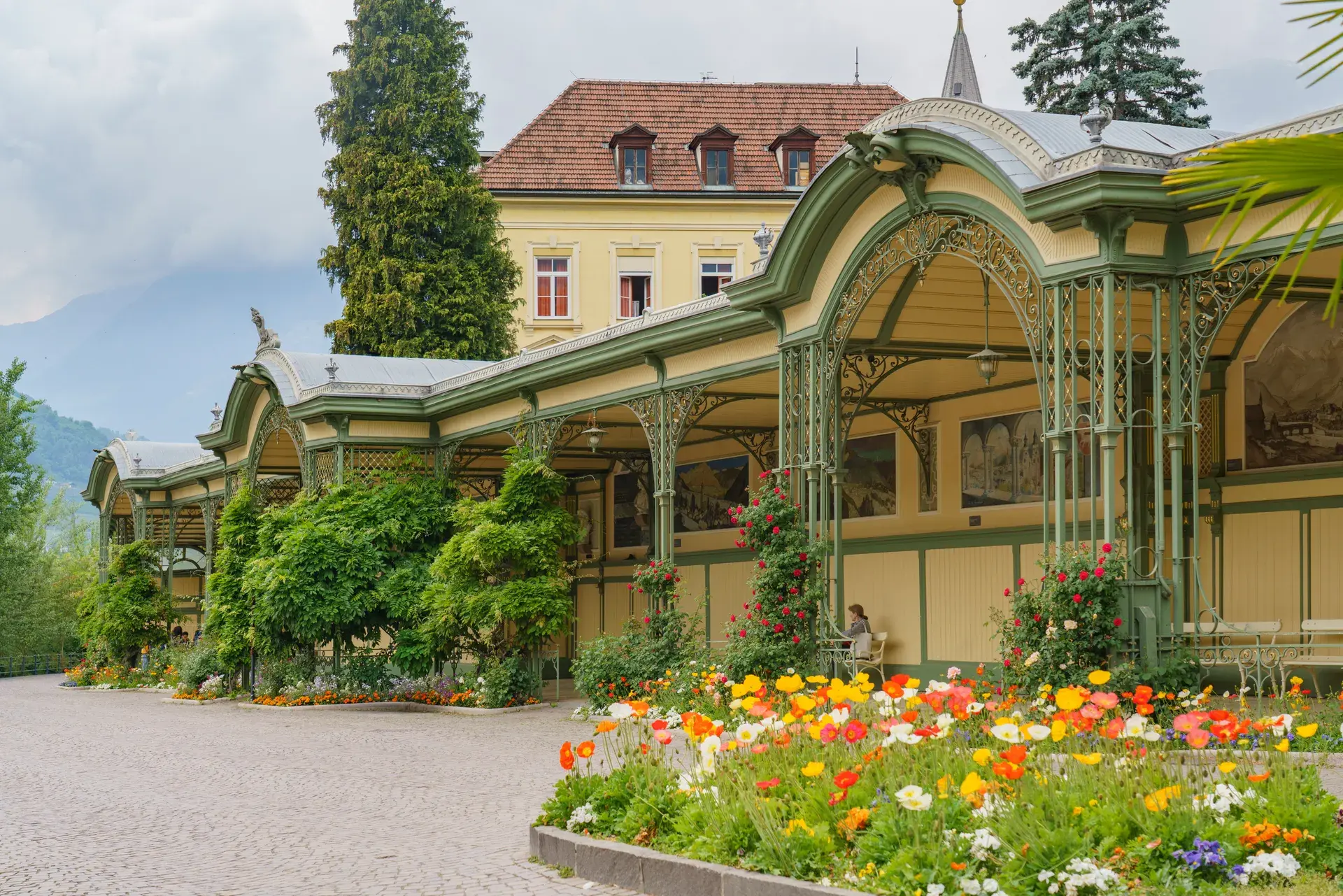
The Wandelhalle is a covered cast-iron colonnade located on the Winter Promenade along the northern bank of the Passer river in Merano. Stretching nearly 100 metres in length, the structure was developed as a key piece of 19th-century resort infrastructure to serve the town's expanding community of health tourists (Kurgäste).
Initiated by Merano Mayor Josef Valentin Haller with the medical endorsement of physician Franz Tappeiner, the covered walk was designed to give winter guests a sheltered outdoor route for therapeutic walking and fresh-air treatments during rain and snow. The construction was not without civic tension; the riverside site had long served local working-class residents as a communal area for washing and drying laundry. Despite resistance from townspeople over the loss of these public washing grounds, Haller advanced the project to establish dedicated amenities for the resort industry.
Viennese Cast-Iron Architecture
Erected between 1864 and 1866 and subsequently enlarged between 1889 and 1891, the colonnade exhibits a blend of late Biedermeier classicism and early Belle Époque iron craftsmanship. Its structure consists of a raised central section flanked by two wings that curve gently along the riverbank.
The ironwork was prefabricated in Vienna by the Griedel foundry before transport and assembly in Merano. South-facing painted cast-iron columns support the covered roof, providing shelter over stone paving while catching the lower winter sun. Directly below the balustrade, the sound of the glacier-fed Passer river echoes against the colonnade's sheltered surfaces.
The Ehrenhalle and Art Gallery
By 1891, the expanded walkway had evolved from a functional bad-weather shelter into an open-air art gallery and social venue used for promenade concerts. Within the structure lies the Ehrenhalle (Hall of Honour), which displays commemorative plaques and portrait busts honoring individuals who shaped Merano's development.
Among the prominent memorials is a bust of Duke Karl Theodor in Bavaria. While known as a member of royalty and the brother of Empress Elisabeth of Austria, the Duke was also a licensed, practicing ophthalmologist who established an eye clinic in Merano and personally performed surgical procedures on local patients. In addition to sculptural monuments, the walls showcase large landscape paintings depicting South Tyrolean alpine scenes, created by artists Franz Lenhart, Rudolf Complojer, and Peter Demetz.
Present-Day Role and Riverbank Network
The Wandelhalle serves as the cold-weather counterpart to the shaded Summer Promenade on the opposing riverbank. Together with the Kurhaus and the elevated Tappeiner Promenade, it forms a central element of the town's historic spa trail system.
The colonnade remains open freely to the public year-round. It integrates directly into Merano's riverside walking paths, connecting downstream to the Kurpromenade and upstream toward the historic Stone Bridge (Steinerner Steg) and the Gilf Promenade. The venue accommodates Caffè Wandelhalle with outdoor tables beneath the arcade, continues to host open-air classical concerts and art displays, and serves as the setting for Merano's monthly flea market on the morning of the last Saturday of every month.
FAQ
Where is the Wandelhalle located?
The Wandelhalle is situated on the Winter Promenade along the northern bank of the Passer river in Merano, South Tyrol.
Why was the Wandelhalle built?
Mayor Josef Valentin Haller and physician Franz Tappeiner initiated the colonnade in the 1860s to provide sheltered walking space for winter health tourists during rainy or snowy weather.
Who was Duke Karl Theodor in Bavaria, and why is his bust displayed?
Duke Karl Theodor was the brother of Empress Elisabeth of Austria and an active, licensed eye surgeon who operated a clinic and performed ophthalmic surgeries in Merano.
When does the flea market take place at the Wandelhalle?
Merano's flea market is held at the Wandelhalle on the morning of the last Saturday of every month.