Governor's Palace: Parma's Historic Timekeeper
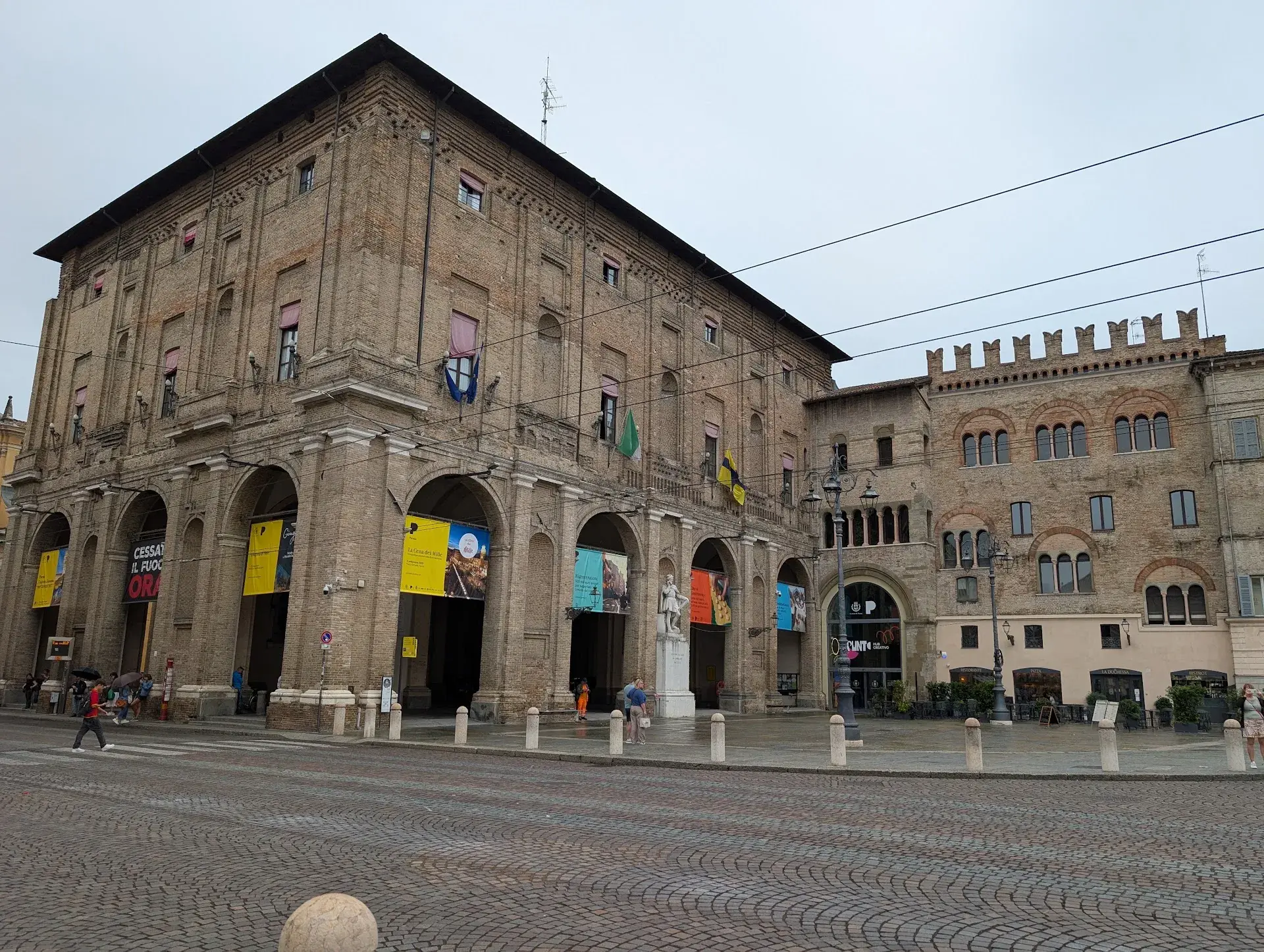
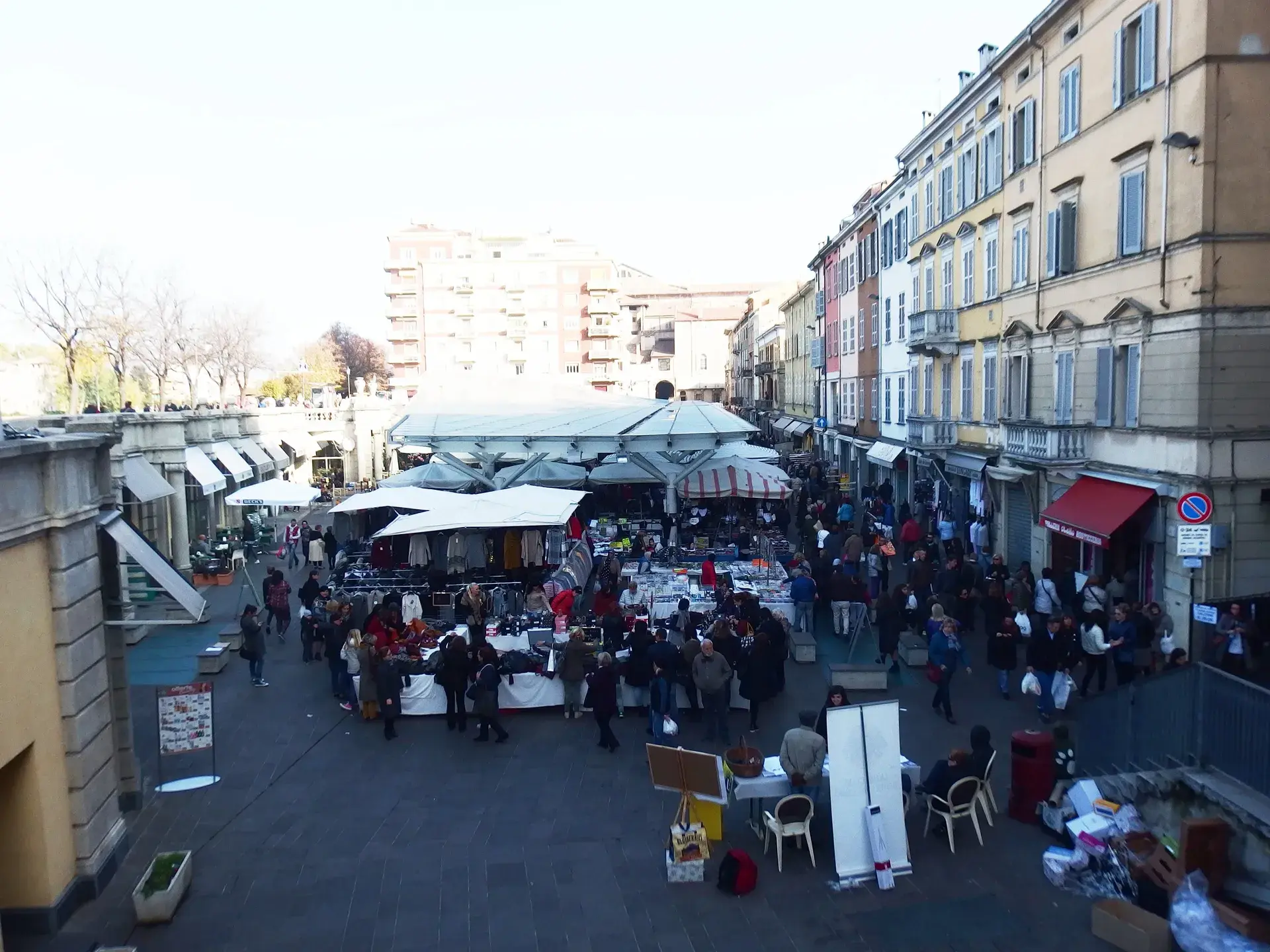
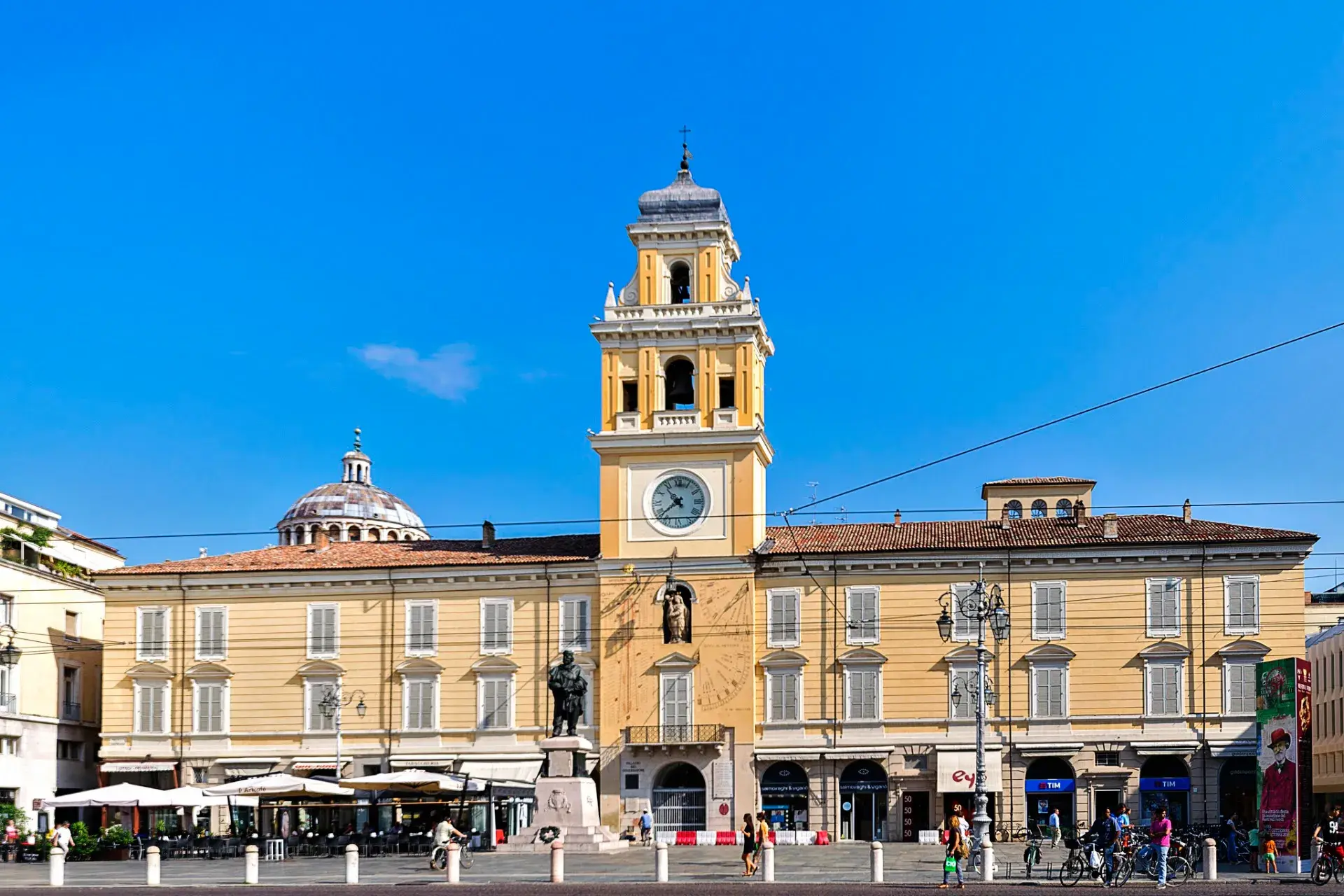
Observe the historic Governor's Palace overlooking the lively Piazza Giuseppe Garibaldi. Positioned at the intersection of the ancient Via Emilia and the old north-south axis, the palace anchors the historic and commercial crossroads of Parma.
From Merchant Guilds to Civic Center
Originating in the 13th century as two brick structures for merchant guilds, the building later housed the Captain of the People, the city Governor, and municipal magistrates.
A devastating collapse in 1606 transformed this former merchant hall into the keeper of the city's time. When Parma's main civic tower fell and destroyed the neighboring town hall, the Governor's Palace was renovated to take over civic timekeeping and bell-ringing duties. The two original buildings were unified, and Gian Battista Barattieri added a Baroque clock tower in 1673.
Neoclassical Redesign and Solar Timekeeping
In 1760, French court architect Ennemond Alexandre Petitot designed the broad, yellow-hued Neoclassical facade seen today. A central niche in the tower beneath the clock houses the Crowned Virgin statue by French sculptor Jean-Baptiste Boudard.
The facade's most striking feature is its advanced solar timekeeping system, commissioned by Duchess Marie Louise in 1829. Created by mechanical clockmaker Lorenzo Ferrari and astronomy professor Luigi Pazzoni, it features a dual-quadrant solar clock and an analemma sundial.
On sunny days around midday, direct sunlight passes through the pierced center of a gilded sun gnomon. This projects a point of light along a red figure-eight analemma loop, allowing citizens to accurately synchronize mechanical clocks to local mean time. Remarkably, the 1829 solar clock also indicates exact solar noon in 14 distant global locations, including the Peak of Tenerife and the Cape of Good Hope.
Hidden Curiosities and Modern Role
Several historical markers distinguish the exterior. Embedded in the outer corner of the facade at Via Cavour is the "Mattone di Parma," an incised stone marker displaying the official medieval brick standard legally binding to local builders. Additionally, a commemorative plaque to the right of the portal honors seven anti-fascist partisans executed by firing squad in September 1944.
The belfry once housed the historic 1453 civic bell known as the "Terza," which was rescued from the 1606 tower collapse. It remained in service until an exact replica replaced it in 1998 for conservation purposes.
Following structural renovations in January 2010, the Governor's Palace reopened its doors. Today, it functions as a prominent civic cultural venue and exhibition center dedicated to modern and contemporary art.
FAQ
Where is the Governor's Palace located in Parma?
The Governor's Palace is located on the north side of Piazza Giuseppe Garibaldi, positioned at the historic intersection of the ancient Via Emilia and the city's old north-south axis.
What is the unique clock on the facade of the Governor's Palace?
Installed in 1829, the facade features an advanced solar timekeeping system with a dual-quadrant solar clock and an analemma sundial. It uses a gilded sun gnomon to calculate local mean solar noon and even tracks solar noon in 14 distant global locations.
What is the Mattone di Parma?
The "Mattone di Parma" is a stone marker embedded in the corner of the palace facade at Via Cavour. It displays the official medieval brick standard that local builders and masons were legally required to follow.
How is the Governor's Palace used today?
Since reopening in January 2010 following extensive renovations, the building serves as a civic cultural venue and exhibition center for modern and contemporary art.
Gallery
Discover Parma like never before
Dive into Parma hidden stories and secret spots with Ciceru interactive tours.
Explore tour
Audioguide
Quizzes
Maps
Solo
Couples
Groups & families

© Photo by Daniele Ferretti via Google Maps · Google Places