Piazza Garibaldi: Parma's Historic Civic Heart
Take in the vibrant atmosphere and civic buildings framing the historic Piazza Giuseppe Garibaldi. As Parma's central civic square, it was built directly over the ancient Roman Forum along the Via Emilia. For centuries, the square has represented the civic and political pole of historic Parma, counterbalancing the religious center located nearby at Piazza Duomo.
A History of Catastrophe and Reinvention
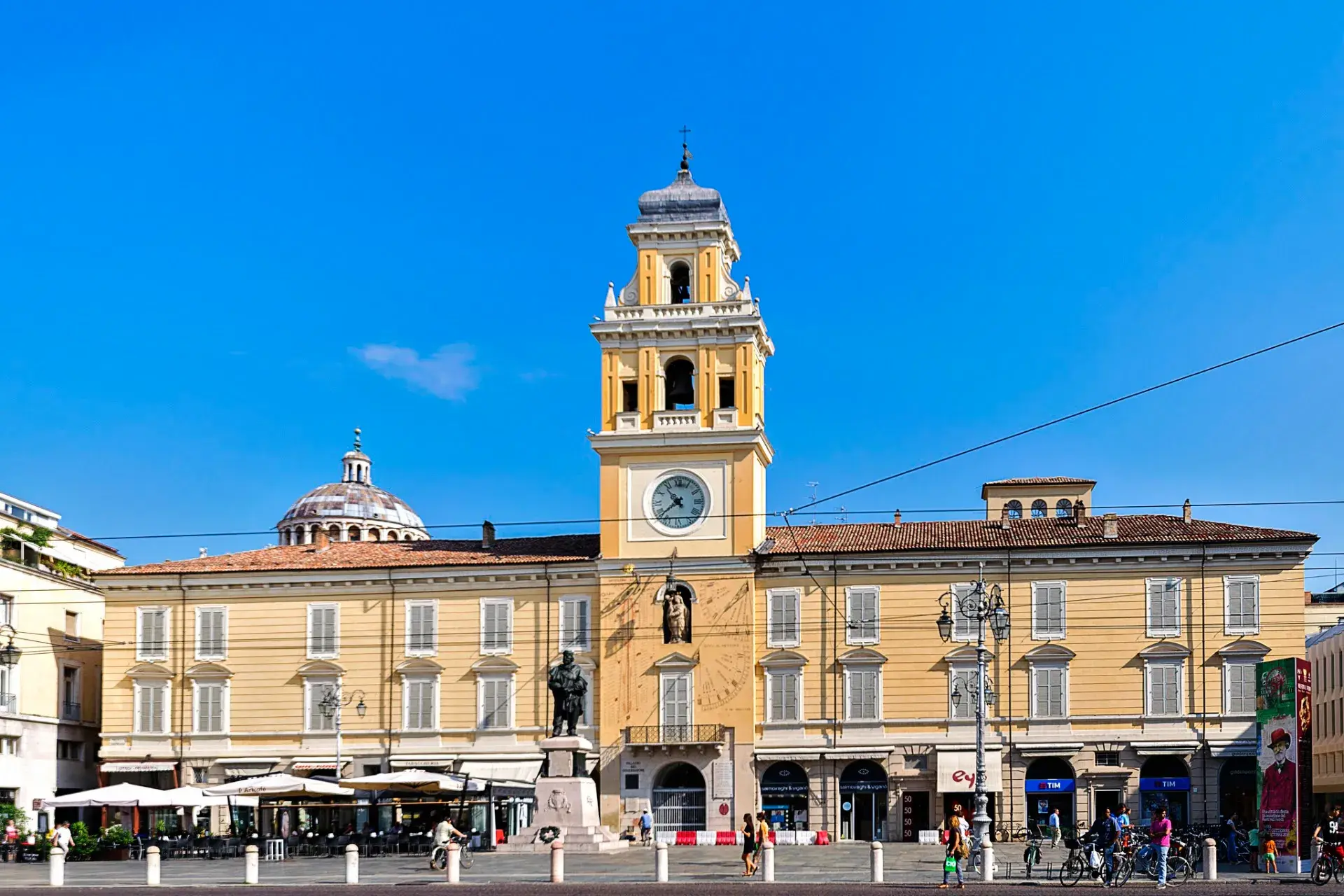
On a winter day in 1606, a catastrophic collapse fundamentally altered the architectural destiny of Parma's civic heart. The medieval Torre Civica fell into the square, crushing parts of the town hall. This disaster forced a complete reconstruction of the space and led to the civic bells being moved to a new central tower on the Palazzo del Governatore in 1673.
In the mid-18th century, the square underwent a major transformation under the Bourbon duchy. French court architect Ennemond Alexandre Petitot redesigned the buildings, unifying the facades into an elegant and cohesive neoclassical ensemble. Following Italian unification, the historic moniker "Piazza Grande" was dropped in 1893 to honor Giuseppe Garibaldi.
Architectural Landmarks
The square is visually characterized by a striking symmetry of warm Parma yellow and ochre facades. The northern side is anchored by the Palazzo del Governatore, originally constructed between 1283 and 1285. Its central clock tower features complex multi-dial astronomical sundials installed in 1829 during the reign of Duchess Marie Louise of Austria.
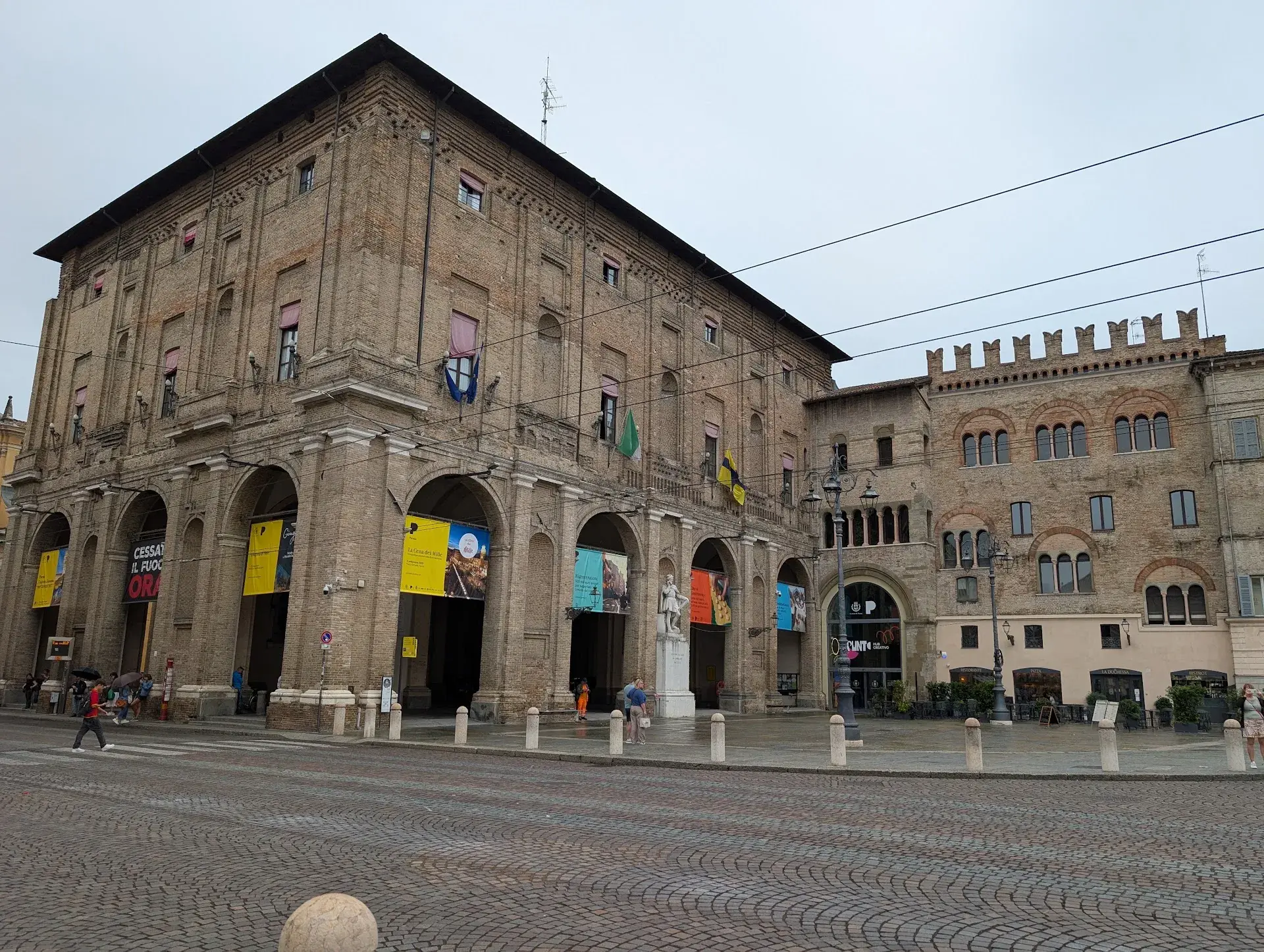
The southern boundary features the 13th-century Palazzo del Podestà and the early 17th-century Palazzo del Comune, built by Giovan Battista Magnani. Standing at the center of the square is Davide Calandra's 1893 bronze monument to Giuseppe Garibaldi.
Hidden Curiosities
Embedded directly into the facade of the Palazzo del Governatore is the historic "mattone di Parma." This carved, official public measurement standard was once strictly used by medieval merchants to verify the sizes of fabric, brick, and lumber in the marketplace.
Near the Palazzo del Comune sits an 18th-century fountain statue of Hercules and Antaeus wrestling. In the local Parmesan dialect, the entangled figures are affectionately nicknamed "i dö brasé" (The Two Embraced). A more somber historical marker in the square is a plaque commemorating seven anti-Fascist partisans who were executed by a firing squad on September 1, 1944.
Parma's Living Room
Known today as "Il Salotto" (the city's living room), Piazza Garibaldi remains Parma's primary outdoor meeting place. The cobblestones carry a constant stream of pedestrians and cyclists along the ancient Roman thoroughfare, while cafe terraces host the evening passeggiata and local aperitivo culture. The Palazzo del Governatore maintains its civic function by serving as a municipal venue for modern and contemporary art exhibitions.
FAQ
Why was the square renamed to Piazza Garibaldi?
Originally known as the Roman Forum and later Piazza Grande, the square was officially renamed in 1893 to honor the Risorgimento leader Giuseppe Garibaldi. This renaming coincided with the installation of a bronze monument to Garibaldi at the center of the square.
What is the mattone di Parma?
The mattone di Parma is a historical carved measurement standard embedded in the facade of the Palazzo del Governatore. Medieval merchants and craftsmen were required to use it to verify the dimensions of goods like fabric, lumber, and bricks.
What happened to the original medieval tower in the square?
On January 27, 1606, the medieval Torre Civica collapsed catastrophically into the square, crushing portions of the town hall. This led to major architectural reconstruction, with the civic bells eventually relocated to the Palazzo del Governatore.
Discover Parma like never before
Dive into Parma hidden stories and secret spots with Ciceru interactive tours.
Explore tour
Audioguide
Quizzes
Maps
Solo
Couples
Groups & families

© Photo by Michael Rutz via Google Maps · Google Places