Palazzo della Pilotta: Parma's Museum Citadel
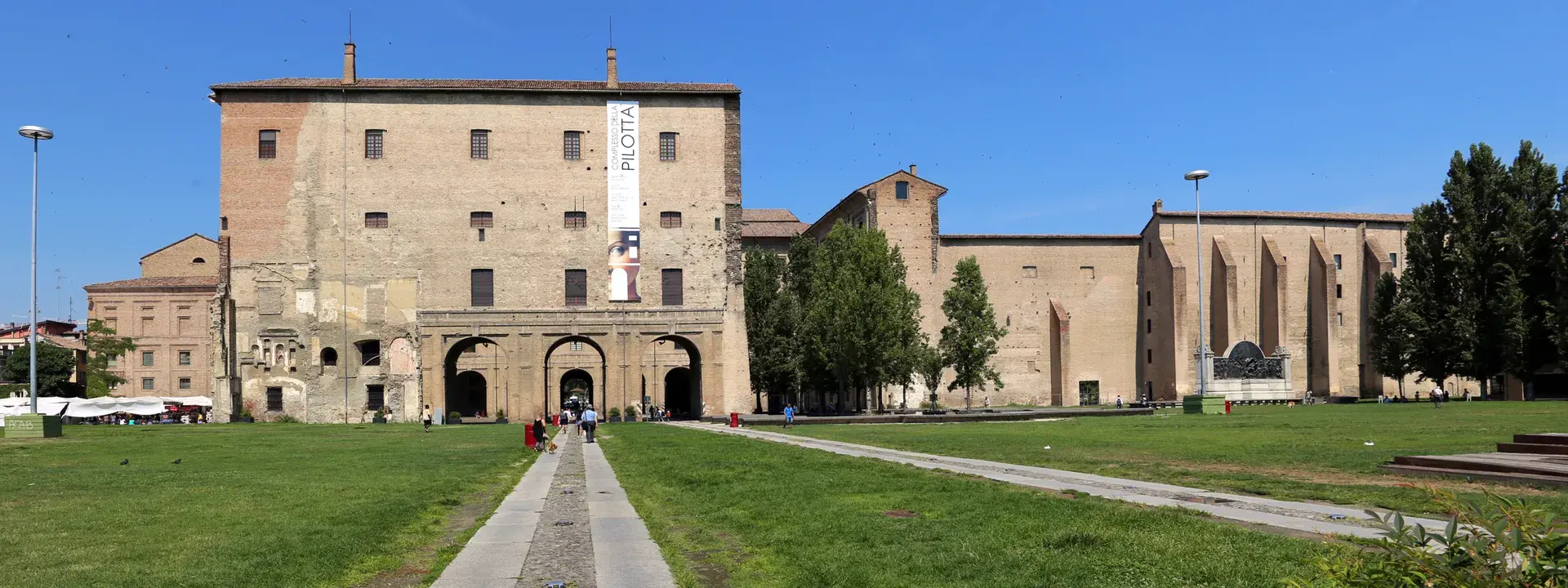
A monumental rustic brick citadel that evolved from a ducal service corridor into the sprawling fortress of Parma's greatest cultural treasures, Palazzo della Pilotta anchors the western edge of the city's historic center. Positioned between the Parma river and the central squares, the complex overlooks Piazzale della Pace and connects the old town to the Parco Ducale.
A Ducal Service Citadel
Initiated by Duke Ottavio Farnese between 1580 and 1583, and expanded under Duke Ranuccio I Farnese until 1622, the complex began as a connecting gallery. This long corridor originally bridged the ancient Viscontea fortress with the ducal residences, gradually growing into an expansive service citadel for the court. Architects including Francesco Paciotto, Giovanni Boscoli, and Simone Moschino contributed to its design.
The palace features multiple inner courtyards and is constructed from rustic, unplastered brick punctuated by monumental arches. Its unique name derives from "pelota," a Basque ball game commonly played in these courtyards by Spanish soldiers and members of the court. Over the centuries, successive rulers, including the Farnese dukes, the Bourbons, and Duchess Marie Louise, centralized massive art and library collections within its walls.
The Illusion of Teatro Farnese
Inside the complex, a grand three-flight scissor staircase leads to the upper museum wings and the cavernous Teatro Farnese. The monumental theater was built rapidly between 1618 and 1619 by architect Giovan Battista Aleotti to celebrate a planned visit by Cosimo II de' Medici.
Despite appearing to be constructed of solid stone and marble, the theater was made almost entirely of painted wood and plaster. The warm patina of exposed timber framing and classical tiered wooden seating creates a striking, historic atmosphere. The theater originally featured complex stage machinery designed to flood the orchestra floor for mock naval battles. Following severe devastation from aerial bombings in 1944, which destroyed the original Ducal Palace, the heavily damaged Teatro Farnese was meticulously reconstructed.
A Unified Museum Complex
Today, Palazzo della Pilotta operates as a unified national museum complex housing several significant cultural institutions. The Galleria Nazionale di Parma displays an array of historical masterworks, most notably Leonardo da Vinci's painting "La Scapigliata."
The complex is also home to the Museo Archeologico Nazionale, where the Tabula Alimentaria is kept. This artifact is the largest surviving bronze inscription from the Roman Empire, detailing Emperor Trajan's municipal fund to support needy children. Additionally, the site contains the Biblioteca Palatina and the Museo Bodoniano. The latter preserves the original steel punches and matrices created by 18th-century court printer Giambattista Bodoni, the creator of the globally utilized Bodoni typeface.
FAQ
Why is it called Palazzo della Pilotta?
The name derives from "pelota," a Basque ball game that Spanish soldiers and court members frequently played in the palace's interior courtyards.
What happened to Palazzo della Pilotta during World War II?
In 1944, aerial bombings severely devastated the complex. The original Ducal Palace was completely destroyed, and the Teatro Farnese was heavily damaged before being meticulously reconstructed in the following years.
What museums are located inside Palazzo della Pilotta?
The complex operates as a unified national museum housing the Galleria Nazionale, the Teatro Farnese, the Museo Archeologico Nazionale, the Museo Bodoniano, and the Biblioteca Palatina.